
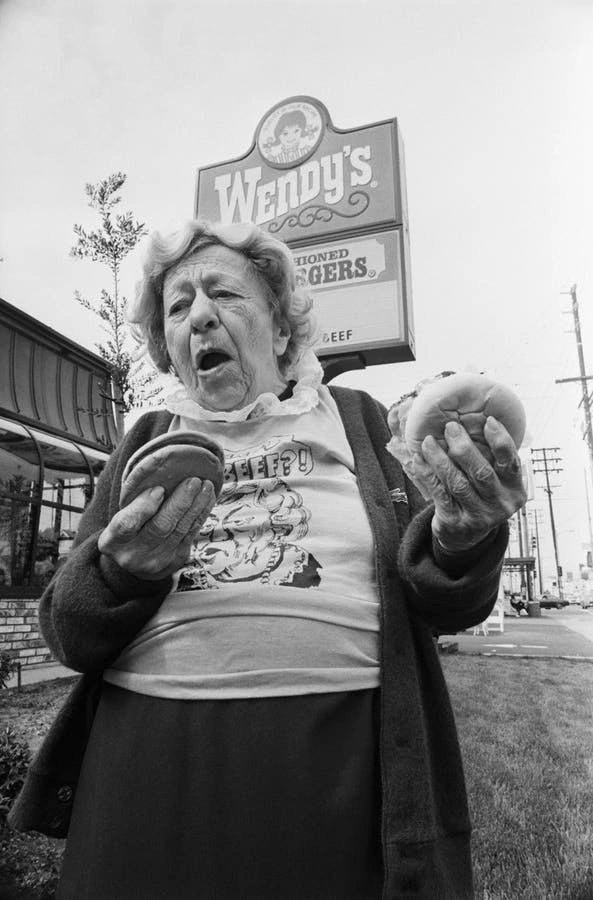
The 'Beef Lady' is blank" rel="noopener noreferrer">Clara Peller, the sharp-tongued octogenarian actress and manicurist who delivered the line 'Where's the beef?' in Wendy's landmark 1984 television commercial. Her estimated net worth at the time of her death in 1987 was approximately $1 million, according to Celebrity Net Worth, and that figure is still the most widely cited benchmark you'll find. Since she passed away nearly four decades ago, there's no ongoing income to track, but understanding how that number was assembled, and how reliable it actually is, is worth a closer look.
Where’s the Beef Lady Net Worth: Best Estimate and How to Verify

Jordan Hartwell
11 May 2026
Who the 'Beef Lady' is and why people search her net worth

Clara Peller was already in her eighties and working as a manicurist in Chicago when she was cast in the Wendy's 'Fluffy Bun' commercial. The ad showed her peering at a competitor's oversized bun and demanding, with spectacular indignation, 'Where's the beef?' The phrase immediately entered American pop culture, got picked up in the 1984 presidential election, and turned Peller into a genuine celebrity almost overnight. She became the face of one of the most effective fast-food campaigns ever produced, and her story is a compelling example of how a single advertising role can carry enormous financial and cultural weight, even for someone who came to the spotlight late in life.
People search her net worth today partly out of nostalgia and partly because the 'Where's the beef?' campaign is still studied and referenced in advertising circles. For a site focused on documenting women's financial stories, Peller is a genuinely interesting case: a working-class woman who earned real money from advertising at an age when most people have long since retired, then lost her Wendy's contract after appearing in a Prego pasta sauce commercial where she said 'I found it!' That move effectively ended her biggest income stream. It's a clean, well-documented story about ad-based earnings, and that makes the net worth question answerable, even if the ceiling on the number is modest.
How net worth estimates like this one actually get built
Net worth, in its simplest form, is total assets minus total liabilities. For public figures without mandatory financial disclosures, estimators work from observable signals: documented income sources, public records, property filings, business registrations, and credible reporting. The IRS's Statistics of Income research program uses actual tax-return data to measure wealth at scale, which is the most rigorous method available, but that data is anonymized and aggregated, not individual. For someone like Clara Peller, no tax filings or asset disclosures are public, so any estimate is built from inference.
In Peller's case, the logical chain is fairly short: she was hired for the Wendy's commercials, the campaign ran nationally and became enormously successful, she made additional commercial appearances and product tie-ins off the back of her fame, and then her Wendy's contract ended after the Prego ad. Wikipedia's entry on 'Where's the beef? ' and the LA Times obituary from August 1987 both confirm the basic timeline. [IMDb credits the original commercial to ad agency Dancer Fitzgerald Sample](https://www.
imdb. com/title/tt10918948/fullcredits), which helps verify the production context. From that documented activity, Celebrity Net Worth arrives at a $1 million estimate, essentially reasoning that a high-profile national ad contract plus follow-on commercial work added up to about that much in assets by the time of her death.
Where to find credible information on her wealth

For a historical figure like Peller, the most trustworthy sources are contemporaneous journalism and verified biographical records, not modern celebrity net-worth aggregators. The LA Times obituary (August 12, 1987) is the gold standard here: it's a primary-source account that describes her Wendy's fame and the circumstances that ended her contract.
In a Los Angeles Times obituary, Clara Peller's long career as a manicurist and her rise to media fame in 1984 through Wendy's television commercials were described as key parts of her story the LA Times obituary (August 12, 1987) is the gold standard here.
Adweek's retrospective coverage of the campaign and Yahoo Finance's '30 Years Later' piece add further context about the advertising economics involved. IMDb's credit page for the 1984 Wendy's commercial is a verifiable production record. These sources give you the factual skeleton from which any honest estimate is built.
Celebrity Net Worth puts her at $1 million and that figure circulates widely, but it's worth knowing what that site actually is: as Wikipedia's entry on CelebrityNetWorth notes, the site reports estimates of celebrities' total assets and financial activities, not verified disclosures. CelebsMoney, another aggregator, lists her figure as 'under review,' which is at least honest about the uncertainty. Neither site has access to Peller's actual financial records. So treat the $1 million figure as a reasonable, research-informed estimate rather than a confirmed balance sheet.
Current net worth range and how the estimate is derived
The best current estimate for Clara Peller's net worth at the time of her death in 1987 is in the range of $500,000 to $1. 5 million, with $1 million as the most commonly cited midpoint. Here's the reasoning behind that range. National television ad campaigns in the mid-1980s paid featured talent meaningful fees, especially when the campaign became a cultural phenomenon.
Peller appeared in multiple Wendy's spots and made additional paid appearances leveraging her celebrity. Her fame was real but brief, lasting roughly two to three years before the Prego conflict ended her Wendy's relationship. She was not building a business empire, acquiring real estate investments, or generating royalty income from intellectual property she owned. The income was essentially ad compensation, likely supplemented by personal appearance fees, which puts a natural ceiling on total accumulated wealth.
The lower end of the range ($500,000) reflects the possibility that ad talent fees in the early 1980s for a character actor of her profile were more modest than the campaign's cultural impact might suggest. The upper end ($1.5 million) accounts for the possibility of licensing, appearance fees, and any savings from her pre-fame working career. There is no evidence of significant business ownership, investment portfolios, or assets beyond what her advertising career would have generated.
The income streams that shaped her wealth

Peller's financial story was almost entirely advertising-driven, which makes it unusual compared to many of the women profiled on a site like this one. Peller's financial story was almost entirely advertising-driven, which makes it unusual compared to many of the women profiled on a site like this one the label lady net worth. There was no music catalog, no brand equity from a company she founded, and no social media revenue. The income streams were narrower but still instructive.
- Wendy's commercial fees: The 'Where's the beef?' campaign was her primary and largest income source. National ad contracts for featured talent typically include usage fees tied to broadcast frequency and duration.
- Follow-on commercial work: Post-Wendy's fame generated additional advertising opportunities before her contract ended. These would have been paid appearances leveraging her celebrity recognition.
- Personal appearances and media: Celebrity status, even brief and late-in-life, often generates paid appearances, interviews, and endorsement-adjacent activities that add to overall income.
- Pre-fame career income: Peller worked as a manicurist for decades before the Wendy's campaign. That career would have provided savings, though not at a level that meaningfully moves the net worth estimate.
- No ongoing royalties or business equity: Unlike creators who own intellectual property or founders who hold equity in companies, Peller did not appear to hold residual-income assets that would grow after her death.
This income profile puts Peller in a genuinely different category from many women profiled on wealth-focused reference sites. Her story is more comparable to a well-compensated character actor or a food-focused media personality with a single breakout moment than to a businesswoman with diversified holdings. For comparison, women like food bloggers, YouTube personalities, or brand founders in the food and grocery space often have more layered income structures, including ad revenue, sponsored content, and product licensing, even if their cultural footprint is smaller. That same kind of “net worth” speculation shows up heavily in the grocery lady YouTube niche, where earnings are often inferred from views, sponsorships, and affiliate links grocery lady YouTube net worth.
How net worth changes over time, and how to verify updates
For someone who passed away in 1987, 'updating' the net worth estimate means something different than it would for a living public figure. Peller's estate would have been settled under probate, and any assets she held at death, including any residual rights or claims, would have transferred to her heirs. There is no public record of significant rights litigation or licensing activity tied to her likeness that would suggest the estate generated meaningful post-death income. The $1 million estimate is essentially a historical snapshot, not a figure that meaningfully changes.
If you want to verify or challenge the estimate yourself, here is a practical checklist to work through.
- Start with the LA Times obituary and Wikipedia's Clara Peller page for the factual career timeline and confirmation of key events (Wendy's campaign, Prego conflict, death date).
- Check IMDb's credit listing for the 1984 Wendy's commercial to verify the production context and advertising agency involved.
- Review Celebrity Net Worth's page with the understanding that their $1 million figure is an estimate, not a verified disclosure, as Wikipedia's entry on that site makes clear.
- Search newspaper archives (ProQuest, Google News archive, or similar) for contemporaneous coverage of Peller during 1984 to 1987 to gauge the scale of her public appearances and any reported earnings.
- Look for probate records in Illinois (her home state) if you want to pursue the most rigorous possible estimate; probate filings are public records and would include inventoried assets at the time of death.
- Treat any figure from aggregator sites without primary-source backing as a starting point for research, not a conclusion.
The honest bottom line is that Clara Peller's net worth will never be precisely known from public sources alone. If you are seeing “ladyironchef net worth” mentioned online, it is worth treating it as an unverified claim unless it links back to reputable sources. But the documented evidence, her Wendy's campaign, follow-on commercial work, and lack of business equity or investment holdings, points consistently toward a figure in the range of $500,000 to $1.5 million, with $1 million as the most defensible single-point estimate. For a manicurist who became a household name in her eighties through one brilliant advertising moment, that's a financially meaningful story worth telling accurately.
FAQ
Why is Clara Peller’s net worth only an estimate, not a confirmed number?
Because she left no publicly available financial disclosures, you cannot see a final asset list (bank accounts, real estate, investments) or liabilities (debts, taxes, legal claims). Any “net worth” figure you see is inferred from documented work, typical pay for national ads in that era, and what is known about her lack of long-term business ownership.
If the most cited figure is $1 million, what evidence usually supports that midpoint?
Most estimates lean on her nationally broadcast Wendy’s role plus follow-on paid appearances, then assume she did not accumulate major new wealth via businesses or recurring royalties. In other words, the $1 million number functions as a central guess where the ad-pay window plus savings could plausibly land by 1987.
How can I sanity-check the estimate using ad pay, without relying on celebrity-net-worth sites?
Look at the production and campaign scope, then compare to typical mid-1980s compensation patterns for featured performers on national television advertising. If the campaign ran nationally and multiple spots used her likeness, a higher single-period payout is plausible, but you would still expect a hard ceiling since there is no evidence of ongoing royalties or an owned catalog.
Did her Prego commercial conflict directly reduce her earnings, or is that overstated?
It likely reduced her biggest paycheck source because it ended her Wendy’s relationship, which was the primary driver of her brief fame. However, the exact magnitude of lost income is impossible to reconstruct precisely, since we do not have contract terms or severance details, so net worth sites often treat it as a directional factor rather than a measurable loss.
What about her estate, could probate records or heir claims reveal the real net worth?
In principle, probate documents can show assets and debts, but many records are not digitized, may be restricted, or may not clearly summarize total wealth in a way that modern aggregators can translate into “net worth.” Also, even if you find probate totals, they reflect what existed at death, not what she earned during her advertising peak.
Are there any signs she generated recurring money after the ads, like royalties or licensing?
Not in any well-documented way. The campaign’s cultural footprint is widely discussed, but that does not automatically mean she earned ongoing royalties. Without evidence of a licensing agreement tied to her likeness or brand partnership structure, estimates usually treat her income as largely tied to appearances during her short burst of celebrity.
Could she have had wealth from earlier working life as a manicurist that changes the estimate?
It is possible she saved some income before the Wendy’s fame, but there is no public record of significant property or investment holdings. That is why the credible range extends downward (more modest savings prior to fame) and upward (some additional savings or paid appearance income), rather than jumping to a much higher number.
What’s the most common mistake people make when searching “where’s the beef lady net worth”?
They treat a modern aggregator’s number as a verified balance sheet. For historical figures, especially those without disclosure obligations, the right mental model is “best-fit range from observable work,” not “confirmed net worth.” A good verification starts with contemporaneous reporting and production records, then uses pay-era assumptions to bound the estimate.
If I want to dispute the $1 million midpoint, what alternative would be most reasonable?
Focus on whether ad compensation and follow-on appearances were likely modest or substantial for a character actor in her age bracket, and whether any additional payments existed beyond the known commercials. That is how you justify moving within the $500,000 to $1.5 million range, rather than inventing unrelated income streams like business ownership or major investment returns.
Does net worth mean the same thing as “earnings from commercials,” and why does it matter here?
No. Net worth is assets minus liabilities at a point in time (in her case, around 1987), while earnings are what she may have received during production. A person can earn a lot briefly and still have a mid-level net worth if expenses, taxes, and debt are significant, or if the income was not sustained.
Next Article
The Label Lady Net Worth: Estimate, Income Sources, and Verification
Estimate Label Lady net worth with verified methods, income breakdown, likely assets, and steps to confirm today.