
Macaron Queen's net worth sits most defensibly in the $3 million to $8 million range as of mid-2026, with $5 million being the most reasonable single-number estimate given what we can verify about production scale, wholesale infrastructure, and the business's televised investment deal. This is not a social media influencer story in the traditional sense. Macaron Queen is a real manufacturing and retail brand, owned by a mother-daughter team, and the wealth here comes from macarons moving through factory floors and wholesale portals, not primarily from follower counts or brand deals.
Macaron Queen Net Worth: Estimate, Sources, and How to Verify

Jordan Hartwell
3 Jun 2026
Who Macaron Queen actually is

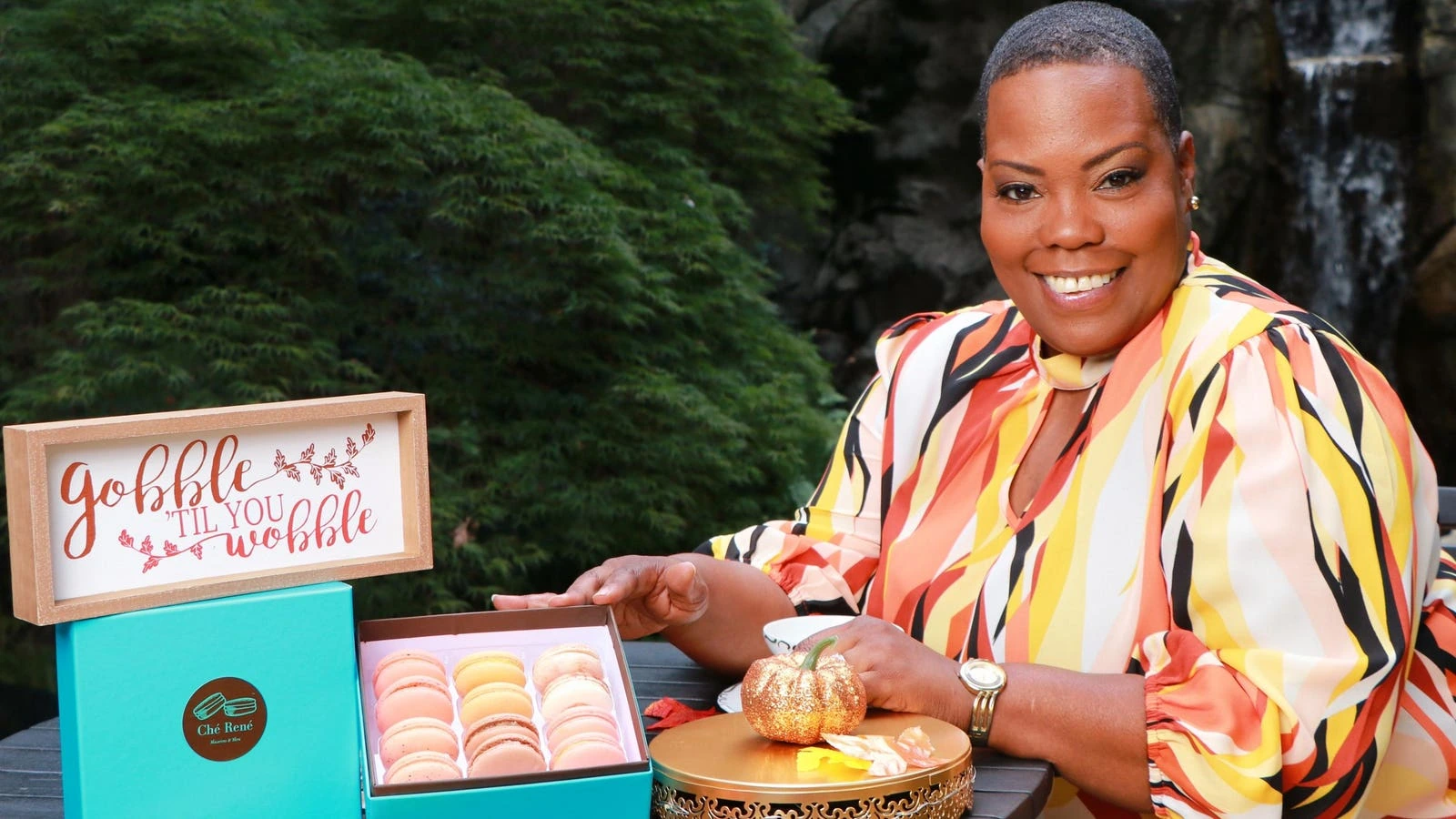
Macaron Queen is a women-owned Atlanta-based confectionery business founded by Finia Jahangard and her daughter Nina Chteoui. If you've landed here wondering whether 'Macaron Queen' is a YouTuber or a TikTok personality, the answer is no. The brand started as a single dessert cart at Atlanta's Lenox Square mall, expanded into boutique mall locations at North Point and Perimeter, and then scaled dramatically into large-scale manufacturing. A Women's World feature reports they now produce 17,000 macarons per day out of a 50,000 square foot facility, and a USA Today contributor piece from December 2024 described them as the largest manufacturer of French macarons in the United States. That's the entity whose net worth we're estimating.
The business operates across at least three distinct sales channels: direct-to-consumer through an online shop (including a 'Build A Box' format in quantities of 15 or 25), retail kiosks and boutiques, and a wholesale/foodservice operation with a 37-product catalog. They also maintain a brand partnerships page for co-promotions and retail placements, and the About page explicitly references expansion into franchising. Most notably, Marcus Lemonis of CNBC's The Profit signed a deal to acquire up to 50% of the business, a deal that aired in a December 2019 episode titled 'Macaron Queen.' That episode alone tells you this is a business with infrastructure and traceable investment interest, not a bedroom brand.
Why net worth numbers vary so much across sites
If you've searched around before landing here, you may have seen wildly different figures or no concrete estimate at all. That's typical for privately held businesses and non-celebrity entrepreneurs. The core problem is that Macaron Queen is not publicly traded, does not file public earnings reports, and the owners have not disclosed personal financials in any verifiable public document.
Because Macaron Queen is not a publicly traded company, any “Crack Queen of La Net Worth” figure you see online should be treated as an estimate based on business signals rather than confirmed personal financials. That leaves estimators, including this one, working from proxy signals: production volume, pricing, wholesale catalog depth, real estate signals, and third-party media coverage.
Different sites weight these differently, which is why you get a $2 million number on one page and an $8 million number on another.
There's also a methodological issue worth naming. Many celebrity net worth sites conflate annual revenue with personal net worth, or they assign a flat multiple to estimated revenue without accounting for cost of goods, facility leases, payroll, or debt. A manufacturing business with a 50,000 square foot facility and daily production runs has significant overhead. Net worth is what's left over after liabilities, not gross revenue. So when you see a headline figure, always ask: is this revenue, profit, or actual net worth? Most sites don't tell you, and that ambiguity accounts for a lot of the spread in estimates.
The net worth estimate and what it's based on
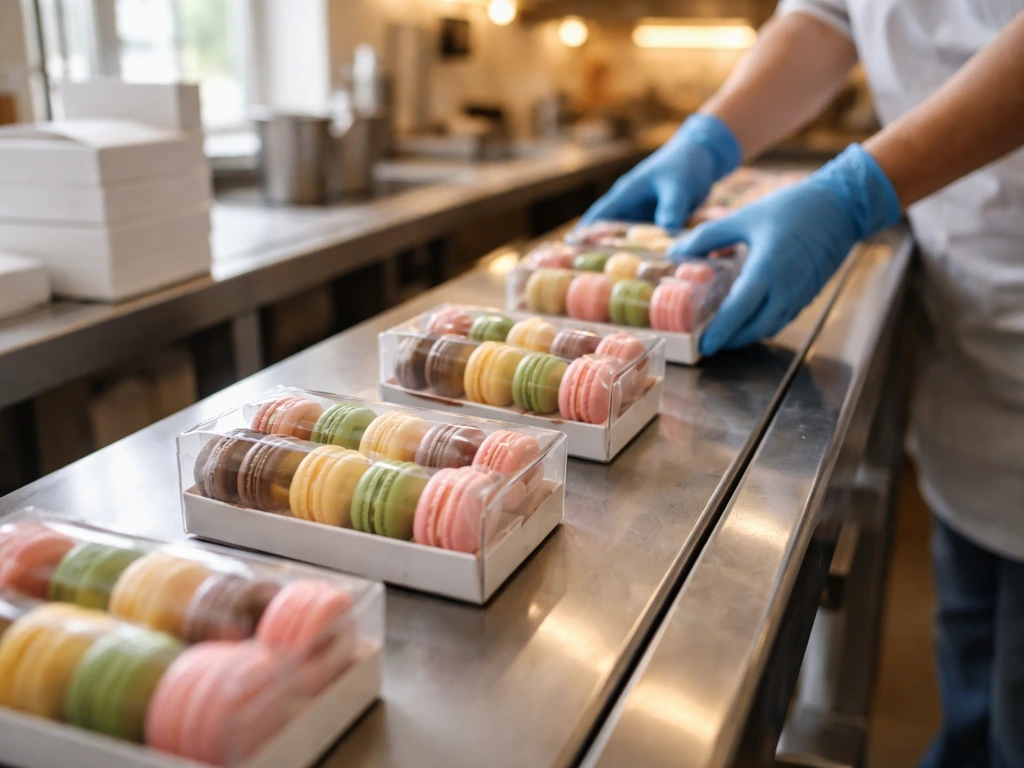
Working from production volume as the primary signal: 17,000 macarons per day at 365 days (assuming high utilization, which their wholesale and foodservice channels support) equals roughly 6. 2 million macarons annually. Their wholesale portal shows 72-pack pricing at $97. 20, which works out to about $1.
35 per macaron at wholesale. Apply that blended wholesale price to even 60% of daily output, with the remaining 40% going through higher-margin retail and direct-to-consumer at roughly $2 per unit (based on their $20 for 10 retail pricing), and you land at gross annual revenue somewhere in the $8 million to $12 million range.
Atlanta Magazine's Feb 9, 2016 article notes the $20 price point for a box of 10 macarons, aligning with the retail pricing context used in this estimate $20 for 10 retail pricing. Subtract a reasonable cost-of-goods and operating expense ratio for a food manufacturing business (typically 55 to 65%), and you get operating profit in the range of $3 million to $5 million annually before taxes and owner distributions.
Net worth is not one year's profit. It's accumulated equity: business value (often a 2x to 3x revenue multiple for established food brands), real property, and personal assets minus any debt. Applying a conservative 1.
5x to 2x revenue multiple to the estimated revenue range, and factoring in that Marcus Lemonis structured a deal for up to 50% of the business, the equity value of Macaron Queen as a brand likely sits between $12 million and $20 million in total business valuation.
The founders' combined personal net worth, accounting for the equity split with Lemonis (if executed as reported), any outstanding business debt, and personal financial positions, most defensibly falls in the $3 million to $8 million range. The $5 million midpoint is the number I'd use if forced to pick one. Since these numbers are often discussed as the pocket queen net worth figure, it helps to understand what each estimate is actually measuring.
Where the money comes from
Wholesale and foodservice
This is almost certainly the biggest revenue driver. A 37-product wholesale catalog, pricing structured for bulk orders, and a dedicated wholesale portal (wholesale.macaronqueen.com) all point to a business that has built out its B2B infrastructure deliberately. Frozen-transport-ready products, as highlighted on their homepage, signal they're moving product across geographic lines, not just locally. Foodservice and retail distribution typically run on thinner margins but much higher volume, and for a manufacturer of this scale, that volume is the engine.
Direct-to-consumer and boutique retail

The online shop with customizable box builds and the mall boutiques carry better margins but lower volume. These channels also serve a brand-building function, keeping Macaron Queen visible to consumers who then influence foodservice and gifting demand. The 'Build A Box' format at 15 or 25 macarons is a smart average-order-value play that pushes buyers toward larger purchases.
Brand partnerships and events
The brand partnerships page and early history (private parties, celebrity events, fashion spreads, music videos, movie sets) suggest this revenue stream is real but supplementary. Event catering and placement partnerships don't typically drive the majority of revenue for a scaled manufacturer, but they reinforce premium positioning and can carry strong margins on a per-event basis.
Franchising and the Lemonis deal
The About page's mention of franchising and a contact email for franchise applications suggests the brand has at least explored licensing its model. If franchising was executed post-Profit episode, franchise fees and royalties could represent a separate, recurring income stream. The Lemonis deal itself, depending on how it was structured and whether the acquisition of up to 50% actually closed, may have involved a capital injection that altered the founders' personal liquidity and net worth positioning significantly.
Assets and lifestyle signals people use to estimate wealth
There's a Fort Lauderdale public property record that lists 'JAHANGARD, FINIA Z' and references Nina Chteoui in the same document context. Without confirmed ownership structure or pricing, this only tells us there's a potential real estate connection to Fort Lauderdale, not the value of the asset. Still, it's the kind of public signal net worth researchers use. The 50,000 square foot production facility is a significant asset or lease obligation depending on ownership structure; if owned, it represents meaningful real property. The Macaron Queen trademark registration (on file with Justia, naming Finia Jahangard) is a formalized intellectual property asset with its own valuation implications for any future licensing or acquisition.
On the lifestyle side, the business's trajectory, from a mall cart to what USA Today describes as the largest French macaron manufacturer in the US, strongly implies material personal wealth accumulation over the roughly twelve-year arc of the brand's growth. That said, lifestyle signals like social media posts, visible travel, or luxury purchases that some researchers use to triangulate wealth are not prominently documented for Finia or Nina in the public research available here, which actually makes the business fundamentals more reliable as the primary estimation basis.
How to pressure-test this estimate yourself
If you want to verify or challenge the numbers above, here's a practical checklist of what to look for using publicly available tools today.
- Search the Georgia Secretary of State's business registry for any registered entity names associated with Macaron Queen, Finia Jahangard, or Nina Chteoui. Active filings will show registered agents, formation dates, and sometimes officer lists, giving you a cleaner picture of corporate structure.
- Check the USPTO trademark database for the MACARON QUEEN mark. Active registration with a named owner confirms IP ownership and can inform brand valuation.
- Look up the CNBC The Profit episode from December 3, 2019, and any post-episode reporting on what Lemonis's deal actually closed at. Deal terms disclosed publicly (even approximate equity percentages) can anchor a business valuation calculation.
- On the wholesale portal (wholesale.macaronqueen.com), note the number of SKUs, pricing tiers, and any minimum order quantities. These let you build a basic revenue model from the B2B side.
- Search for any SBA loans, PPP loan data, or USDA food manufacturing grants associated with the business name. These are public records and can confirm facility investment or working capital levels.
- Check Fort Lauderdale and Fulton County (Atlanta) property records for any real estate owned under Jahangard or Chteoui names. Public property appraiser sites publish assessed values.
- Look for any franchise disclosure documents (FDD) filed with the Federal Trade Commission or individual state regulators if they pursued franchising. FDDs require detailed financial disclosures and are public.
- Search Google News for any interviews after 2020 where the founders discuss revenue, facility size, or distribution reach. Post-Profit episode press coverage often includes more specific financial language than earlier features.
What the future earning picture looks like
The trajectory here is genuinely strong. Scaling to 17,000 units per day from a mall cart is not a small achievement, and 'largest French macaron manufacturer in the USA' is a positioning statement that, if accurate, suggests real competitive moat. The frozen-transport-capable product line opens national and potentially international wholesale distribution without requiring geographic retail expansion. If franchising activates meaningfully, it becomes a capital-light growth path. And food manufacturing businesses at this scale tend to attract acquisition interest from larger confectionery or specialty food companies, which would represent a significant liquidity event for the founders.
The risk factors worth watching: food manufacturing is margin-sensitive and commodity-cost-dependent (almond flour is the core ingredient in French macarons and is subject to supply chain volatility), and a 50,000 square foot facility carries substantial fixed overhead. The Lemonis deal structure, depending on how it evolved, may also affect how much of future upside accrues to the founders versus their investor.
That said, for women entrepreneurs who built a manufacturing business from a dessert cart, Finia Jahangard and Nina Chteoui represent exactly the kind of wealth-building story that deserves a careful, grounded financial profile rather than a throwaway headline number. If you are looking up a queen manica money net worth figure, the methods above explain why the range can feel confusing throwaway headline number.
The $3 million to $8 million personal net worth range reflects what the business fundamentals can actually support, and the upside case for crossing $10 million in combined personal wealth is plausible if distribution and franchising continue to scale. This is a very different wealth profile from social media personalities like the Slot Queen or others in the women-led influencer space who build wealth primarily through platform monetization.
Macaron Queen's earnings are tied to physical goods, production infrastructure, and B2B relationships, which makes the business more stable but also harder to estimate without private financials. Because of that, any discussion of the pocket queen net worth should be treated as an estimate based on available business signals rather than confirmed filings.
FAQ
Does the $3 million to $8 million figure refer to the founders’ personal net worth or the value of the business?
In this estimate, it is aimed at the founders’ personal net worth, not total enterprise value. Business valuation can be meaningfully higher because it includes the company’s assets and operating value, while personal net worth depends on how much equity was owned by the founders after any outside investment, debt, and distributions.
Why do different websites show wildly different “net worth” numbers for Macaron Queen?
Most discrepancies come from mixing up revenue, profit, and net worth, plus using different multiples of revenue when there are no public financial statements. Some also treat one-time events or estimated “monthly views” as income signals, even though a manufacturing business’s fundamentals are better reflected in production volume, wholesale capacity, and margins.
What is the biggest verification step if I want to confirm whether the business scale is real?
Look for consistent, third-party signals that match the production claim, such as recurring wholesale ordering activity, the breadth of the foodservice catalog over time, and evidence that distribution is nationwide (for example, shipping-ready or frozen-ready product claims plus stable retail placements). One-off press mentions are less reliable than operational continuity.
How can I sanity-check the per-macaron pricing assumption without seeing financials?
Use what you can observe directly, like listed wholesale pack pricing and retail price points, then compare the implied gross margin range to what food manufacturing commonly supports after labor and ingredient costs. If a net worth estimate assumes extremely high margins that don’t fit a manufacturing cost structure, the resulting equity value is likely overstated.
Does food ingredient cost volatility (almonds) meaningfully change net worth estimates?
Yes. Almond flour price swings can compress margins quickly, especially if contracts are short-term or if the brand cannot pass costs to wholesale and retail buyers. A net worth estimate based on a single-period price level can be optimistic if it ignores cost-of-goods variability.
Could debt or lease terms at the 50,000 square foot facility drastically change net worth?
They can. If the facility is leased with long-term commitments, that affects profitability but not necessarily asset ownership. If it is debt-financed or encumbered with liens, the company and founders’ effective equity value drops even if revenue looks strong.
What would I look for to confirm whether the Marcus Lemonis deal truly reduced the founders’ ownership?
You would want confirmation of the acquisition closing and the actual equity percentage transferred, which can be reflected in later ownership mentions, official statements, or corporate records that show the investor’s stake. Without that, estimates that assume founders kept most upside may be too high or too low.
If franchising was mentioned, why doesn’t it automatically mean a higher net worth today?
Franchising can be explored without generating meaningful revenue yet. Net worth impact depends on whether franchise fees were collected, the number of operating franchise locations, the timing, and whether the brand’s model is franchise-ready (supply chain, training, quality control). Early “franchise application” signals are not the same as mature royalty streams.
Are lifestyle signals like luxury travel or social media purchases useful for checking this estimate?
They can be misleading. For private owners of a manufacturing business, visible spending may lag behind income, or it may come from distributions, loans, or non-business assets. Lifestyle triangulation is weaker than operational evidence like product throughput, pricing, and distribution footprint.
How do I avoid a common mistake when searching for “net worth” for Macaron Queen?
Don’t treat any single headline number as net worth. Instead, identify whether the site is estimating personal net worth, business enterprise value, or even annual revenue. Then check whether the underlying method uses reasonable manufacturing cost assumptions and an equity multiple rather than a simple guess.
What’s a practical way to re-run the estimate if I find new pricing or production info?
Update the inputs, not the method. Use the latest wholesale and retail prices you can verify, adjust the expected mix (wholesale versus direct-to-consumer), apply a plausible cost-of-goods ratio for confection manufacturing, and then re-calculate revenue and operating profit before applying an equity multiple. Changing the multiple alone is usually the biggest driver of swings.
Next Article
Trick Shot Queen Net Worth: Estimated Income Breakdown
Estimate Trick Shot Queen net worth with income breakdown from ads, sponsorships, platforms, merch, and why figures vary