
Madame Queen's estimated net worth at death is not a number you will find in a probate filing or a newspaper obituary. What we do have is a well-documented peak wealth figure of around $500,000 at the height of her career in the late 1920s and early 1930s, which translates to roughly $7 million in today's dollars. By the time she died quietly in December 1969, that figure had almost certainly declined, but credible historical accounts suggest she was still considered wealthy. The honest answer is a range somewhere between $50,000 and $200,000 at death in 1969 dollars, based on what we know about how her income streams collapsed after the mid-1930s and how she spent her final decades. Here is how to think about that estimate and why the number is so hard to pin down precisely. If you are also comparing other entertainers’ earnings, you may find the queen of scotty road net worth question is a useful contrast to how hard Madame Queen’s estimate is to verify.
Madame Queen Net Worth at Death: Best Estimate and Sources

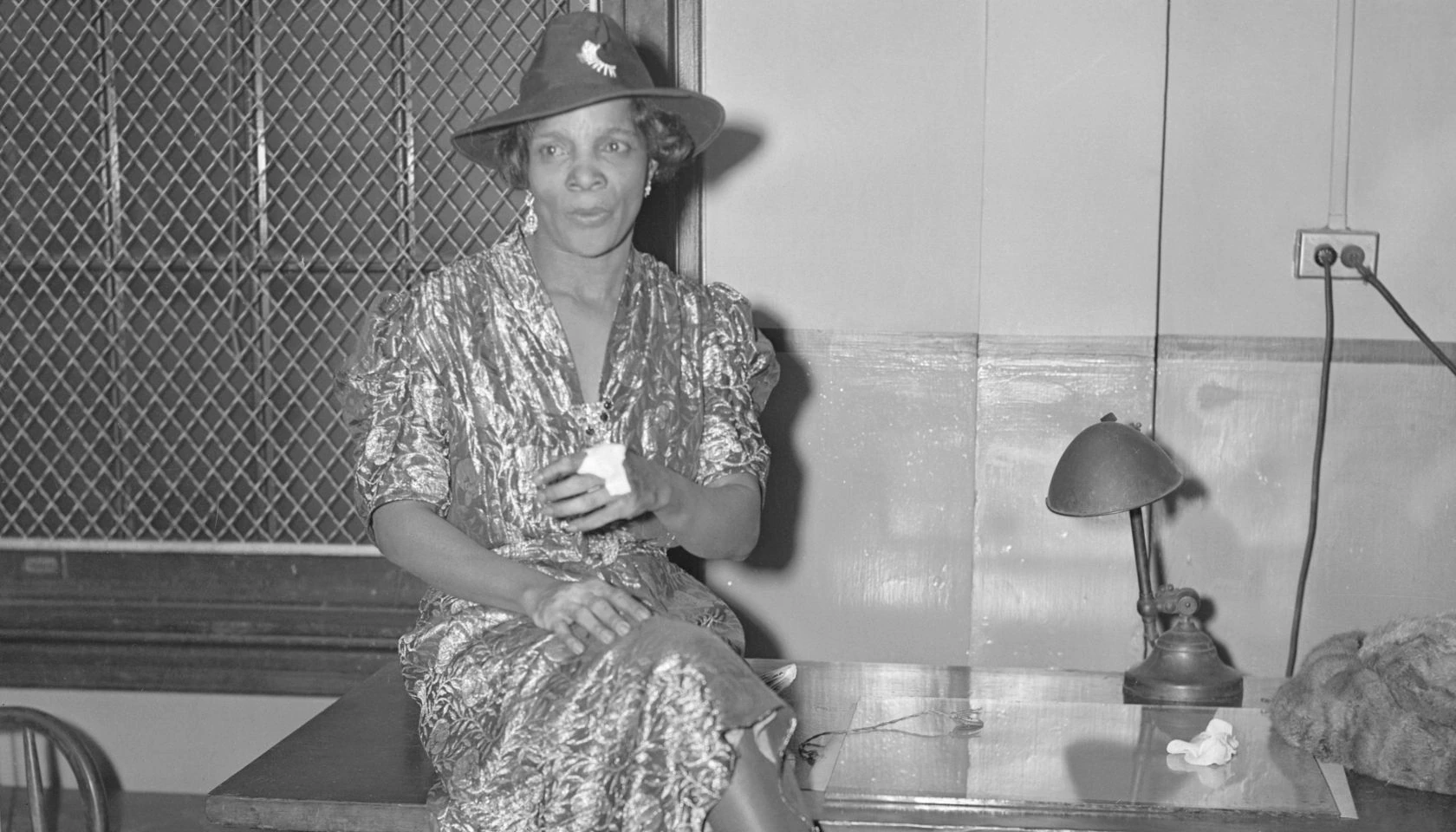
Who Madame Queen actually was

"Madame Queen" is the nickname most commonly associated with Stephanie St. Clair, a Caribbean-French immigrant who built one of the most powerful illegal gambling operations in 1920s and 1930s Harlem, New York. She is also known by the monikers Queenie, Madame St. Clair, and the Queen of the Policy Rackets, so if you have seen those names while researching this topic, they all refer to the same person. Born on December 25, 1897, likely in Martinique or Guadeloupe, she arrived in the United States around 1911 and eventually settled in Harlem.
Her financial story begins in earnest on April 12, 1917, when she invested $10,000 of her own money into a clandestine lottery game in Harlem. That initial capital seeded what became a full-scale numbers policy operation, essentially an illegal daily lottery where Harlem residents placed small bets and St. Clair's organization paid out winnings while keeping the house margin. By the late 1920s she was running a sophisticated numbers bank, employing hundreds of runners and collectors. She was arrested on December 30, 1929 while associated with a numbers house, which gives you a precise anchor for when her operation was at full speed and under law enforcement pressure simultaneously. Sky HISTORY describes her legacy as built on a combination of wealth, power, and community activism, which is a fair summary of why the "Madame Queen" title stuck.
Her career did not end cleanly. By the mid-1930s she had quit the numbers racket, partly because Dutch Schultz and organized crime figures had muscled in on Harlem's policy operations. Her battle with Schultz reportedly cost her three-quarters of a million dollars in legal fees and losses. In 1938 she shot her husband, Sufi Abdul Hamid, and was convicted. After her release she largely lived in seclusion. She died in December 1969 in a Long Island psychiatric facility, and her death went unmentioned in any newspaper of the era, which tells you a great deal about how difficult this net worth-at-death question is to answer with hard documentation.
What "net worth at death" actually means in this context
Net worth at death is the total value of a person's assets minus their total liabilities at the moment they died. For a living celebrity with recent tax filings, business valuations, and real estate records, you can get reasonably close to a real number. For a figure like Stephanie St. Clair, who ran illegal enterprises in the 1920s, lived in relative seclusion for her final three decades, and died without press coverage, the methodology shifts. You are reconstructing an estimate from scattered historical breadcrumbs: documented wealth at peak, known expenditures and losses, qualitative descriptions of her later-life financial condition, and any available property or legal records.
The word "estimated" carries real weight here. When Wikipedia describes her as dying "quietly and still wealthy in 1969," that is a qualitative historical judgment, not a probate document. It tells you her wealth did not disappear entirely, but it does not tell you the dollar figure. Any net worth-at-death estimate for Madame Queen is built from inference, and any site that gives you a single confident number without explaining the methodology is doing you a disservice. If you are specifically looking for the Jimmy Queen net worth question, this range is the closest you can get with the available sourcing net worth at death.
The best-supported net worth estimate at death

The most reliable starting point is the peak figure: VICE and other historically-grounded sources cite $500,000 as her personal fortune at the height of her career, approximately equivalent to $7 million today. That figure dates to roughly the late 1920s to early 1930s, when her numbers operation was at its largest. From there, you have to account for about 40 years of financial erosion before her 1969 death.
Working backwards from what we know: her legal battles and losses tied to Dutch Schultz were significant, described as costing her three-quarters of a million dollars in total when you combine legal costs and operational disruption. She exited the numbers racket by the mid-1930s, cutting off her primary income source. After the 1938 shooting conviction she served time and then lived in seclusion. One documented financial detail from her later years is that $10,000 of her husband Sufi Abdul Hamid's money was placed in trust for her, suggesting that by that period her accessible liquid assets were relatively modest. She likely retained some savings, possibly some real estate holdings, and any investments she had made during her peak earning years.
The most defensible estimate for her net worth at death in 1969 is in the range of $50,000 to $200,000 in 1969 dollars, which would be roughly $400,000 to $1.6 million in today's money. The lower end accounts for significant legal costs, decades without active income, and medical or custodial expenses late in life. The upper end reflects the possibility that she preserved real estate, cash savings, or other investments from her peak years. "Still wealthy" by the standards of a 72-year-old woman in a Long Island facility in 1969 could mean many things, and this range tries to capture that uncertainty honestly.
How she built her money and how it likely changed over time
Understanding the income streams helps you understand why the at-death figure is so much lower than the peak. Her wealth came from a small number of sources, all of them heavily concentrated in a single business that she eventually had to abandon.
- Numbers policy operation: her core business from 1917 through the mid-1930s, structured as what she essentially created as a policy bank in Harlem. The house margin on an illegal daily lottery was high, and with hundreds of runners working for her, the cash flow at peak was substantial.
- Operational reinvestment: a successful numbers operator of her scale would have cycled profits back into paying employees, bribing officials, and covering legal costs, all of which reduced what she actually kept.
- Real estate and savings: historically, successful Harlem entrepreneurs of that era moved cash into property as a store of value. There is no itemized record of her real estate holdings, but this is the most likely vehicle for preserved wealth late in life.
- Trust arrangement from Sufi Abdul Hamid: the documented $10,000 trust is the only specific late-career financial structure we can point to, and it signals a modest, protected cash reserve rather than active business income.
- Community spending and activism: St. Clair was known for spending on community causes and political campaigns, including newspaper ads challenging law enforcement. This is wealth deployed, not accumulated, and it reduces the net worth picture.
The critical shift in her income story happens in the mid-1930s when she exits the numbers racket. After that point there is no documented active business income. Whatever she had accumulated by then is what she was living off for the next three-plus decades. No royalties, no brand deals, no business filings after that transition, just whatever savings and assets she had managed to preserve through the Dutch Schultz conflict, the legal costs, and a conviction.
Assets, debts, and what to include in the estimate

When you try to reconstruct a net worth at death for a historical figure like Madame Queen, the categories matter as much as the numbers.
| Category | What We Know | How It Affects the Estimate |
|---|---|---|
| Cash and liquid savings | No documented figures for late life; $10,000 trust from Hamid is the only specific reference | Likely modest contribution to overall net worth at death |
| Real estate | No itemized property records publicly available; plausible based on era and wealth level | Could be the largest single asset if she retained Harlem-era property |
| Business holdings | She exited the numbers racket by mid-1930s; no documented businesses after that | Minimal or zero contribution after mid-1930s |
| Legal liabilities and costs | Three-quarters of a million dollars in losses tied to Dutch Schultz conflict; 1938 conviction costs | Major drag on accumulated wealth; significantly reduced peak net worth |
| Medical and custodial costs | Died in a Long Island psychiatric facility; late-life medical costs are plausible | Likely reduced final liquid assets |
| Illegal enterprise proceeds | Core income source 1917-mid 1930s; cash-based and largely undocumented | Forms the foundation of peak wealth estimate but leaves no paper trail for verification |
One important note: because her primary income was from an illegal lottery operation, the financial documentation that would normally exist for a legitimate business simply does not. There are no corporate filings, no audited accounts, no partnership agreements in the public record. The cash-based nature of the numbers racket means her peak wealth estimate is itself built on qualitative accounts and the $500,000 figure that has been repeated across credible historical sources, not on primary financial documents.
Where the numbers come from: how this estimate is sourced
The $500,000 peak wealth figure originates from historical accounts of her career and has been cited by VICE through its No Man's Land podcast research, All That's Interesting, and multiple other outlets covering her biography. It functions as a well-replicated secondary figure, meaning many sources repeat it, but the original documentation behind it is journalistic and historical rather than from a probate filing or tax record. HISTORY.com provides documented anchors like the 1929 arrest and the Dutch Schultz losses. Wikipedia contributes timeline details, including the 1917 initial investment and the 1969 death date. Sky HISTORY adds the framing of her "wealth, power, and activism" combination as the basis for her legacy.
For the at-death estimate specifically, the sourcing is even thinner. Wikipedia's description of her dying "still wealthy" is the strongest qualitative evidence that her estate had some substance, but it is not quantified. The trust arrangement detail from historical reporting gives you one concrete data point for a modest cash reserve in her later years. The absence of newspaper coverage of her death in 1969 means there was no estate-related press coverage to draw from, which is typical for historical figures whose primary activities were extralegal.
Why numbers vary across different sites and how to spot the reliable ones
If you search "Madame Queen net worth" across different sites, you will likely see figures that range from the $500,000 peak claim to vague modern equivalents, sometimes presented as if they represent her net worth at death rather than at peak. If you meant rock band Queen net worth figures, the process for verifying them is usually very different from estimating Stephanie St. Clair’s wealth at death. If you are looking for her exact queen máxima net worth number, this article breaks down why the sources disagree and what evidence exists. Here is why that happens and how to evaluate what you find.
- Valuation date confusion: many sites cite the $500,000 figure without specifying that it refers to her peak in the late 1920s, not her net worth at death in 1969. These are very different numbers, and the distinction matters enormously for a figure whose income stopped 35 years before she died.
- Inflation conversion errors: converting 1920s dollars to today's equivalent is straightforward enough, but some sites apply that conversion to the peak figure and present it as her estate value at death, which inflates the at-death estimate significantly.
- Missing liability deductions: the Dutch Schultz losses alone were documented as costing her three-quarters of a million dollars, but aggregator sites that simply repeat the $500,000 figure rarely subtract known losses from the estimate.
- No disambiguation: "Madame Queen" is also used informally in pop culture and hip-hop contexts. Some search results may reference fictional characters or unrelated public figures. Always verify that any net worth figure you find is explicitly tied to Stephanie St. Clair.
- Aggregator replication without new sourcing: sites that repeat the same figure with no additional research or sourcing are drawing from the same secondary pool. More repetitions of a number do not make it more accurate.
A reliable source will tell you when the estimate applies, acknowledge the difference between peak wealth and at-death wealth, note the absence of probate documentation, and explain what assumptions are built into the figure. For comparison, you can see how this kind of transparency works in profiles of better-documented figures, like an exploration of Queen Latifah's net worth, where income streams, business ownership, and asset categories are traceable through public records. St. Clair's situation is fundamentally different because of the era and the nature of her business, but the analytical framework is the same.
How to research this further right now
If you want to go deeper than this article and try to tighten the estimate, here are the most productive places to look and what you are actually trying to find.
- New York City property records: search the NYC Department of Finance's ACRIS database for property records tied to Stephanie St. Clair, Madame St. Clair, or her known Harlem addresses. Any real estate she held would show up here if it was held in her name, and this is the most likely source of undocumented asset data.
- New York County Surrogate's Court: probate records in New York are filed with the Surrogate's Court in the county where the person resided at death. If she died in Long Island (Nassau or Suffolk County), try those Surrogate's Courts. A probate filing would list assets and debts at death directly.
- Newspaper archive searches: use ProQuest Historical Newspapers or the Chronicling America database at the Library of Congress to search for coverage of her 1938 trial, the Dutch Schultz conflict, and any estate-related news. Even small mentions can anchor financial data points.
- Federal court records: her legal battles with law enforcement and potentially with Dutch Schultz's organization may have generated federal records. PACER (Public Access to Court Electronic Records) covers federal cases; for historical records, the National Archives holds older federal court files.
- Academic and biographical sources: several academic historians have written about St. Clair in the context of Harlem economics and Black entrepreneurship in the early 20th century. These sources sometimes cite primary documents that have not made it into popular press coverage.
- Social Security Death Index: confirms death date and location, which helps narrow which county's probate records to search.
- Historical biographies and documentary research: the No Man's Land podcast (VICE) and the Sky HISTORY profile are good starting points for a bibliography of secondary sources that may cite primary documents you can then trace directly.
The single highest-value action right now is checking the Surrogate's Court records for Nassau or Suffolk County for a probate filing from late 1969 or 1970. If one exists, it would contain the closest thing to a verified net-worth-at-death figure available for Stephanie St. Clair. If none exists, that itself tells you something: either her estate was too small to trigger formal probate under New York's thresholds at the time, or assets were held in ways that bypassed the probate process entirely.
For broader context on how wealth is estimated for historical and contemporary figures connected to the "queen" moniker in popular culture, it is worth comparing methodologies. The way wealth is reconstructed for someone like a modern queen-titled public figure differs dramatically from historical reconstruction, simply because the paper trail is richer today. St. Clair's case is a reminder of how much documentation shapes what we can say with confidence.
The bottom line on Madame Queen's net worth at death
Stephanie St. Clair, known as Madame Queen, died in December 1969 with an estate that historical accounts describe as still substantial but undocumented in any public financial record. If you are also comparing celebrity fortunes, you might find the discussion of adam lambert net worth before queen useful for context. Her peak wealth of approximately $500,000 in late-1920s dollars (around $7 million today) was the high point of a career that effectively ended by the mid-1930s. After accounting for documented losses tied to the Dutch Schultz conflict, legal costs from her 1938 conviction, and decades without active business income, the most defensible at-death estimate is in the range of $50,000 to $200,000 in 1969 dollars, approximately $400,000 to $1.6 million in current purchasing power. That range is wide because the evidence is thin, and being honest about that is more useful than picking a single number with false confidence. If you want to narrow it, the Surrogate's Court probate records and ACRIS property database are your best next moves.
FAQ
Does Madame Queen’s “$500,000” figure represent her net worth at the time of her death?
No. The $500,000 claim is described as peak wealth during the late 1920s to early 1930s, when her numbers operation was at its largest. The at-death estimate is lower because her main income stream ended by the mid-1930s, and later-life liabilities and care costs are not precisely documented.
If there is no newspaper obituary in 1969, does that automatically mean she had a small estate?
Not automatically. Lack of obituary coverage often reflects social visibility and press priorities rather than estate size, especially for people who died in institutions or whose earlier activities were extralegal. A probate file may still exist even if local papers never mention it.
Where would probate records be most likely to show up, and what if I find nothing?
Start with Surrogate’s Court records for Nassau or Suffolk County (Long Island), covering filings around late 1969 into 1970. If no filing appears, it can mean the estate was below probate thresholds, assets were held in trusts or jointly, or there were transfers that reduced the need for formal administration.
What exactly should I look for in probate to verify a net worth-at-death figure?
Look for inventories, schedules of assets, and statements of liabilities, not just a headline “estate value.” Also note whether the document is for administration of an estate versus a trust-related accounting, because those can change what “net worth” would practically include.
How should I treat “still wealthy” descriptions in biographies when I see them online?
Treat them as evidence of substantial value, not a dollar amount. The phrase usually can’t tell you whether she had most wealth tied up in illiquid assets (like property) versus cash, and it often excludes liabilities unless a financial summary is provided.
Why do some websites show wildly different modern-dollar numbers for her net worth?
Most discrepancies come from mixing up peak wealth with at-death wealth, then applying inflation or “equivalents” without stating the base year. To evaluate a claim, confirm the date the original figure refers to (peak versus 1969), and whether the site explains the inflation method.
If she had $10,000 held in trust from her husband, does that set a floor for her net worth in 1969?
It suggests she had at least some accessible or designated funds, but it does not automatically equal her total net worth. Trust terms, timing of distributions, whether the $10,000 was the only liquid asset, and whether she had additional real estate or savings all affect the overall estate value.
Could she have hidden wealth in real estate or other assets that bypassed probate reporting?
Yes. Wealth can be concentrated in property held in specific legal forms (for example, joint ownership) or transferred before death, which can reduce what goes through probate inventories. That’s why the article points to using property records alongside court filings, since real estate can persist even when an estate administration record is absent.
What is the most common mistake when estimating net worth for historical figures like Madame Queen?
Using a single repeated “fortune” number as if it were net worth at death. The better approach is to separate (1) peak wealth, (2) documented losses and legal costs, (3) the loss of income after the mid-1930s, and (4) later-life liquidity and liabilities, then build a range rather than a false exact figure.
If I want to tighten the estimate beyond a broad $50,000 to $200,000 range, what should I do first?
Prioritize finding any probate or surrogate filings from late 1969 to 1970, then cross-check property records through ACRIS for Suffolk and Nassau County. Those two steps are the highest-yield path to determining whether her wealth at death was mostly cash, real estate, or held via structures that don’t show up as a simple “estate value.”
Net Worth Queen Latifah: Estimated Value, Forbes, and Why It Varies
Queen Latifah net worth estimate from Forbes, why figures vary, and wealth drivers across music, acting, producing, and