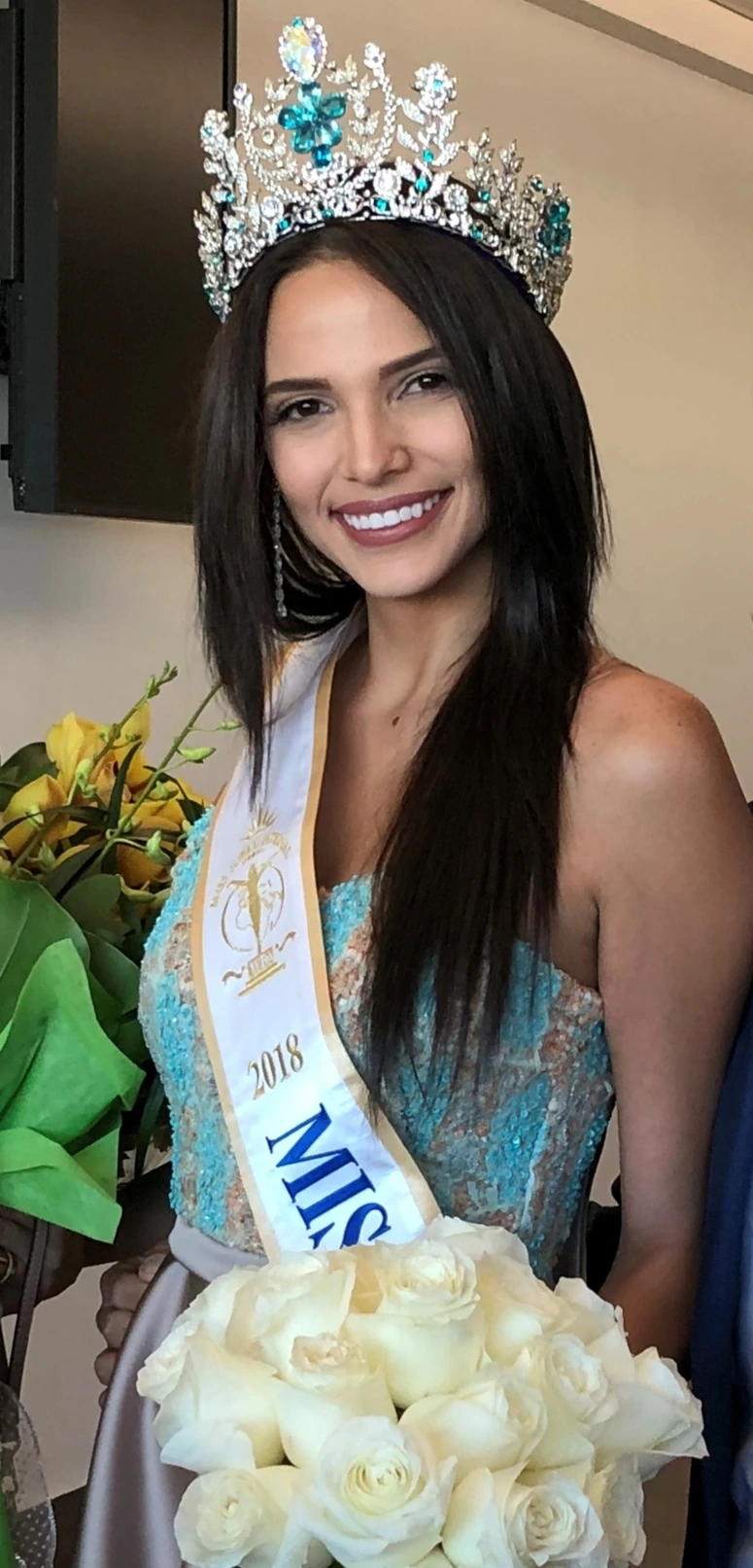
If you searched 'Māori Queen net worth,' the answer depends entirely on which Māori Queen you mean. There have been several significant figures linked to that title, and they live in very different historical and financial contexts. The most likely person you are looking for in 2026 is Ngā Wai Hono i te Pō, who became the current Māori Queen in August 2024 following the death of her father, Kiingi Tūheitia. A credible, evidence-based net worth figure for her does not currently exist in the public record, and this article will explain exactly why that is, how to think about it anyway, and what sources to actually trust.
Māori Queen Net Worth: How to Identify and Estimate Wealth

Jordan Hartwell
4 Jun 2026
Which Māori Queen are we actually talking about?

The term 'Māori Queen' is applied to a small number of distinct women across very different historical periods, and the search results for this phrase often blend them together in ways that cause real confusion. Here is a quick breakdown of the three names you will most commonly encounter.
| Figure | Lifespan | Role / Title | Relevance to 'Net Worth' Searches |
|---|---|---|---|
| Te Puea Hērangi | 1883–1952 | Kīngitanga leader, granddaughter of King Tāwhiao; sometimes called 'Princess Te Puea' | Historical figure; no meaningful net worth data; estate records exist in planning/legal archives |
| Te Arikinui Dame Te Atairangikaahu | 1931–2006 | Māori Queen from 1966 until her death | The Scotsman obituary described her as the 'richest Māori woman,' citing a figure over £3 million; treat as secondary/speculative without cross-verification |
| Ngā Wai Hono i te Pō | Born 13 January 1997 | Current Māori Queen since August 2024 | The person most searchers mean today; no verified personal wealth figure in the public record as of June 2026 |
It is worth noting that Te Puea Hērangi, while enormously influential within the Kīngitanga movement, was not actually the sovereign. She was a leader who emerged during the First World War period and became one of the most revered figures in Kīngitanga history, but calling her 'Māori Queen' is technically a misnomer. If you land on content that conflates her with the actual queens, that is a red flag about the quality of that source. For this article, the primary focus is Ngā Wai Hono i te Pō, with relevant context on Te Atairangikaahu where evidence exists.
Why putting a number on a cultural leader's net worth is genuinely difficult
Net worth, as this site approaches it, means the best-supported estimate of a person's total assets minus liabilities, built from traceable evidence. For celebrities, that evidence typically includes music royalties, brand deals, real estate filings, company ownership disclosures, and credible reporting from outlets with access to financial records. Cultural leaders, especially those whose role is rooted in hereditary and spiritual authority rather than commercial activity, almost never generate that kind of paper trail.
The Māori Queen's role sits within the Kīngitanga movement, a constitutional and cultural institution rather than a business or entertainment brand. Institutional wealth tied to entities like Waikato-Tainui (which publishes quarterly governance reports, most recently for Q2 2025-26) is tribal and collective, not personal. The assets of the Kīngitanga, the marae at Tūrangawaewae, ceremonial land holdings, and cultural infrastructure belong to the iwi, not to the individual who holds the title. Confusing institutional wealth with personal wealth is one of the most common errors you will see in low-quality 'net worth' content about figures like this.
There is also a deeper issue: New Zealand's public financial disclosure requirements for cultural leaders are minimal compared to, say, a publicly listed company executive or an elected politician. That means even diligent research will hit a ceiling. Being honest about that ceiling is actually more useful to you than a confident-sounding number with no foundation.
Sources worth trusting and sources worth skipping

Not all sources are equally useful here, and the hierarchy matters a lot when the public record is thin. Here is how to rank what you find.
- Official and institutional records first: Te Ara (the Encyclopedia of New Zealand), NZ History, the Dictionary of New Zealand Biography, the Department of the Prime Minister and Cabinet honours records, and Waikato-Tainui's own governance publications are the most authoritative starting points. They won't give you a dollar figure, but they establish identity, roles, and institutional affiliations accurately.
- Reputable biographical and news reporting second: Major outlets including The Guardian, the New Zealand Herald, and the Los Angeles Times have covered figures like Te Atairangikaahu with editorial oversight. The Guardian's September 2024 profile of Ngā Wai Hono i te Pō is a good example of credible contemporary coverage.
- Legal, planning, and archival records third: The Waikato District Council's planning documents reference the 'Estate of Te Puea Herangi,' and the National Library of New Zealand holds obituary records for Princess Te Puea. These are useful for tracing historical asset claims, not modern wealth.
- Secondary biographical aggregators with caution: The Scotsman's obituary claim that Te Atairangikaahu died as the 'richest Māori woman' with a fortune over £3 million should be treated as a starting point for further verification, not a confirmed figure. Currency, date of measurement, and methodology are all unclear in that snippet.
- Celebrity net worth websites with heavy skepticism: Sites that post confident dollar figures for Ngā Wai Hono i te Pō without citing asset disclosures, business filings, or credible reporting are essentially guessing. One such page explicitly acknowledges 'unclear origins of wealth' while still publishing a number, which tells you everything you need to know about its reliability.
Building a realistic wealth profile: what income streams and assets could plausibly exist
Even when hard numbers are unavailable, you can build a reasonable framework by cataloguing the income streams and asset types that are plausible given a person's documented roles. For Ngā Wai Hono i te Pō, here is what the traceable record actually supports as of June 2026.
Governance and institutional roles

Wikipedia documents her as a board member of Waikato-Tainui College for Research and Development. Board roles within Māori entities can carry governance fees or honoraria, though specific compensation is not publicly disclosed. This is an income indicator, not a confirmed figure. Her role as Māori Queen may also carry institutional support from the Kīngitanga, but that support structure is not equivalent to a personal salary in the conventional sense.
Media and public engagement
Since ascending to her role in August 2024, Ngā Wai Hono i te Pō has received significant media coverage, including major profiles in The Guardian and ongoing coverage in the New Zealand Herald. For an example of that contemporary coverage, the NZ Herald reported on Ngā Wai Hono i te Pō being honoured at Huria Marae ongoing coverage in the New Zealand Herald. Cultural leaders of her prominence sometimes receive speaking fees, honoraria for event appearances, or income tied to documentary and media projects. There is no public record of such income for her specifically, so this remains a plausible category rather than a confirmed one.
Personal assets
At 29 years old as of 2026, Ngā Wai Hono i te Pō's personal asset base is unlikely to be substantial relative to older public figures this site covers. She was 27 when she ascended to her role. There are no publicly documented property holdings, investment portfolios, or business ownership stakes in her name that have been verified by credible reporting.
Historical context: Te Atairangikaahu
For those specifically researching the previous Māori Queen, Te Arikinui Dame Te Atairangikaahu reigned for 40 years (1966–2006) and received honours including a DBE in 1970, documented by the DPMC. She accumulated significant personal and institutional prestige during that period. The Scotsman's claim of a fortune exceeding £3 million at the time of her death in August 2006 is the only circulating figure, but without confirmation of whether that figure represents personal net worth, tribal assets, or an amalgamation of both, it cannot be treated as definitive. It is a useful benchmark, not a verified fact.
What counts and what doesn't: clearing up the most common myths
This is where a lot of 'net worth' content about cultural leaders goes badly wrong, so it is worth being direct about the categories of claims you should dismiss immediately.
- Tribal or iwi assets are NOT personal wealth. Waikato-Tainui is a major economic entity with significant assets, but those belong collectively to the tribe. Attributing tribal wealth to the Māori Queen personally would be like attributing the assets of a country to its head of state as personal income.
- Ceremonial titles and land holdings tied to the Kīngitanga, including Tūrangawaewae Marae, are institutional. They are not the personal property of whoever holds the title.
- Honorary recognition (DBE, ONZ, and similar awards) carries no monetary value and should never appear in a net worth calculation.
- Round-number estimates on celebrity net worth aggregator sites (you will see figures like '$1 million' or '$5 million' posted without any sourcing) are almost always placeholder figures. If you cannot trace the number to an asset, a business filing, or a credible reported estimate, it is not evidence.
- Historical claims about Te Puea Hērangi's personal finances, including a Māori-language reference in NZ History material to a financial claim of 'five thousand pounds,' are historical assertions embedded in biographical narratives. They require careful archival source tracing before they can be treated as factual wealth data.
How to interpret a range-based estimate when hard numbers aren't available
When evidence is limited, the intellectually honest approach is to use a range rather than a single figure, and to label that range with its confidence level. Here is how this site's methodology handles that for a figure like Ngā Wai Hono i te Pō.
| Confidence Level | What It Means | Example for Ngā Wai Hono i te Pō |
|---|---|---|
| High confidence | At least one credible source independently documents a specific asset, income stream, or reported figure | No high-confidence figure currently exists in the public record |
| Moderate confidence | Multiple circumstantial indicators (board roles, media presence, documented employment) point to a plausible range | Governance roles and institutional support suggest some income; personal net worth likely in the low-to-mid hundreds of thousands NZD at most, based on documented roles and age profile |
| Low confidence / speculative | Single secondary source, no asset documentation, or celebrity aggregator figures without sourcing | Figures circulating on celebrity net worth sites for this individual fall into this category and should be disregarded without further verification |
The honest range-based conclusion for Ngā Wai Hono i te Pō as of June 2026 is: there is no verified personal net worth figure, the circumstantial evidence from her documented roles does not support any of the larger numbers circulating online, and any estimate you see without sourcing should be treated as speculation.
Celebrity Net Worth’s net worth-style write-up discusses uncertainty around Nga wai hono i te pō’s wealth and highlights the lack of clear, verifiable evidence larger numbers circulating online. If you came here from searches for Missy Park title nine net worth, the same rule applies: without verifiable records, any number is likely speculation.
For Te Atairangikaahu, the most credible secondary figure is the 'over £3 million' claim from The Scotsman's 2006 obituary, but that requires verification against primary sources before it can be confidently stated.
This is actually similar to the challenge you encounter when researching the financial profile of other culturally significant title-holders, where institutional prestige and personal financial data are routinely conflated. The same careful source-tracing discipline applies whenever the subject's wealth is intertwined with a broader cultural or competitive institution rather than a commercial brand.
Where to check for updates and how to verify new information
Because the public record on this topic is genuinely thin, any new verifiable information that emerges will be worth tracking. Here is exactly where to look and what to look for.
- New Zealand Herald and RNZ (Radio New Zealand): These are the most consistent sources of current coverage on Ngā Wai Hono i te Pō. Search her name directly and filter by date to find the most recent reporting. Look specifically for any coverage of business appointments, governance roles, or formal remuneration disclosures.
- Waikato-Tainui quarterly reports: Published as PDFs and accessible via the Waikato-Tainui website (the Q2 2025-26 report was posted in March 2026). These cover governance structures and can reveal whether her roles carry documented compensation. They will not disclose personal net worth, but they are the closest thing to a traceable institutional record.
- Companies Office (New Zealand): Search the New Zealand Companies Office register for any directorship or shareholding in her name. This is publicly accessible and would reveal business interests if any exist on the formal record.
- DPMC honours database: Useful for confirming titles and roles, not for financial data, but important for identity verification when sources disagree about which 'Māori Queen' they are referencing.
- Archival sources for historical figures: For Te Atairangikaahu or Te Puea Hērangi, the National Library of New Zealand's catalogue and Te Ara's Dictionary of New Zealand Biography are the authoritative starting points. The Waikato District Council planning documents reference the Estate of Te Puea Herangi in a legal context, which could be followed up through council records for historical asset tracing.
- Source quality checklist before trusting a figure: Does the article name a specific asset, business, or reported income? Is the outlet one with editorial standards and accountability? Does the figure include a date and currency denomination? If the answer to any of these is no, the figure is not reliable.
The bottom line is that 'Māori Queen net worth' is a search that currently leads to more speculation than evidence. The most responsible answer, and the most useful one for anyone doing serious research, is to name the specific person clearly, acknowledge what the record does and does not contain, and use a transparent methodology to describe a confidence-weighted range rather than a false precision.
If you are instead hunting for celebrity-style figures like miss gala net worth puerto rico, this article's methodology explains why those numbers are usually easier to verify than a Māori Queen's personal wealth. As of June 4, 2026, no credible public source has documented a verified personal net worth figure for Ngā Wai Hono i te Pō, and the secondary claims for Te Atairangikaahu require additional primary-source verification before they can be treated as settled.
This article explains why any widely shared numbers for Miss World net worth are usually hard to verify and should be treated cautiously.
FAQ
How can I tell whether a “Māori Queen net worth” number is mixing personal wealth with tribal or institutional assets?
Check whether the source says the money belongs to the iwi or the Kīngitanga entities (for example, governance reports, marae-related holdings, or collective assets). If the claim presents those institutional resources as if they were the queen’s individual bank balance, it is likely a conflation rather than a personal net worth estimate.
Why is it so hard to find a verified net worth for Ngā Wai Hono i te Pō (or similar title-holders)?
Because New Zealand disclosure mechanisms and financial record availability are limited for cultural title-holders compared with roles that routinely file public accounts. If a “net worth” claim does not point to traceable primary records (property filings in her name, direct company ownership disclosures, documented compensation statements), it cannot be treated as verified.
What kinds of evidence would actually qualify as credible for a personal net worth estimate in this context?
Direct, documentable items tied to the individual, such as property ownership records under her name, audited or formally published compensation for specific appointments, disclosed investment holdings, or credible reporting that references underlying financial documents. Media profiles without named compensation figures are typically only an income indicator, not a net worth proof.
If no net worth figure is verified, what is the best way to interpret online “range” estimates?
Treat any range as a confidence-weighted hypothesis, not a number to memorize. The useful range will usually be narrower for younger figures with no verified assets reported and will explicitly separate plausible income categories (honoraria or speaking fees) from confirmed asset ownership.
Are speaking fees, honoraria, or media income likely to mean she has substantial personal wealth?
Not necessarily. Event honoraria can contribute to short-term income without implying large long-term asset accumulation, especially if there is no evidence of property ownership or investment holdings. For net worth purposes, income categories matter only once you can connect them to retained assets.
Should I use Te Atairangikaahu’s commonly repeated “over £3 million” claim as a benchmark for Ngā Wai Hono i te Pō?
Only cautiously. A benchmark is not the same as verified personal net worth, and the article notes uncertainty about whether the figure represents personal wealth, tribal assets, or a blend. If you use it at all, label it as an unverified secondary number and avoid treating it as a transferable reference point.
What red flags indicate a low-quality “Māori Queen net worth” page?
Look for confident single-number claims with no sourcing to documents, instant jumps from institutional prestige to personal wealth, and explanations that rely on vague statements like “she is known to be rich.” Also be wary of pages that merge different queens without clarifying which person they mean.
If I am trying to identify which “Māori Queen” a page refers to, what quick checks should I do?
Verify dates, titles, and context. For example, Ngā Wai Hono i te Pō’s current queenship began in 2024, while Te Atairangikaahu reigned for decades earlier. If the page mixes time periods or roles, the financial claim is likely unreliable even if the number looks precise.
Where should I look first if I want new, verifiable updates on personal wealth (not institutional wealth)?
Prioritize official governance reporting from relevant bodies only for collective or institutional context, then separately look for records that can be tied to personal ownership or compensation disclosed under her name. Also watch for reputable investigative reporting that explicitly references underlying documents, not just general biography-style profiles.
Next Article
Miss Gala Net Worth in Puerto Rico: Estimate and Check
Clarifies which Miss Gala is meant in Puerto Rico, then estimates net worth range using income and asset signals.