
There is no single verified net worth figure for "The Supremes" as a group entity, because the group never operated as a jointly-held business that accumulated shared assets. What most people are really asking about when they search this is one of two things: the personal net worth of individual members (especially Diana Ross, who is the most financially prominent), or a general sense of how much wealth the group's legacy has generated. If you are specifically searching for the queen opp net worth angle, this article focuses on what you can verify for individual members rather than a single group-owned figure. The most credible estimate for Diana Ross personally is around $250 million as of 2026, based on her recorded catalog, touring income, business interests, and decades of post-Supremes work. The other surviving and late members hold or held significantly smaller individual estates. Understanding why those numbers differ so much, and why "The Supremes net worth" is a tricky query to answer cleanly, is actually the most useful thing this article can give you.
The Supremes Net Worth: Verified Estimates and How to Check

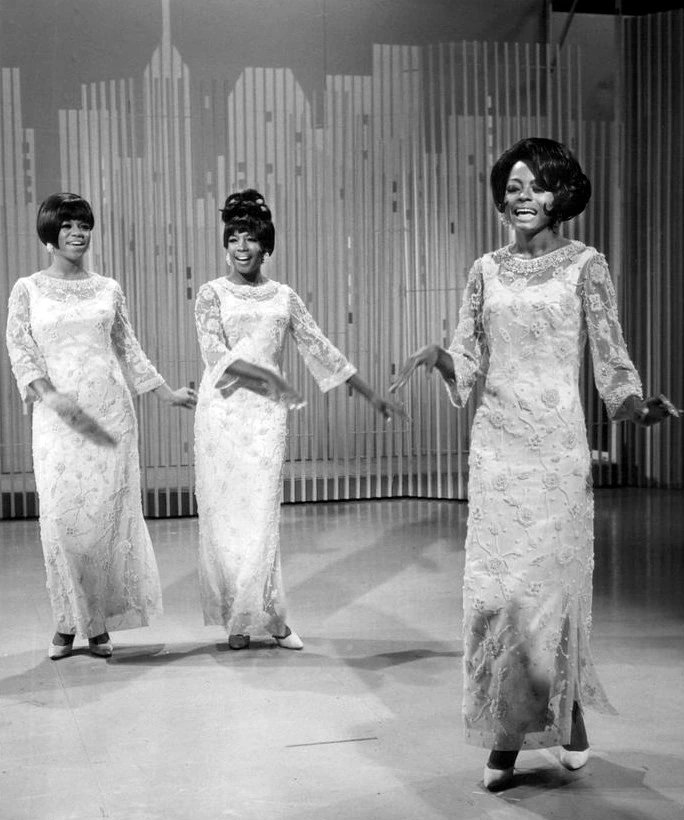
Group net worth vs. individual wealth: why the distinction matters
Net worth in its most basic form is total assets minus total liabilities. For a solo celebrity, that calculation, while still partially estimated, at least applies to one person's financial picture. For a group like The Supremes, the question gets messier fast. The Supremes were never a corporation that pooled assets among members and distributed equity shares. They were a Motown Records act, meaning their recordings were owned by Motown, their publishing was administered through Motown's Jobete Music (and its sister company Stone Diamond Music Corp.), and their financial arrangements with Berry Gordy's label governed what they actually took home. The group had a name, a brand, and a catalog, but that catalog's value flowed primarily to Motown, not to the performers themselves.
So when a website says "The Supremes net worth is X," what are they actually measuring? Often, it's a blended or informal figure that conflates Diana Ross's personal wealth with a vague group identity. Some low-authority sites go even further and use engagement-based proxies, comparing social media presence, Wikipedia traffic, and YouTube views to produce a "net worth" number that has nothing to do with assets or liabilities at all. That kind of figure is essentially a popularity score dressed up as a financial estimate, and you should treat it accordingly.
The best-supported net worth estimates

Diana Ross is the only former Supreme whose personal net worth is regularly and somewhat credibly estimated by financial profiling sites. CelebrityNetWorth, which uses a framework of assets minus liabilities and draws on publicly reported contracts, real estate, touring revenue, and business ownership, places her net worth at approximately $250 million. That figure has appeared consistently across multiple update cycles and is the most widely cited estimate you'll find from sites that at least attempt an asset-based methodology.
For the other major members, the picture is much smaller. Mary Wilson, who passed away in February 2021, had an estimated net worth in the range of $2 to $8 million at the time of her death, according to various estimates, though none of these figures are backed by disclosed estate documents. Florence Ballard, who died in 1976 under difficult financial circumstances, had essentially no substantial estate, a well-documented outcome given her legal battles with Motown, the loss of her royalty rights, and the welfare payments she was receiving near the end of her life. Cindy Birdsong and Scherrie Payne, who joined later lineups of the group, are rarely profiled with serious wealth estimates.
| Member | Active Period in The Supremes | Estimated Net Worth (2025/2026) | Primary Wealth Driver |
|---|---|---|---|
| Diana Ross | 1959–1970 (lead), solo career ongoing | ~$250 million | Solo career, catalog royalties, business ventures |
| Mary Wilson | 1959–1977 (deceased 2021) | $2–$8 million (estimated at death) | Memoir, touring, speaking engagements |
| Florence Ballard | 1959–1967 (deceased 1976) | Negligible estate | Lost royalty rights; financial hardship in later years |
| Cindy Birdsong | 1967–1972, 1973–1976 | Not publicly estimated | Limited post-group profile |
| Scherrie Payne | 1973–1977 | Not publicly estimated | Post-group touring with various lineups |
How The Supremes made money (and how that money flows today)
The Supremes had twelve number-one singles on the Billboard Hot 100 between 1964 and 1969, making them one of the most commercially successful acts in American pop history. But the way Motown structured its artist relationships meant that the group's recording and publishing income did not belong to the members. Motown owned the master recordings. Jobete Music, the Motown publishing arm, controlled the publishing copyrights and collected mechanical and synchronization royalties. blank" rel="noopener noreferrer">The RIAA database shows certified Gold and Platinum releases attributed to Diana Ross and The Supremes, confirming the commercial scale. But certifications confirm units sold, not money in performers' pockets.
The Jobete catalog was considered so valuable that in 1997, EMI paid approximately $132 million for a half-stake in the Motown publishing holdings that included Diana Ross and The Supremes' songs. UPI reported that EMI bought a 50% stake in Jobete in 1997 for $132 million, later acquiring additional interests blank" rel="noopener noreferrer">EMI paid approximately $132 million for a half-stake in the Motown publishing holdings in 1997. That transaction gives you a sense of the catalog's worth as a licensing and royalty-generating asset, but the royalties from that catalog flowed to Motown (and later its successors) and to songwriters, not to Diana Ross or the other Supremes as performers. Performers earn neighboring rights and certain streaming royalties from their recordings, but in most Motown-era deals, the split heavily favored the label.
Where the members could and did earn money independently includes touring (The Supremes were a major live draw throughout the late 1960s), TV appearances (the group appeared on The Ed Sullivan Show multiple times, plus variety specials), merchandise, and eventually licensing deals for use of their name and image in retrospective projects. A 1965 report noted that each member received a check for $100,000 in earnings from the prior year, which was a significant income for the mid-1960s, though it also illustrates that peak earnings were in the six-figure range annually, not the kind of compounding wealth that builds a nine-figure estate.
Legacy royalties and streaming in the modern era

Streaming has added a new layer of income for legacy catalogs. Since 2013, the RIAA has incorporated streaming conversion units into its certification calculations, meaning older songs accumulate new certification credits as they rack up streams on Spotify, Apple Music, and similar platforms. This matters for The Supremes' catalog because hits like "Stop! In the Name of Love" and "You Can't Hurry Love" remain genuinely popular. However, the master recording royalties still flow primarily to Universal Music Group (which now owns the Motown catalog), not to the members or their estates. Songwriting royalties from those hits go to the publishing rightsholders and the original composers.
How each member's post-group career shaped their wealth
This is where the divergence in individual net worth becomes most visible. Diana Ross left The Supremes in 1970 and built one of the most commercially successful solo careers in music history. She continued recording hits through the 1970s and 1980s, toured globally, pursued a film career (earning an Oscar nomination for Lady Sings the Blues), and built business interests that extended well beyond music. That decades-long solo trajectory is what drives her $250 million estimate. Without those post-Supremes decades, even Diana Ross's wealth picture would look dramatically different.
Mary Wilson stayed with The Supremes as the group cycled through multiple lead singers, eventually departing in 1977. She built a career around nostalgia touring, public speaking, and a memoir (Dreamgirl: My Life as a Supreme), which all generated income but never approached the commercial scale of a solo recording career. Her estate was modest by celebrity standards, and she was open about financial difficulties at various points in her life.
Florence Ballard's trajectory is the most sobering. She was pushed out of the group in 1967 and signed a settlement with Motown that stripped her of royalty rights in exchange for a lump-sum payment she reportedly spent quickly. A subsequent solo deal with ABC Records failed commercially. By the early 1970s she was receiving welfare assistance, and she died in 1976 at 32 from cardiac arrest. Her story is a clear example of how group-level commercial success can coexist with individual financial devastation when contract structures and legal settlements are unfavorable.
Why the numbers look so different across websites

If you google "The Supremes net worth" right now, you'll get a mix of figures that may range from a few million to hundreds of millions, and that range is not random, it reflects fundamentally different methodologies and levels of rigor. That is especially true for articles about the queen flip net worth concept, where the label often shifts without a clear, asset-based calculation. Sites like CelebrityNetWorth build estimates from reported assets (real estate records, known contracts, tour grosses, business ownerships) and acknowledge that private financial data is unavailable. Sites like NetWorths.io use similar assets-minus-liabilities framing but also admit that complete financial data is not publicly accessible. Sites like Hafi generate income model ranges from publicly observable proxies and explicitly warn that their figures may not be accurate. And some platforms produce engagement-based "net worth" scores that measure digital footprint, not financial standing.
Timing also matters. A figure published in 2018 will not reflect 2021 estate events (like Mary Wilson's death and any estate distributions), real estate transactions, or updated streaming revenue estimates. Net worth estimates for living celebrities are snapshots, not permanent truths, and for deceased celebrities they're frozen at a point that may or may not reflect eventual estate settlement values. Legal disputes around rights, like the numerous Jobete-related licensing cases that have wound through courts over decades, can also alter the royalty landscape for anyone still receiving related income.
- Methodology gap: Some sites measure assets minus liabilities; others use earnings proxies or engagement scores.
- Data access gap: No celebrity's private bank accounts or investment portfolios are publicly disclosed.
- Timing gap: Figures go stale after major life events, estate settlements, or catalog ownership changes.
- Attribution gap: Many sites conflate Diana Ross's personal wealth with a generalized "Supremes" figure.
- Source chain gap: Many mid-tier sites copy figures from higher-traffic sites without independent verification.
How to verify and update these figures yourself
If you want to build the most responsible estimate possible with publicly available information, here's the practical approach I'd use. Start with CelebrityNetWorth for Diana Ross specifically, since it's the most consistently updated and asset-narrative-driven source for her individual wealth. Cross-reference it against any recent interviews where she or her representatives have commented on business activities or catalog deals. Then check real estate aggregators like Zillow or Realtor.com for any known properties tied to her name, since real estate is often the largest single disclosed asset for celebrities.
- Search CelebrityNetWorth for each member individually (Diana Ross, Mary Wilson, Florence Ballard), not for "The Supremes" as a group, to avoid blended or misattributed figures.
- Check the RIAA Gold and Platinum database (riaa.com) for certification records tied to Diana Ross & The Supremes to understand the commercial scale of the catalog.
- Search Wikipedia for each member's individual biography and cross-check any wealth or income claims against cited sources rather than accepting the figure at face value.
- For catalog and publishing context, look for news coverage of Motown/Jobete ownership changes and licensing deals, which affect ongoing royalty pipelines.
- Use Google News to search for any recent estate news (especially for Mary Wilson's estate) or business announcements from Diana Ross's team.
- Flag and discard any site that presents a single "The Supremes net worth" figure without breaking it down by member, or that uses social media engagement as a proxy for wealth.
One practical red flag: if a site claims a specific net worth for "The Supremes" as a collective, with no member breakdown and no source chain, treat that figure as decorative, not factual. The group had no joint balance sheet. Any credible estimate has to be member-specific.
What you genuinely can't know from public data

Private investment portfolios, trust structures, and estate plans are not public record unless disclosed in probate or litigation. Diana Ross's full financial picture, including any catalog ownership stakes she may have negotiated over decades, family trust arrangements, or private equity holdings, is not documented in any source you can access online. The same was true for Mary Wilson before her death, and her estate settlement details are not publicly available at the level of precision that would meaningfully update the estimates already in circulation. Florence Ballard's story is documented enough to say with confidence that her estate at death was minimal. For the later members like Cindy Birdsong and Scherrie Payne, there is simply not enough publicly available data to produce responsible estimates.
The honest framing here is that for this topic, as with many legacy music acts, the most you can credibly say is that Diana Ross accumulated substantial personal wealth through a combination of her post-Supremes solo career, touring, film, and business activity, that the other members did not benefit comparably from the group's commercial legacy due to the Motown contract structure and their individual post-group trajectories, and that the group's catalog value (in the hundreds of millions of dollars) belongs to Motown's corporate successors, not to the performers. If you're researching comparable figures in the "queens of music" space, the financial divergence between a group's cultural legacy and its individual members' personal wealth is a pattern you'll see repeatedly, not just here. If you're specifically looking for queen pen net worth figures, the key is to separate personal wealth estimates from any misleading group-based numbers.
FAQ
Why do “The Supremes net worth” numbers online swing from a few million to hundreds of millions?
Most swings come from mixing different targets (group identity vs. Diana Ross personal wealth) and from changing the methodology, some sites use an assets minus liabilities approach, others use engagement or traffic proxies that have no direct link to assets or debts.
If Motown owned the masters and Jobete controlled publishing, did any Supreme earn ongoing money from the catalog?
Yes, but it is usually limited to the specific rights each person held under their individual contracts (for example, neighboring rights or certain streaming-related payments). In many Motown-era deals, performers did not receive the same share as the label that owned recordings and publishing administration.
What is the biggest mistake people make when they try to estimate a group’s net worth like The Supremes?
Treating a recording act as if it were a corporation with a pooled bank account and an equity split among members. Because the group did not operate with shared ownership of assets, there is no single “group balance sheet” figure to compute.
Can you use RIAA Gold and Platinum certifications to calculate The Supremes members’ net worth?
No. Certifications confirm sales and streaming-conversion eligibility levels, not how much cash reached performers after label and publishing splits. They are useful for understanding commercial scale, but not for building an assets minus liabilities estimate.
How should I interpret a site that claims it has “verified” net worth for “The Supremes” as a collective?
If it cannot show a member-by-member breakdown and a clear chain of sources for assets and liabilities, it is not actually verified. For this topic, credibility comes from isolating an individual (like Diana Ross) and using reported contracts, real estate records, and documented business interests.
Does the estimate of Diana Ross’s wealth change after major catalog deals or publishing transactions?
It can, but only if Ross personally owned or retained stakes that affect her entitlement. Many high-value catalog transactions involve label or publisher successors, so you need to check whether the deal terms included personal ownership shares, not just catalog value in general.
What’s the best way to check whether a “net worth” article is using outdated numbers?
Look for the stated “as of” date and then compare it with recent estate events, property sales, or publicly reported business updates. For living celebrities, estimates can lag behind new income streams, and for deceased members, they can remain frozen until any estate settlement details are reflected.
How do I handle net worth estimates for deceased members when exact estate documents are not public?
Use ranges and treat them as low-confidence if probate filings, disclosed asset lists, or litigation records are not cited. The absence of disclosed trust or portfolio details means you should not treat a single number as factual.
Are engagement-based “net worth scores” for The Supremes ever meaningful?
Only as a measure of attention, not finances. They may correlate with cultural relevance, but they do not account for assets, liabilities, contract splits, or royalty entitlements.
If I want to estimate the difference between Diana Ross’s wealth and other members’, what factors should I focus on?
Focus on ownership and entitlement (solo vs. group-era rights), duration of independent income after leaving (post-group solo touring, film, and business), and contract structure that determined who received master and publishing-derived cash flows. These factors explain the divergence better than any “group net worth” label.
Queen Members Net Worth: How to Find and Verify Estimates
Find and verify queen members net worth estimates for Freddie, Brian, Roger, and John with a step-by-step cross-check fr