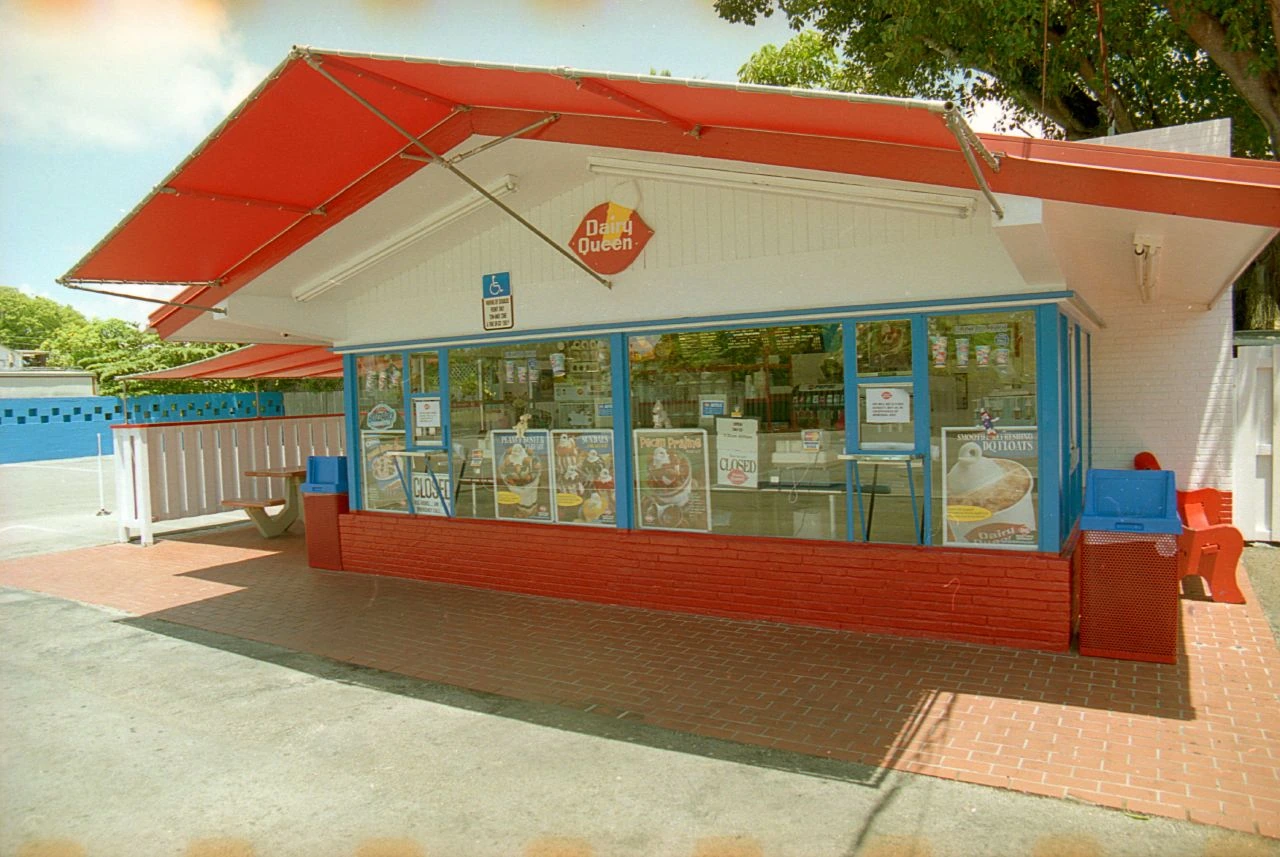
What people usually mean by "Dairy Queen net worth"
When someone searches "Dairy Queen net worth," they are almost never looking for the personal wealth of an individual named Dairy Queen. The query is almost always one of three things: a curiosity about how much the Dairy Queen brand is worth as a corporate asset, a question about the total economic value of the franchise system (all those stores, system sales, and royalty streams combined), or occasionally a question about the wealth of a specific franchise owner or the company's parent. All three are legitimate questions, but they have very different answers, and mixing them up is exactly how you end up reading wildly inconsistent numbers online.
This site focuses on the financial lives of notable women in business, entertainment, and brand-building, from artists like Ivy Queen to entrepreneurs running thriving consumer brands. Dairy Queen fits that lens as a brand story: it is a massive, globally recognized name with a surprisingly complex ownership and valuation structure that most people, even fairly savvy ones, misread. So let's break it down properly.
Dairy Queen's business model: corporate vs franchise value

Dairy Queen is not a company that owns and operates 7,700 ice cream shops. It is a franchisor. That distinction matters enormously for valuation. The corporate entity, International Dairy Queen, Inc. (IDQ), is the parent of American Dairy Queen Corporation (ADQ) and Dairy Queen Canada, Inc. IDQ owns the trademarks, sets the brand standards, and collects royalties and franchise fees. The actual restaurants are owned and operated by independent franchisees. Those franchisees take on their own capital costs, staff their own locations, and carry their own profit-and-loss risk.
What this means practically is that Dairy Queen the corporation's value is anchored in its royalty income, trademark equity, and franchise fee revenue, not in the total revenue or total assets of every store in the system. Think of it like a music publisher: the publisher earns royalties from songs regardless of how well any individual artist tours that year. The trademark for something like the BRAZIER brand, for example, is held by American Dairy Queen Corporation, not by any franchisee. That IP is where the corporate value lives.
The broader system value, on the other hand, is the combined economic footprint of all 7,700-plus DQ restaurants worldwide. System sales across all those locations run into the billions annually. But that figure belongs to the network of franchisees, not to IDQ's balance sheet. Conflating the two is the number-one mistake in "Dairy Queen net worth" discussions online.
How to estimate brand and system value (what to actually look up)
Because Dairy Queen is privately held inside Berkshire Hathaway, there is no standalone ticker or public market cap to point to. Berkshire acquired Dairy Queen in 1998 for $585 million. That purchase price is a useful historical anchor, but extrapolating "current net worth" from a 28-year-old transaction without current cash-flow data is a shortcut that produces garbage estimates. A lot of the numbers you will see on net worth aggregator sites are essentially doing exactly that.
The most rigorous public starting point is Berkshire Hathaway's annual 10-K filing. Berkshire reports International Dairy Queen as part of its segment disclosures. The 2024 10-K (covering fiscal year 2024) is publicly available on Berkshire's investor relations page as a PDF. You want to navigate to the business segments section or the notes on segment information to find IDQ's revenue and operating profit line items. Those figures, combined with a reasonable earnings multiple or a discounted cash flow, are your foundation for a defensible corporate valuation estimate.
For system value, you layer in store counts (IDQ's own communications cite 7,700-plus worldwide as of the most recent company snapshot) and average unit volume data available through industry databases or QSR-focused research firms. Multiply system-wide store count by estimated average unit volume to get a system sales figure, and you have a rough top-line picture of the network's economic scale even if that money does not flow through IDQ's income statement.
Using parent-company financials and brand valuation methods

There are two main valuation lenses worth understanding here. The first is the corporate earnings approach: take IDQ's segment-level operating profit from the Berkshire 10-K and apply a multiple consistent with franchised QSR (quick-service restaurant) businesses. Publicly traded franchise-model peers in the QSR space have historically traded at enterprise value to EBITDA multiples in the range of roughly 15x to 25x, depending on growth trajectory and royalty margins. Apply a range of those multiples to IDQ's disclosed operating earnings and you get a defensible corporate valuation band.
The second lens is the royalty relief method for brand valuation. This approach asks: if American Dairy Queen Corporation had to license its trademarks from a third party instead of owning them, what royalty would it pay? You derive a hypothetical royalty rate (informed by comparable franchise disclosure documents and industry benchmarks), apply it to a revenue base, discount the projected royalty stream at an appropriate rate, and arrive at a standalone brand value. The Dairy Queen FDD (Franchise Disclosure Document) is a public document that gives you some inputs here, including the fee structures that franchisees pay. Royalty rates, initial franchise fees, and advertising fund contributions are all disclosed and all relevant to this calculation.
Putting concrete numbers on either approach requires pulling the actual IDQ segment financials from the Berkshire filing, which most online sources skip entirely. Based on the scale of the system (7,700-plus stores, multi-decade brand equity, global presence), corporate valuations estimated by analysts and financial journalists have generally placed Dairy Queen in the range of roughly $2 billion to $4 billion in brand and franchisor value, though some estimates go higher depending on the multiples and methodology used. Treat any number in that range as a reasonable ballpark, not a hard figure.
What to make of conflicting online net worth numbers
You will find sites claiming Dairy Queen's "net worth" is anywhere from $500 million to over $10 billion. The variance is not random; it reflects the fact that different sites are measuring completely different things without disclosing which thing they are measuring. Here is what usually drives the discrepancies:
- Some sites anchor on the 1998 Berkshire acquisition price of $585 million with no updating for inflation, growth, or changed business conditions.
- Some conflate total system sales (franchisee revenues across all 7,700-plus stores) with the corporate franchisor's value, inflating the number dramatically.
- Some use Berkshire Hathaway's total market cap as a rough proxy and assign a proportional slice to DQ, which can produce estimates that swing wildly based on Berkshire's overall stock performance.
- Some simply copy numbers from other net worth sites without any methodology disclosed, creating a citation loop with no real data underneath.
The credibility test is simple: does the site explain whether it is estimating corporate/franchisor value, system value, or brand/trademark value? Does it reference current segment financials from a Berkshire filing, or any datable source? If the answer is no to both, treat the number as entertainment, not research.
This is a pattern that shows up across a lot of brand and company wealth profiles, not just Dairy Queen. Whether you are reading about the business valuation of a niche brand like Evil Queen Candles or trying to parse the earnings of a K-pop act like Red Velvet, the discipline is the same: identify what asset you are actually valuing, find the most direct data source for that specific asset, and don't accept a number that can't explain its own inputs.
Comparing the three main ways to read "Dairy Queen net worth"
| Valuation Frame | What It Measures | Best Data Source | Rough Range (2024-2025 estimates) | Key Limitation |
|---|
| Corporate / Franchisor Value | IDQ's equity value as the royalty/IP-holding entity | Berkshire 2024 10-K segment financials + QSR peer multiples | $2B to $4B (analyst estimates) | IDQ not separately publicly traded; segment data requires extraction from Berkshire filing |
| System / Network Value | Total economic scale of all 7,700+ stores combined | IDQ company snapshots + industry AUV data | $5B to $10B+ in annual system sales | This is franchisee revenue, not IDQ's corporate asset |
| Brand / Trademark Value | Value of the DQ trademark if it were licensed at market rates | FDD royalty disclosures + royalty relief methodology | Subset of corporate value; often $1.5B to $3B | Requires assumptions on royalty rate and discount rate; no public audit of brand value |
| Parent Company Proxy | Berkshire Hathaway's implied value of the DQ segment | Berkshire 10-K + peer franchisor transaction comps | Overlaps with corporate value estimate above | Berkshire does not separately disclose IDQ's standalone balance sheet |
The most defensible answer for most readers is: Dairy Queen's value as a corporate franchisor is likely in the $2 billion to $4 billion range based on its earnings profile and comparable franchise transactions, while the total system it anchors (all those stores, all that franchisee revenue) represents a multi-billion-dollar economic network. Neither number is "wrong," but they answer different questions.
Sanity-check checklist and practical next steps

Before you accept any "Dairy Queen net worth" figure you find online, run it through this checklist. It takes about two minutes and will save you from building arguments or articles on shaky numbers.
- Check which entity is being valued. Is it IDQ (the parent), ADQ (the U.S. franchisor), the broader system, or the trademark? Each has a different value. If the source doesn't specify, that is a red flag.
- Check the data vintage. Dairy Queen has grown substantially since the 1998 acquisition. A number derived from the $585 million purchase price without adjustment is outdated by decades.
- Check the source chain. Does the number trace back to a Berkshire 10-K, an FDD, an industry research report, or just another net worth website? Only the first three are primary or near-primary sources.
- Check whether system sales are being confused with corporate revenue. If a site claims DQ earns $3 billion or more in revenue, ask whether that is system-wide franchisee sales or IDQ's actual royalty and fee income. They are not the same.
- Check the store count date. IDQ's current communications use "7,700+" worldwide. If a source uses a meaningfully different number, make sure both figures are from the same period.
- Check the multiple or method. A valuation built on earnings should disclose the multiple used and justify it against comparable public franchisors. No multiple disclosed means no methodology to evaluate.
For practical next steps: start with the Berkshire Hathaway 2024 Annual Report (the 10-K PDF), search for "International Dairy Queen" in the segment notes, and record the revenue and operating profit figures. Then go to the Dairy Queen FDD summary (available through franchise disclosure databases) to pull the royalty rate and initial franchise fee structure. With those two inputs plus a peer multiple from a public QSR franchisee or franchisor, you can build your own estimate in a spreadsheet in under an hour. It won't be audited or certified, but it will be grounded in actual data rather than recycled website estimates.
Artists and entrepreneurs who have built serious wealth, whether someone like Queen Ifrica navigating the music industry or a brand operator building a franchise empire, all share a similar lesson: headline wealth numbers are almost always an oversimplification. What matters is understanding the underlying asset, the income it generates, and the multiple the market assigns to that income. Dairy Queen is no different. The brand is genuinely valuable and has decades of global equity behind it, but the number attached to that value depends entirely on which question you are actually asking.
One more grounding note: because Dairy Queen sits inside Berkshire Hathaway's private subsidiary structure, you will never get a definitive, standalone market-cap figure the way you would for a publicly traded company. That ambiguity is permanent, not a gap that will eventually be filled. What you can do, and what analysts do, is triangulate: segment financials from Berkshire, system data from IDQ, fee structures from FDDs, and comparable transactions from the QSR franchise market.
That triangulation, approached the same way you would research any notable figure's wealth profile, is what produces a number worth trusting. Performers and business builders like Utica Queen have shown that building a brand with real staying power is itself an asset class, and Dairy Queen, whatever its precise valuation, is a masterclass in exactly that.