
When people search 'quilter net worth,' they're almost always looking for Jenny Doan, the face of Missouri Star Quilt Company and the most recognizable quilter in the world. She built one of the largest quilting supply businesses in the United States from a single longarm machine in a small Missouri town, and the most defensible estimate of her personal net worth today sits somewhere in the range of $20 million to $50 million, though the business she co-owns could push that figure higher depending on how Missouri Star Quilt Company is valued as a private enterprise. Some people also search for her crazy lamp lady net worth, but the same range and estimation logic applies to what she might personally earn from the business.
Quilter Net Worth: How to Estimate, Verify, and Recheck

Jordan Hartwell
2 Jun 2026
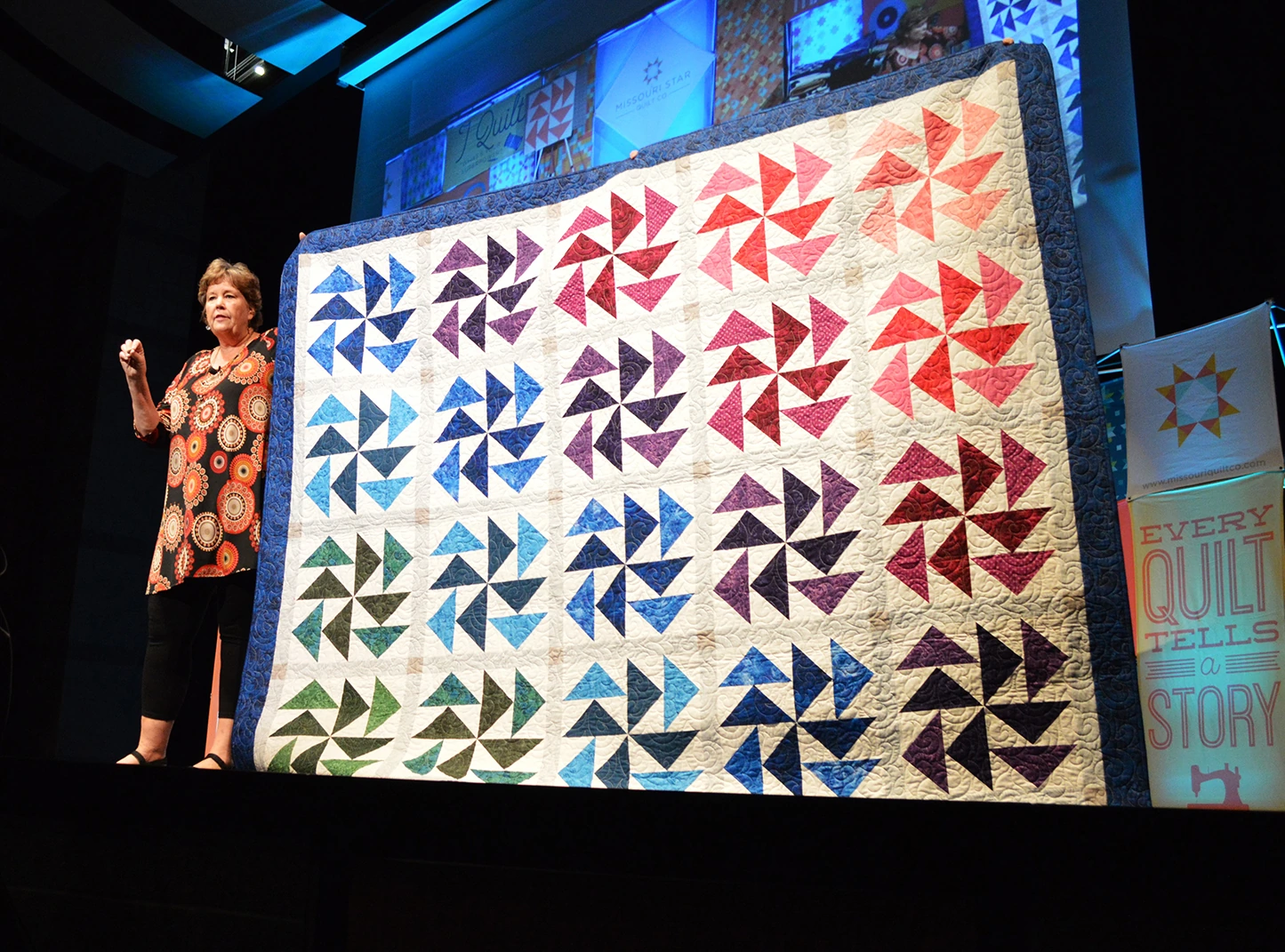
Who 'Quilter' Most Likely Refers To

The keyword 'quilter net worth' almost certainly points to Jenny Doan. She's been called the 'Oprah of quilting' by Forbes, she runs the biggest quilting channel on YouTube with over 837,000 subscribers and more than 150 million views across 500-plus free tutorials, and she is the co-founder of Missouri Star Quilt Company, described by blank" rel="noopener noreferrer">Wikipedia as the largest quilting supply vendor in the United States. No other individual quilter comes close to her public profile or financial footprint.
There is also 'Quilter' as a financial services company in the UK, but that's a wealth management firm listed on the London Stock Exchange and has no connection to craft or influencer content. If you ended up here looking for that entity, you'd want to check their investor relations page directly.
And there are quilting influencers on YouTube and Instagram who have built smaller but genuine followings, including personalities like 'Knitting Cult Lady' and 'That Quirky Miss' who operate in overlapping craft-content spaces. Knitting Cult Lady is a separate craft influencer who overlaps with quilting and needlework audiences, but she is not the same person as Jenny Doan. But none of them carry the same financial scale as Jenny Doan, so this article focuses on her.
Quick Net Worth Answer vs. the Full Range
If you need a number fast: Jenny Doan's estimated net worth is generally placed between $20 million and $50 million as of mid-2026. Sites like CelebrityNetWorth publish point estimates in this ballpark, but those are third-party approximations, not audited figures. The honest answer is that the range is wide because Missouri Star Quilt Company is a private business, and private company valuations are notoriously hard to pin down without insider access to balance sheets.
What we do know from public reporting: Forbes reported Missouri Star's annual revenue at $40 million, with a separate figure of $140 million-plus in revenue for 2018 appearing in the same Forbes narrative (the discrepancy likely reflects different reporting periods or revenue definitions). The company had 389 employees as of the 2018 reporting. Add the Robert Kaufman Fabrics acquisition, 12 physical retail shops, a booming online store, and a YouTube channel that still drives consistent traffic, and you're looking at a business with real enterprise value. Jenny's personal share of that, after family ownership stakes and any debt, is what determines her net worth.
How Net Worth Estimates Are Actually Calculated

Net worth is simply assets minus liabilities. For a public company executive, this is relatively transparent because stock filings and compensation disclosures are public. For a private business owner like Jenny Doan, it requires estimation. Forbes, for example, values private businesses by looking at revenue and profit estimates and then applying multiples derived from comparable public companies, a price-to-sales or price-to-earnings approach. They also apply a liquidity discount (around 10% in their methodology) because private assets can't be sold as quickly as publicly traded stock.
For Missouri Star specifically, a reasonable back-of-envelope approach looks like this: if the company earns $40 million in annual revenue and a comparable retail/e-commerce business trades at 1 to 2 times revenue, the enterprise value could be anywhere from $40 million to $80 million or more. The Doan family owns the business, but the exact equity split among Jenny, her husband Ron, and their adult children (who are also involved in the company and led the Robert Kaufman acquisition) isn't public. That's the core uncertainty in any net worth estimate for Jenny Doan.
Sources Worth Checking Yourself
- Forbes profiles and methodology pages (they explain their valuation approach and note when figures are estimated)
- Missouri Star Quilt Company's own press releases and About pages for employee count, store count, and business milestones
- Craft Industry Alliance for trade-level reporting on deals like the Robert Kaufman acquisition
- USPTO trademark filings, which document the IP assets the company has formally registered
- Local Missouri news and KCUR (NPR affiliate) for community-level business context
- CelebrityNetWorth and similar aggregators for quick estimates, but treat these as informed guesses rather than verified figures
Where the Money Actually Comes From

Missouri Star's wealth story is a multi-channel operation, not just a YouTube channel. Understanding the income streams helps explain how a quilting business can generate real wealth.
| Income Stream | How It Works | Scale Indicator |
|---|---|---|
| Online fabric and supply sales | E-commerce storefront selling fabric, tools, and notions globally | Primary revenue driver; part of the $40M+ annual revenue figure |
| 12 physical retail shops in Hamilton, MO | Destination retail drawing quilting tourists to a small Missouri town | Visitors reportedly spend thousands per trip; town transformed into a 'quilting Mecca' |
| YouTube advertising revenue | 837,000+ subscribers, 150M+ views across 500+ free tutorials | Significant passive income; also functions as a marketing engine for product sales |
| Missouri Star Academy | Paid classes and workshops, both in-person and scheduled online | Diversified education revenue with structured enrollment |
| Craftsy and online course licensing | Jenny instructed paid courses on Craftsy early in the platform's history | Historical stream; evidence of early digital education monetization |
| Robert Kaufman Fabrics stake | Controlling interest acquired by family members; major upstream supplier | Equity upside; Robert Kaufman is a significant industry manufacturer |
| Machine quilting services | Long-arm quilting services provided to customers | Original business model; still part of the offering |
| Book and pattern sales | Jenny has authored books and patterns sold through the business and retail channels | Licensing and royalty income stream |
| Brand sponsorships and partnerships | Collaborative fabric lines and co-branded products with manufacturers | Industry partnerships common at Missouri Star's profile level |
Assets and What Actually Drives the Valuation
Beyond the income streams, the asset base behind Missouri Star's valuation is substantial. The company owns real estate in Hamilton, Missouri, where it operates 12 dedicated quilt shops on and around Main Street. It also owns the Missouri Star Academy space and retreat infrastructure. Real estate in a small Missouri town is relatively inexpensive on a per-square-foot basis, but the company effectively owns a significant portion of a small town's commercial district, which has its own strategic value.
The Robert Kaufman Fabrics stake is potentially the most significant single asset. Robert Kaufman is one of the largest fabric manufacturers in the quilting and sewing industry. A controlling interest in that company, funded privately by the Doan family, represents a major upstream investment that could substantially increase total family wealth depending on Kaufman's own valuation. The deal was reported by Craft Industry Alliance but the terms and price weren't disclosed publicly.
There's also intellectual property. Missouri Star holds registered trademarks (documented through USPTO filings) for its brand. The YouTube channel itself, with its 150-million-view library, is a content asset that continues generating ad revenue and driving product discovery. Brand equity built through Jenny's personal likeness and the 'face of quilting' positioning adds intangible value that doesn't show up on a balance sheet but affects acquisition value significantly.
Why Net Worth Numbers Vary So Much Across Sites
You'll find estimates for Jenny Doan ranging from under $10 million to well over $50 million depending on where you look. This isn't necessarily anyone being dishonest. It's a function of what data is available and what assumptions each estimator makes. Because Missouri Star is a private company, there's no required public financial disclosure. Sites like CelebrityNetWorth use a combination of reported revenue figures, industry comparables, and informed estimation. When the underlying revenue figure jumps from $40 million to $140 million in different sources (both cited in Forbes reporting, which may reflect different years or accounting definitions), the resulting valuation swings dramatically.
The other big variable is how much of the business Jenny personally owns versus her husband Ron and their children. The Robert Kaufman deal was reportedly led by her adult children Sarah Galbraith and Alan Doan, which suggests equity is distributed across the family. That's completely normal for a family-owned business, but it means Jenny's personal net worth is not the same as Missouri Star's total enterprise value. No public document breaks that down.
How to Verify the Figure Yourself
- Start with Forbes' direct coverage of Jenny Doan and Missouri Star, which includes reported revenue figures and the most credible third-party narrative
- Check Craft Industry Alliance for trade-level business news, including the Robert Kaufman acquisition details
- Look at Missouri Star's own website for employee count, store count, and Academy offerings as signals of business scale
- Search Missouri Secretary of State business filings for Missouri Star Quilt Company, Inc. for any public registration data
- Use the Forbes 400 methodology (publicly available) to understand how to apply revenue multiples and liquidity discounts to a private company
- Treat any point estimate from aggregator sites as a starting range, not a verified figure, and note the date of the source since revenue and valuations change year to year
The Career Timeline That Built the Wealth
The Missouri Star story is genuinely compelling as a wealth-building narrative. Jenny and Ron Doan were in financial difficulty in the wake of the 2008 recession. Their adult children pooled resources to buy a small brick building in Hamilton, Missouri in November 2008, installing a single longarm quilting machine. The business started as a quilting service, not a retail empire.
The turning point was YouTube. Jenny started posting free quilting tutorials, and the channel grew into the largest quilting channel on the platform. Those tutorials weren't just content for content's sake. They were a discovery engine that drove customers to the online store and eventually to Hamilton in person. By 2015, KCUR was reporting that Missouri Star had transformed a 'once sleepy little town into a quilting Mecca,' a signal that the business had reached genuine regional economic impact.
By 2018, Forbes was reporting 389 employees and revenue exceeding $140 million in that year alone, with 12 shops operating on Main Street. The Academy launched as a formal education product, and the Craftsy partnership (dating back to Craftsy's early days around 2011) showed the family's instinct for early-mover digital platform deals. The Robert Kaufman acquisition came later, extending the family's reach from retail and content into manufacturing, which is a classic vertical integration move that adds significant enterprise value.
By mid-2026, Missouri Star is an established multi-channel business with physical retail, e-commerce, media, education, and now upstream manufacturing exposure through the Kaufman stake. That trajectory, from a single quilting machine to what amounts to a regional destination business and fabric supply giant, is the foundation of whatever net worth figure you ultimately land on for Jenny Doan. The exact number is uncertain, but the scale of the operation makes a multi-million-dollar personal net worth entirely credible and well-supported by the public record.
FAQ
Why do some sites list “quilter net worth” values that are wildly different?
Most discrepancies come from mixing personal net worth with business enterprise value (and from guessing ownership percentages). A second driver is whether the estimator uses the $40 million or the $140 million-plus revenue figure, then applies a profit or valuation multiple that may not match the company’s actual margins.
How can I tell if a “quilter net worth” number is actually business value disguised as personal wealth?
Look for wording like “company worth,” “enterprise value,” or “valuation,” then compare it to whether the estimate clearly subtracts debt and adjusts for equity ownership. Personal net worth should reflect assets minus liabilities that belong to Jenny Doan, not the full value of Missouri Star or the whole family stake.
If Missouri Star is private, what is the most defensible data to use for estimation?
The most defensible public anchors are reputable reporting on revenue and employee counts, then conservative assumptions about margins and valuation multiples. Avoid estimates that rely mainly on social-media popularity metrics without tying them to revenue, costs, or comparable company transactions.
What does “liquidity discount” mean in practical terms for a private-business owner?
It reflects that a private owner cannot sell equity as easily as a publicly traded stock. Estimators often reduce valuation by roughly 10% or more to account for selling friction, narrower buyer pools, and longer timelines to convert ownership into cash.
Does revenue alone make net worth easy to estimate for a private owner?
No. Two businesses can have similar revenue but very different margins and debt. Net worth is closer to (profitability plus capital structure) than to revenue. A quick check is whether the estimate mentions margins, cash flow, or debt, not just top-line revenue.
How much should I trust point-estimate sites like CelebrityNetWorth for quilter net worth?
Treat them as educated guesses, not audit-ready figures. If the site gives a single number without clearly stating assumptions (ownership %, debt, margin, valuation multiple), the figure is mostly a projection rather than a verifiable calculation.
What ownership questions matter most when trying to estimate Jenny Doan’s personal net worth?
The biggest is the split of equity among Jenny, Ron, and their children, since the company and acquisitions appear family-owned. A second issue is whether she holds additional direct assets (or personal liabilities) outside Missouri Star, which can shift the final personal net worth up or down.
How do acquisitions like Robert Kaufman change the “quilter net worth” discussion?
They can inflate family wealth because a controlling or meaningful stake can be worth far more than retail operations alone. However, the effect depends on the Kaufman valuation at that time, the size of the stake, and whether the deal used leverage that increases liabilities.
Do trademarks, the YouTube library, and brand equity really count in net worth estimates?
They can, but most public-facing net worth estimates underweight them because they are hard to value without transaction data. In acquisitions, brand and media assets can contribute to goodwill or customer lifetime value, which affects purchase price and thus implied equity value.
Is “quilter net worth” sometimes used to mean “income,” not net worth?
Yes, and it leads to confusion. Net worth is assets minus liabilities at a point in time, while income is what you earn over a period. A high-earning business owner can still have a modest net worth if much of the value is tied up in the company and debt.
Could the 2008 story or the number of shops imply a reliable net worth trajectory?
It’s supportive context but not a precise forecast. Growth in shops and digital traffic shows business momentum, yet net worth depends on retained earnings, reinvestment rate, debt incurred, and major asset purchases (like manufacturing exposure or property).
What’s the most common mistake when people compare “quilter net worth” across influencers?
Comparing personal wealth claims without adjusting for business model differences. A craft influencer running ads and sponsorships might have revenue but little balance-sheet value, while Jenny Doan’s profile includes ownership in a retail, media, education, and manufacturing-linked operation.
How do I “recheck” an estimate without insider documents?
Rebuild the estimate using the same structure: start with revenue, estimate margins and profit, apply a conservative valuation multiple for comparable retail or e-commerce businesses, then adjust for debt and subtract non-owner-adjustable portions of equity. Recompute using both $40 million and $140 million-plus scenarios to see sensitivity.
Next Article
Knitting Cult Lady Net Worth: How to Verify Income and Assets
Verify knitting cult lady net worth with income sources, asset clues, and a conservative wealth range you can check.