Where the money most likely came from

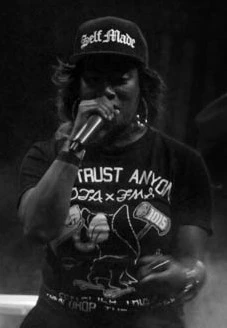
Gangsta Boo, born Lola Mitchell, built her name as the only female member of Three 6 Mafia, one of Memphis rap's most influential and commercially successful groups. That foundation matters a lot when you're trying to reverse-engineer her wealth. Three 6 Mafia signed with Loud Records and then Sony in the late 1990s, which gave their catalog genuine commercial reach. The group's collective output during Gangsta Boo's active membership (roughly 1995 to 2001) included platinum-certified projects, and her individual contributions as a rapper and co-writer on those tracks would have generated both upfront advances and ongoing royalty income.
Her two solo albums, "Enquiring Minds" (1998) and "Both Worlds *69" (2001), released under Loud Records, added direct recording revenue to that base. Neither album went platinum, but both had legitimate commercial runs, especially in the South. Touring alongside Three 6 Mafia during their peak years, and later on her own in smaller regional markets, would have added performance fees. For an artist at her level in the late 1990s and early 2000s, regional touring could realistically generate anywhere from $500 to $5,000 per show depending on the market and the bill, which adds up over a decade-plus of activity.
Streaming royalties in her later years became another passive income thread. Once platforms like Spotify and Apple Music began monetizing catalog rap from the 1990s, artists like Gangsta Boo started seeing renewed revenue from older recordings, even modest ones. Three 6 Mafia's catalog in particular has remained culturally relevant, which keeps those streams active.
Other income streams worth factoring in
Beyond her core discography, Gangsta Boo stayed active through features and collaborations well into the 2010s and early 2020s. She appeared on tracks with artists including Run the Jewels, Yelawolf, and Raekwon, among others. Feature fees for a recognizable name with cult status in hip-hop circles typically range from a few hundred dollars to several thousand, depending on the project budget and the artist's current market profile. Doing even a handful of features per year over 20-plus years of career activity adds a meaningful line to her total earnings picture.
Songwriting credits are another piece of this. Gangsta Boo co-wrote material throughout her career, and publishing royalties from those credits accumulate through performance rights organizations like ASCAP or BMI. These are often overlooked when people estimate rapper net worths, but for someone with as long a career catalog as hers, they're real money. There's also the matter of any ownership stake she held in masters or publishing, though no public records confirm specific terms of her deals. Like many artists signed in the late 1990s, label contract structures of that era were rarely favorable to the artist on ownership, which is one reason the $300K estimate from NetWorthList may actually be more conservative and realistic.
She didn't have a documented business empire, significant brand endorsements, or public real estate holdings, so this is a relatively clean picture: music earnings, royalties, features, and touring. No major outside businesses are known to have contributed significantly to her net worth.
Why different sites publish such different numbers

The gap between $300,000 and $1 million is substantial, and it comes down to methodology. Most celebrity net worth sites don't have access to private financial records. They're working from public information: record sales data, streaming estimates, reported touring activity, and inference from industry norms. The problem is that each site applies different assumptions, uses different income multipliers, and sometimes just copies estimates from other sites without original research.
CelebrityNetWorth, for example, tends to publish round numbers and generally skews higher than independent researchers. Their $1 million figure for Gangsta Boo is plausible if you're being generous about cumulative career earnings and assuming she retained a reasonable share of her royalties. The $300K figure from NetWorthList likely reflects a more conservative read: an independent artist who was signed to major labels that kept most of the master ownership, had modest solo album sales, and operated primarily in regional touring markets. Neither site publishes a methodology, which is a key thing to understand when you're evaluating these claims.
It's also worth noting that net worth estimates for artists who aren't household names outside their genre rarely get the deep-dive treatment that, say, a mainstream pop star would receive. The research effort is lower, the data is thinner, and the estimates carry more uncertainty. This is true across many profiles in this space, whether you're looking at someone like Cuban Doll, whose digital-era rap career presents its own estimation challenges, or artists who built their wealth outside the U.S. mainstream entirely.
How to verify and compare estimates yourself
If you want to do your own due diligence on a figure like this, there's a practical framework that works. Start by identifying every published estimate you can find from named sources (not just aggregator sites that repost other aggregators). Write down the number, the source, and whether they explain how they arrived at it. Then look for corroborating public data: Billboard chart performance for her albums, RIAA certification records (available at riaa.com), any reported touring information from music press, and streaming presence on Spotify or Apple Music. On Loud Records specifically, Wikipedia notes Hypnotize Minds reached the top 15 on the Billboard 200 and later received RIAA platinum certification blank" rel="noopener noreferrer">Billboard chart performance for her albums, RIAA certification records.
Cross-referencing against artist peers is also useful. Artists with comparable career profiles, similar label situations, similar regional versus national reach, and similar activity levels in the same era tend to cluster in similar wealth ranges. If one estimate looks wildly different from what comparable artists are reported to have, that's a flag. For Gangsta Boo specifically, looking at other female MCs from the late 1990s Southern rap scene gives you a reasonable calibration range.
You can also look at what the artist publicly discussed. Gangsta Boo gave interviews throughout her career where she spoke candidly about the business side of rap, including the difficulties of navigating label deals and staying financially afloat as a solo artist outside the Three 6 Mafia umbrella. That narrative context aligns more with the lower end of the published range than the higher end.
Net worth versus income: reading the number correctly
This is a distinction that trips a lot of people up. Net worth is a snapshot of total assets minus liabilities at a given moment, not a measure of how much someone earns per year. An artist could have earned $3 million over a 25-year career and still have a net worth of $300,000 if expenses, taxes, lifestyle costs, and debt ate into those earnings over time. The music industry has a long history of artists generating significant gross income who end up with surprisingly modest wealth because of how the money flows through label deals, management splits, and the basic cost of staying in the business.
For Gangsta Boo, the $300K to $1 million range is plausible as a net worth figure, but it almost certainly represents significantly more in total career gross earnings. Thinking of it that way actually gives you a more respectful and accurate picture of her financial life and career. The wealth that was documented at the time of her death was the residue of a long career, not the ceiling of what she generated. This same framing applies when you're researching any artist's finances, whether it's someone like La Diosa de Cuba building wealth through Latin entertainment or a long-career figure like Xuxa, whose decades of work translate to a very different asset base.
A quick comparison of the published estimates
| Source | Estimate | Methodology Disclosed | Credibility Notes |
|---|
| CelebrityNetWorth | $1,000,000 | No | Tends to skew high; round numbers; widely referenced but lacks sourcing |
| NetWorthList | $300,000 | No | More conservative; aligns with typical regional rap artist wealth profiles |
| Research-based estimate (this article) | $300K–$1M range | Yes (see above) | Derived from discography, royalty logic, touring, and career context |
The most defensible answer to "what was Gangsta Boo's net worth" is: somewhere between $300,000 and $1 million, with the weight of evidence leaning toward the lower half of that range. Her career was long, genuinely influential, and commercially real, but it unfolded under label structures that rarely left independent artists wealthy, and her solo output never crossed into mainstream commercial territory. She was a respected figure in hip-hop who worked consistently for over two decades, and her estate presumably benefits from ongoing streaming and publishing royalties from a catalog that remains actively listened to.
If you're researching this for a specific purpose, here's how to move forward practically. Use CelebrityNetWorth's $1 million figure as the high-end ceiling, use $300K as the conservative floor, and treat anything in between as a reasonable estimate. Don't cite either number as a verified fact, because neither site has published auditable sourcing. [RIAA certification uses set sales thresholds for Gold, Platinum, and Diamond awards](https://en.
wikipedia. org/wiki/RIAAcertification), which can help contextualize industry sales benchmarks. If you're comparing Gangsta Boo's financial trajectory to other artists in the same space, profiles like Gorilla Sister or Queen of Congo offer useful reference points for how women in rap and entertainment build and document wealth across different career models.
For broader context on how public figures accumulate wealth through non-traditional paths, profiles covering figures like Immaculée Ilibagiza or Muñeca Diamante de Rubí show just how varied the routes to documented wealth can be. And if you want a case study in how digital-era visibility changes the math for newer artists, Cubana White Lion is worth a look for comparison.
The bottom line: Gangsta Boo was a pioneering figure in Memphis rap whose financial legacy is modest by celebrity standards but entirely consistent with the reality of a long, independent-leaning music career. The number matters less than understanding what built it and how to read it honestly.