
The short answer: Hot Mama Gowns is a small maternity/nursing gown brand that appeared on ABC's Shark Tank in 2011, founded by Deidrea Haysel. Based on everything publicly available, the brand appears to have closed around 2013, and its estimated net worth at peak operation was almost certainly under $200,000, with a current active business value of effectively zero. That is not a dismissal of the founder's effort. It is just what the evidence supports, and this article walks you through exactly how to read that evidence yourself.
Hot Mama Gowns Net Worth: How Much Is the Founder Worth?

Jordan Hartwell
16 Apr 2026
What Hot Mama Gowns actually is (brand, founder, or social account?)

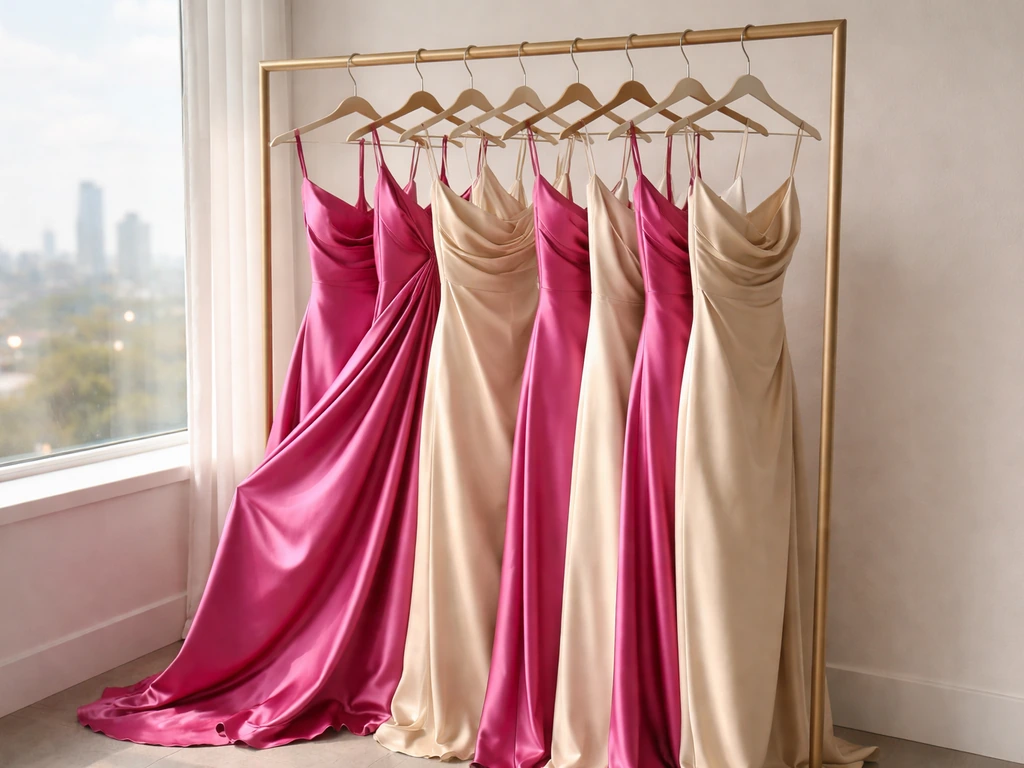
Before you can trust any net-worth figure attached to a name like "Hot Mama Gowns," you need to pin down what you are actually asking about. Hot Mama Gowns is a women-owned fashion brand specializing in hospital maternity gowns made from 100% organic cotton, sized XS through XXL. The brand was founded by Deidrea Haysel and became publicly known after she pitched it on Season 2, Episode 5 (also indexed as Episode 2.6) of ABC's Shark Tank in 2011. The brand's flagship product was the Emma Gown, designed specifically for ease of breastfeeding and nursing in a hospital setting. The brand had a real website (hotmamagowns.com), an active Twitter account (@HotMamaGowns), and was listed in wholesale trade directories as a legitimate small business based out of Delaware, with contact information including a 302 area-code phone number.
There is one ambiguity worth flagging: the phrase "hot mama gowns" could theoretically pull up unrelated social media accounts, resellers, or similarly named boutiques. If you are researching a different Hot Mama Gowns account (say, an Instagram boutique or a separate maternity brand using similar language), the financials here will not apply. The entity with a documented paper trail, a Shark Tank appearance, wholesale listings, and credible third-party reviews is Deidrea Haysel's brand. That is what this article is estimating.
What "net worth" actually means for a fashion brand and its owner
Net worth is a simple concept: total assets minus total liabilities. For a fashion brand founder, that means the value of the business (inventory, brand equity, intellectual property, outstanding receivables) plus personal assets (savings, property, investments) minus any debts. The tricky part is that for a small, private label like Hot Mama Gowns, almost none of those numbers are public record. There are no SEC filings, no investor disclosures, and no audited statements. What you end up doing is building an estimate from the pieces you can actually find, which is exactly what we do here.
It is also worth separating the brand's value from the founder's personal net worth. A brand might be worth very little (especially one that has stopped operating), while the founder could have parlayed the experience into other income. Conversely, a brand could be thriving while the founder carries personal debt. The two numbers are related but not the same. In Hot Mama Gowns' case, the brand's operational value appears to be near zero today, so any estimate of Deidrea Haysel's current personal net worth depends entirely on what she has done since 2013, which is not publicly documented.
How we estimate net worth from public evidence (and why we use ranges)

Estimating the net worth of a private brand requires piecing together signals rather than reading a balance sheet. For Hot Mama Gowns, those signals include: the revenue figures Haysel disclosed on Shark Tank, the retail and wholesale pricing documented in trade publications, the brand's apparent market footprint before shutdown, and third-party reporting on what happened after the show. None of these give a precise number, which is why responsible estimates always come as a range with a stated confidence level.
The same methodology applies broadly across women-led fashion labels. When researching brands like Women Gna Clothing, publicly available sales signals, wholesale pricing, and social footprint are often the only tools available for building a credible estimate. The approach is not perfect, but it is transparent, and transparency is what separates a researched estimate from a made-up number.
Here is the specific framework used for Hot Mama Gowns. First, start with known revenue: $11,500 in sales over two years was disclosed on camera. Second, apply known pricing: retail was $119 for XS-L and $139 for XL-XXL, with a manufacturing cost of $49 per gown. Third, account for the wholesale channel, where gowns were listed at $70 each to retailers. Fourth, factor in trajectory: the brand appeared to go inactive by 2013, roughly two years after the Shark Tank appearance. Fifth, weigh the absence of credible post-2013 reporting, which is itself a signal.
The business model and revenue drivers behind Hot Mama Gowns
Hot Mama Gowns operated across at least three revenue channels: direct-to-consumer retail sales through its own website, wholesale placement with boutiques and retailers, and brand visibility from the Shark Tank appearance (which functions as a form of earned media and marketing even without a deal). On the pitch, Haysel also disclosed spending $20,000 on materials, which suggests she was actively manufacturing inventory and not just dropshipping. The brand was made in the USA, which is a meaningful cost driver but also a premium pricing justification.
The Shark Tank pitch asked for $30,000 in exchange for 20% equity, implying a self-assessed valuation of $150,000. A Reddit thread from viewers discusses how the pitch’s valuation and pricing argument came across, providing first-person audience context for that disagreement blank" rel="noopener noreferrer">valuation of $150,000. That is a founder's optimistic projection, not a market-validated number, but it tells you how Haysel herself valued the business at that moment. The reported $11,500 in two-year sales made the $150,000 valuation a tough sell for the sharks, and reportedly no deal was made. After the show, there is evidence of continued online activity (the Twitter account, product reviews like the one on Mama Cheaps, and a Vimeo video demonstrating the nursing functionality of the gowns), but the brand's web presence went quiet around 2013 according to reporting from The List.
There is no documented evidence of sponsorship deals, licensing agreements, or affiliate revenue for Hot Mama Gowns. Some fashion brands at this scale do pursue those channels. For example, brands built around hair and beauty products (a close parallel in the women-led niche) sometimes expand through licensing, the way Queen of Weave has used brand extensions to build revenue beyond direct product sales. For Hot Mama Gowns, there is simply no public evidence of that kind of expansion happening before the brand went dormant.
What actually drives wealth in fashion (and why small brands often stay small)
Understanding why Hot Mama Gowns likely never crossed into serious wealth territory requires understanding the economics of small fashion. Margins look attractive on paper: a $49 manufacturing cost sold at $119 retail is roughly a 59% gross margin, which is strong. But gross margin is not profit. You have to subtract marketing, web hosting, transaction fees, packaging, returns, and the founder's own time. At small volumes, those costs eat the margin fast.
Scaling is the other challenge. A brand selling through its own site and a handful of wholesale accounts is dependent on either massive organic growth or serious marketing spend to reach new customers. Organic cotton hospital gowns are a niche product with a narrow buying window (the customer is only relevant for a short period during pregnancy and postpartum). That limits repeat purchases, and it means customer acquisition cost has to be recovered on a small number of transactions per buyer. Brands that break through in this space usually do it by going wide on distribution (major retail chains, Amazon, hospital procurement contracts) or deep on community (building a loyal parenting audience that monetizes across multiple products). Hot Mama Gowns does not appear to have achieved either before closing.
Inventory is also a cash trap for small fashion brands. The $20,000 in materials Haysel disclosed on Shark Tank represents real capital tied up in physical product. If that inventory does not sell, it does not become cash. For a brand doing $11,500 in sales over two years, $20,000 in materials spend means the business was likely running at a loss on a cash basis. Compare this to brands like Wigs for Every Woman, where recurring product needs (wigs wear out and styles change) create a more sustainable repeat-purchase engine. A one-time purchase like a hospital gown does not have that same dynamic.
The estimated net worth range, with a clear confidence level
Here is the honest breakdown of what the numbers support.
| Metric | Known or Estimated Figure | Confidence |
|---|---|---|
| Two-year revenue (pre-2011) | $11,500 | High (self-disclosed on Shark Tank) |
| Manufacturing cost per gown | $49 | High (disclosed on Shark Tank) |
| Retail price per gown (XS-L) | $119 | High (documented in reviews and pitch) |
| Retail price per gown (XL-XXL) | $139 | High (documented in reviews) |
| Wholesale price per gown | $70 | High (documented in trade listing) |
| Self-assessed business valuation (2011) | $150,000 | Low (founder projection, not market-validated) |
| Brand status today | Inactive (circa 2013) | High (multiple sources confirm dormancy) |
| Founder personal net worth today | Not publicly documented | Not estimable |
Given the above, the defensible net-worth range for Hot Mama Gowns as a brand at its operational peak (2011-2013) is roughly $20,000 to $80,000. The low end reflects the reality of $11,500 in sales against $20,000 in material costs, meaning the business was in a net loss position. The high end assumes a Shark Tank bounce in sales after the episode aired, some wholesale placement, and modest ongoing revenue before shutdown. The $150,000 self-valuation from the pitch is not supportable by the revenue data. As a currently active brand, the value is essentially zero.
Confidence level: low to medium for the peak range, high for the current-value-zero conclusion. The peak estimate is uncertain because we do not know what the Shark Tank episode did to sales volume, and we do not have sales records from 2011 to 2013. The current-value conclusion is strong because multiple sources independently confirm the brand went inactive around 2013 with no documented revival.
How to verify this yourself and what to check next
If you want to do your own due diligence on Hot Mama Gowns or Deidrea Haysel, here is exactly what to look for and where. You can cross-check trademark and business records using the USPTO Trademark Search at blank" rel="noopener noreferrer">tmsearch.uspto.gov, which is useful for verifying filings connected to Hot Mama Gowns or related names. You can verify whether “Hot Mama Gowns” or similar names were filed and check their status using the USPTO’s free “blank" rel="noopener noreferrer">word-and/or design mark search” tool.
- Check Delaware business registrations: The phone number associated with Hot Mama Gowns has a 302 area code (Delaware). Delaware's Division of Corporations database is free to search online. Look for any entity registered under "Hot Mama Gowns" or Deidrea Haysel's name to confirm whether the business was formally registered and whether it is still active or dissolved.
- Search the USPTO trademark database: If Haysel filed a trademark for "Hot Mama Gowns" or the Emma Gown name, that registration will be searchable at tmsearch.uspto.gov. Abandoned or expired trademarks are another strong indicator of a dormant brand.
- Use the Wayback Machine (web.archive.org): Search hotmamagowns.com to pull archived snapshots of the website from 2011 through 2013. This will show you the product lineup, pricing, and when the site stopped being updated.
- Review the Shark Tank episode directly: The episode is indexed as Season 2, Episode 5 or Episode #2.6. Watching the actual pitch will let you hear the revenue and cost figures directly rather than relying on third-party summaries.
- Search for post-2013 press coverage: If Deidrea Haysel relaunched the brand or pivoted to another business, credible trade publications or parenting media would likely have covered it. The absence of such coverage after 2013 is itself meaningful.
- Check LinkedIn and professional profiles: If Haysel is active professionally, a LinkedIn profile may show what she has been doing since Hot Mama Gowns, which would be relevant to estimating her current personal net worth even if the brand itself closed.
- Cross-check any number you find online: A lot of sites publish net-worth figures for Shark Tank participants with no sourcing. If a site claims Hot Mama Gowns or Deidrea Haysel has a multi-million dollar net worth, ask what evidence is cited. If there is none, the number is not reliable.
The broader takeaway from the Hot Mama Gowns story is not unusual for early-stage, founder-led fashion brands in the 2010s. A passionate founder with a genuinely useful product, a small but real customer base, and a national TV moment still could not clear the revenue threshold needed to sustain and scale the business. That does not mean the founder failed in any personal sense, and it does not mean the brand had zero value. It just means the numbers tell a specific story, and that story does not support the kind of net-worth figures that get attached to well-known fashion names. When you see a net-worth query for a brand at this scale, the most useful thing you can do is read the evidence carefully and resist the pull of round numbers that look more certain than they are.
FAQ
Does Hot Mama Gowns net worth mean Deidrea Haysel’s current personal net worth?
No, the brand net worth estimate is not the same as the founder’s personal net worth. Even if the business value was modest, the founder could have had savings, other jobs or investments, or could have taken on personal debt to fund operations.
Why do some websites show wildly higher Hot Mama Gowns net worth numbers?
If you see a figure tied to “Hot Mama Gowns” that is far above the $20,000 to $80,000 peak range, it is likely mixing the value of the brand with unrelated accounts, confusing resellers, or repeating the $150,000 pitch valuation as if it were real market value.
What evidence is actually trustworthy for estimating net worth of a small private fashion brand?
For a private brand, you should treat any single reported value as low-quality unless it is supported by documents like tax filings, audited statements, or clear transaction records. Without those, the best you can do is triangulate with disclosed sales, pricing, inventory signals, and post-period activity.
How should I interpret the Shark Tank valuation versus the later net worth estimate?
Shark Tank disclosures are a snapshot of expectations and operations at the time, not proof of final outcomes. The $30,000 for 20% equity implies a valuation that depends on the founder’s assumptions, so it should be checked against actual disclosed sales and any observable sales changes after the episode.
Could Hot Mama Gowns have been worth more than $80,000 at its peak?
Yes. The peak range can shift upward or downward depending on how much of the $11,500 two-year sales happened after the episode and whether wholesale orders existed in meaningful volume. The article’s estimate is conservative because post-2013 sales records are missing.
What would change the conclusion that the current value is essentially zero?
Look for signs that the business continued, such as an updated product catalog, new wholesale placements, active customer support, payment processor activity, or fresh third-party coverage after the 2013 “quiet” period. If those are absent, the “current value near zero” conclusion is more reliable.
If the gowns had a high gross margin, why would the business still lose money?
A brand might show strong gross margins on paper, but profit can still be negative if marketing spend, payment processing fees, returns, packaging, shipping, or founder payroll are high. For small-volume niches like hospital maternity gowns, fixed costs can overwhelm margins quickly.
Does the $20,000 materials number automatically mean Hot Mama Gowns had at least $20,000 in value?
Yes. A common mistake is to assume the $20,000 materials spend became cash later. In small retail, inventory often ties up cash, and if units do not sell fast, you cannot simply convert “materials invested” into “company value” without evidence of sell-through.
How do you account for brand equity or intellectual property when the company stopped operating?
You should separate (1) the brand’s operational value and (2) any intangible value like intellectual property or design equity. If there is no documented product line continuation, no active IP licensing, and no evidence of ongoing sales, intangibles are hard to justify as real financial value.
How can I avoid mixing up Hot Mama Gowns with unrelated similarly named accounts?
If you are trying to validate the founder’s story, verify that the same person, location, and product line appear across multiple independent signals, such as the trade listings, the pitch timeframe, and consistent brand naming. Similar-sounding accounts are a frequent source of net worth confusion.
What’s a simple, reasonable way to build my own estimate without making up numbers?
If you want your own quick model, start with disclosed sales, translate them into cost of goods using the known manufacturing cost, then subtract realistic operating costs proxies like marketing and transaction fees. Finally, dampen the results if you cannot confirm ongoing sales volume after 2013.
Next Article
QVC Queen Net Worth: Best Estimate and How It’s Calculated
Estimate QVC Queen net worth with methods, sources, income streams, and steps to verify the right profile fast.