
As of June 2026, Folorunsho Alakija is the name most consistently cited as the richest woman in Africa, with net worth estimates ranging from roughly $1 billion to $2.5 billion depending on the source and timing. She built her fortune primarily through oil exploration rights in Nigeria, and her wealth sits inside a mix of private companies, real estate holdings, and fashion ventures that make her exact figure genuinely difficult to pin down. That range is not sloppy journalism; it reflects real differences in how wealth trackers do their math.
Richest Woman in Africa Net Worth: Latest Estimates

Jordan Hartwell
5 Jun 2026
Who is considered the richest woman in Africa right now

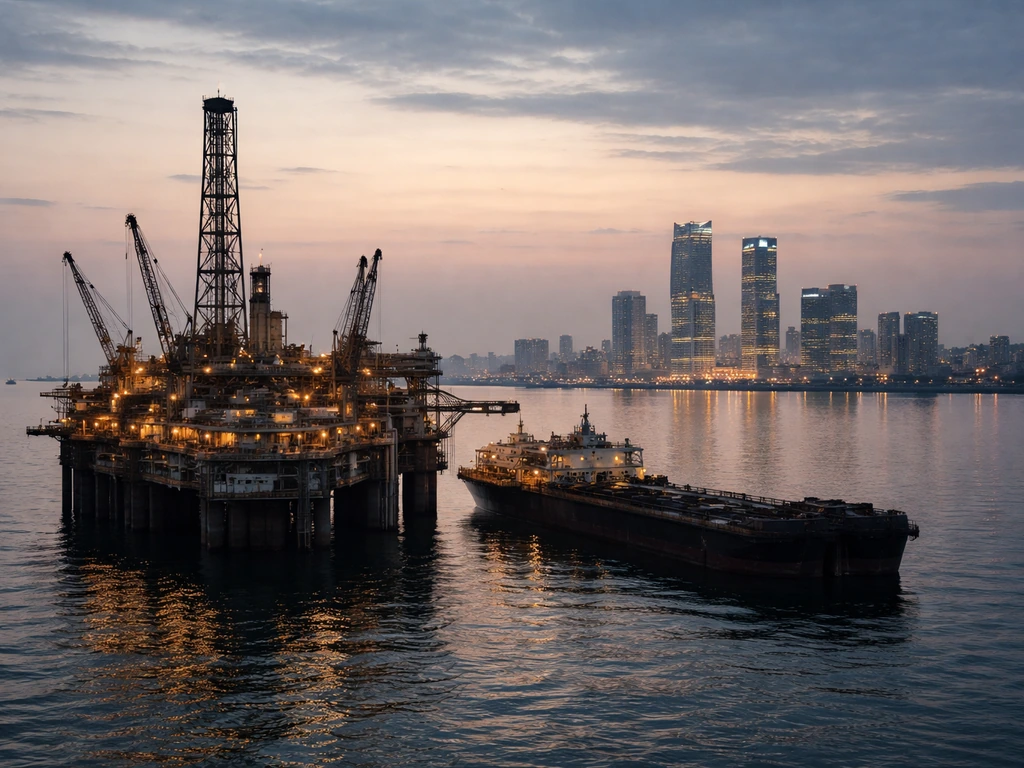
Folorunsho Alakija of Nigeria holds the top spot across most major rankings as of mid-2026. She is the executive vice-chairman of Famfa Oil, a company that holds a significant working interest in OML 127, an offshore oil block in Nigeria that has been producing since 2003. Before oil, she ran a fashion house called Supreme Stitches (later rebranded Rose of Sharon House of Fashion), which gave her the business infrastructure and high-level connections she later used to pursue the oil sector. Her wealth is real, documented, and tied to tangible assets, which is why she keeps appearing at the top of lists even as the figures shift.
It is worth flagging that the title is not permanent. African women's wealth rankings shift with oil prices, currency moves, and business performance. Isabel dos Santos, the Angolan businesswoman and daughter of former President José Eduardo dos Santos, appeared in earlier lists as a frontrunner but has faced serious legal and financial headwinds since the Luanda Leaks investigations starting in 2020, which alleged widespread corruption in how her assets were acquired. Most credible trackers have either removed her or significantly discounted her listed wealth, so she is not a reliable benchmark today.
Latest net worth estimates and why they differ
Alakija's net worth has been reported anywhere from $1 billion to $2.5 billion in recent years. Forbes, which publishes its Africa's Richest People list using stock prices and currency exchange rates from the close of business on a single snapshot date (March 1, 2026 for the 2026 list), lands on the more conservative end. Bloomberg's Billionaires Index, by contrast, is updated every business day after New York market close and can reflect intraday movements in linked assets. Bloomberg describes its Billionaires Index as a dynamic measure of personal wealth, reflecting markets, the economy, and Bloomberg reporting Bloomberg's Billionaires Index is updated every business day after New York market close. Those two approaches alone can produce meaningfully different outputs.
Beyond timing, the bigger issue is that Alakija's core asset is a stake in a private oil company. Private companies do not have a stock price you can look up. Analysts have to estimate value using comparable transactions, production rates, oil price forecasts, and royalty structures, and reasonable analysts can reach figures that are hundreds of millions of dollars apart. Add in that the Nigerian naira has experienced significant volatility against the US dollar, and any dollar-denominated estimate has another layer of uncertainty baked in.
How net worth is actually estimated (the quick but accurate version)
Net worth is assets minus liabilities. For a billionaire, assets typically include ownership stakes in companies, real estate, cash, investments, and sometimes art or other holdings. Liabilities include loans, mortgages, and outstanding debts. The tricky part is valuing the assets.
- Public company stakes: If someone owns 30% of a publicly traded company with a $10 billion market cap, that stake is worth $3 billion on paper. This is the easiest number to calculate and verify.
- Private company stakes: With no public market price, analysts use revenue multiples, discounted cash flow models, or comparable sale prices from similar companies. Two analysts can reach very different numbers.
- Real estate: Usually valued at market rate or most recent appraisal, which may lag actual conditions.
- Currency conversion: Forbes and Bloomberg both convert to US dollars, but they use different conversion dates, which matters a lot when a currency like the Nigerian naira is fluctuating.
- Debts and encumbrances: These are subtracted from the total, but private individuals are not required to disclose them publicly, so trackers often make conservative assumptions.
- Methodology transparency: Bloomberg states it aims to provide the most transparent calculations available, with a detailed breakdown in each individual profile. Forbes updates annually with a fixed snapshot date.
The upshot: when you see a net worth figure, treat it as a well-reasoned estimate, not an accounting fact. The more of someone's wealth is in private assets, the wider the legitimate uncertainty band.
Top contenders: a side-by-side look
While Alakija leads most current rankings, a handful of other African women consistently appear in wealth discussions. Here is how they compare across the key variables.
| Name | Country | Primary Wealth Source | Estimated Net Worth (2025-2026) | Key Complication |
|---|---|---|---|---|
| Folorunsho Alakija | Nigeria | Oil (Famfa Oil / OML 127 stake) | $1B - $2.5B | Private company valuation; naira volatility |
| Ngozi Adaobi Okonjo-Iweala | Nigeria | Public sector / finance expertise (not primarily a wealth figure) | Not ranked | Primarily known for institutional leadership, not personal billionaire status |
| Wendy Appelbaum | South Africa | De Morgenzon wine estate, investments, inheritance (Liberty Life) | ~$700M - $1B | Much of wealth tied to private holdings and investments |
| Irene Charnley | South Africa | MTN Group stake, Smile Telecoms | Several hundred million USD | Lower profile; stake valuations depend on telecom market |
It is also worth noting that Forbes' methodology for its Africa list explicitly focuses on African citizens who reside in Africa or have their primary business there. It excludes figures like Mo Ibrahim (a Sudanese-born U.K. citizen) and certain South Africans whose primary business base is offshore. That definitional boundary matters when you are comparing lists from different publishers, because some sources cast a wider net than others.
How Folorunsho Alakija built her wealth: the actual timeline
Alakija's story is genuinely instructive because it is not a straight line. She started in banking in the 1970s, working at Sijuade Enterprises and later moving into corporate finance roles in Lagos. In 1985 she launched Supreme Stitches, a tailoring and fashion business that grew into a prominent Lagos label with a high-end client base, including prominent politicians and business figures. That network proved essential for what came next.
In 1993, Alakija's company Famfa Limited was awarded the rights to oil prospecting license OPL 216 (which later became OML 127) by the Nigerian government. The block sits in deep water offshore and was considered exploratory and speculative at the time. To develop it, Famfa entered into a joint venture with Star Deep Water Petroleum, a subsidiary of Chevron. The Nigerian government also holds a stake through the Nigerian National Petroleum Corporation. When the block began producing in 2003, it became one of Nigeria's significant offshore producers, and Alakija's share of that production revenue became the foundation of her wealth.
Since then, she has diversified into real estate through Dayspring Property Development Company, expanded her fashion work under the Rose of Sharon brand, and established the Rose of Sharon Foundation focused on widows and orphans. She has also been vocal about philanthropy and business mentorship. But make no mistake: the oil stake is where the bulk of the money lives, which means her net worth moves with crude oil prices in a direct and significant way.
Checking the claims: how to spot a credible estimate vs. a bad one
Wealth rankings attract clickbait, outdated figures, and outright errors. Before you trust a number you read online, run it through this quick credibility check.
- Does the source name a specific date? A net worth figure without a snapshot date is almost meaningless. Look for month and year at minimum.
- Is the source Forbes, Bloomberg, or a major financial publication? These have published methodologies and editorial standards. Random listicles do not.
- Does the article explain what assets the figure is based on? A credible estimate ties the number to specific holdings like an oil stake, company ownership, or real estate portfolio.
- Is the currency conversion noted? African wealth figures in USD are sensitive to exchange rate assumptions. If no rate or date is mentioned, the number could be significantly off.
- Has anything major happened since the estimate was published? Oil price swings, legal proceedings, or currency crises can change a figure by hundreds of millions of dollars in months.
- Is the person's primary wealth source private or public? Private = wider uncertainty. Public = tighter, but still an estimate.
- Are there red flags in the subject's background? In Alakija's case the wealth origin is documented and largely uncontested. For figures like Isabel dos Santos, serious legal investigations should make you skeptical of older, higher estimates.
One specific flag worth mentioning: some sites still list Isabel dos Santos with multi-billion dollar figures from pre-2020 estimates. Given the Luanda Leaks findings and subsequent asset freezes in multiple countries, those figures are not reliable. Always check when the estimate was last updated and whether the subject has faced any legal or financial developments since then.
How to verify and track this yourself going forward

If you want to keep an eye on where the richest woman in Africa stands, here is a practical approach that does not require a Bloomberg terminal or a finance degree.
- Check Forbes Africa's Richest list: Forbes publishes this annually, usually in the first quarter of each year. The 2026 figures are calculated from March 1, 2026 market data. Search for 'Forbes Africa Richest 2026' and look at the published date to confirm you have the current version.
- Cross-check with Bloomberg's Billionaires Index: Bloomberg updates daily, so it can catch major moves that a once-a-year Forbes estimate misses. Search the individual's name directly on the Bloomberg Billionaires Index page.
- Watch crude oil prices: Because Alakija's wealth is tied to oil production, a significant drop or spike in Brent crude has a direct read-through to her estimated net worth. You do not need to calculate it yourself; just know that when oil moves 20%, her figure should move too.
- Follow the Nigerian naira rate: The naira-to-dollar exchange rate has been volatile. A weaker naira means Nigerian-based assets are worth fewer dollars even if the underlying business is unchanged.
- Set a Google News alert: Set alerts for 'Folorunsho Alakija' and 'richest woman Africa' to catch new profiles, legal news, or business announcements that might shift the picture.
- Re-check at least annually: Wealth rankings are not permanent. The African business landscape is dynamic enough that this list can look meaningfully different from one year to the next.
For context, the gap between the richest woman in Africa and the richest women globally is substantial. The women who top global rankings like those covered in the richest female celebrities category or in country-specific lists like the richest woman in Australia tend to draw on different asset bases, including tech equity, media empires, and inherited industrial wealth in more stable currency environments. If you are comparing across industries and geographies, a guide to the richest female celebrities net worth can help you interpret those ranges side by side. For a direct comparison, you can also look at the richest woman in Australia net worth and how it is valued. The African context adds currency risk and a heavier reliance on commodity-linked private assets, which is precisely why the numbers can look so different depending on who is doing the math and when.
The bottom line is that Folorunsho Alakija is your most credible answer to this question in June 2026, with a net worth that sits somewhere in the $1 billion to $2. The world’s smallest woman net worth is often debated online, but it depends on which sources and valuation methods are being used net worth that sits somewhere in the $1 billion to $2. In sports history, the idea of a highest net worth gymnast is often tied to sponsorships, media deals, and long-term brand value beyond competition earnings. 5 billion range depending on oil prices, exchange rates, and which methodology you trust. That uncertainty is not a weakness in the reporting; it is an honest reflection of how private-asset wealth actually works. Treat the figure as a range, check the date on any estimate you find, and you will have a much better grip on the real picture than most people asking this question.
FAQ
Why do different websites give very different net worth numbers for the richest woman in Africa?
For private-asset fortunes, valuation depends on assumptions (production levels, oil price forecasts, royalty structures, and how much of a stake is effectively controllable). Small changes in those inputs can move the estimate by hundreds of millions, especially when the person’s wealth is concentrated in one industry.
Does the net worth estimate change daily or only occasionally?
It varies by tracker. Some publish on a schedule using a single snapshot date, while others update more frequently using market-linked assumptions. With commodity-linked assets, even a short run in oil prices or currency moves can justify a re-estimate.
How much does currency exchange matter for Africa-based billionaires’ net worth?
A lot. If most accounting value is in local currency or tied to oil revenues priced in dollars, naira swings can widen the reported range when converted to USD. That is why two estimates produced in different weeks can disagree even if underlying operations barely changed.
If the richest woman in Africa owns private companies, can her wealth be “verified” like a public stock portfolio?
Not in the same way. Private-company interests lack a public price, so analysts infer value from comparable transactions, financial statements (when available), and sector benchmarks. The result is best treated as a modeled range, not an audited figure.
What exactly counts as “assets minus liabilities” for a business owner like Alakija?
Assets typically include ownership stakes, real estate, and other investments, but liabilities include bank debt, mortgages, and any outstanding obligations tied to projects. Some estimates undercount liabilities if loan details are not public, which can push reported net worth upward.
Why do some lists exclude certain African-born or African-diaspora figures?
Because “richest in Africa” can be defined by residency or primary business base. A publisher may restrict to people who are African citizens residing in Africa or who primarily operate their businesses there, while another uses nationality or birthplace. Those rules can change who shows up and who gets excluded.
What are common scams or outdated claims I should watch for when searching this topic?
Watch for articles that do not show a last-updated date, reuse older multi-year figures, or present pre-legal-action numbers as current. If the person’s assets faced disputes, freezes, or major restructuring, older net worth claims can become misleading quickly.
How can I sanity-check a net worth range I see online?
Check three items: (1) the estimate date, (2) whether the wealth is concentrated in private stakes versus publicly traded holdings, and (3) whether the tracker explains its valuation approach for private assets. If it provides only a single number with no method and no recency, treat it as low-confidence.
Is philanthropy or brand activity included in net worth calculations?
Sometimes indirectly. Operating foundations or brand ventures may be valued if they are part of the person’s ownership or if associated assets have identifiable value, but many philanthropic activities are structured separately. That means high-profile giving does not automatically translate into a higher net worth, and it may not be reflected clearly in rankings.
Could someone else overtake the richest woman in Africa in 2026, and what would drive that?
Yes, especially if their assets are also private but tied to faster-growing sectors or if their stake value rises sharply. For commodity-linked fortunes, drivers include sustained oil price strength, project expansion, improved production, favorable exchange rates, and changes in ownership terms or debt levels.
Next Article
Richest Female Celebrities Net Worth: Ranked List
Ranked richest female celebrities net worth list with verified methods, wealth breakdowns, and tips to check estimates.