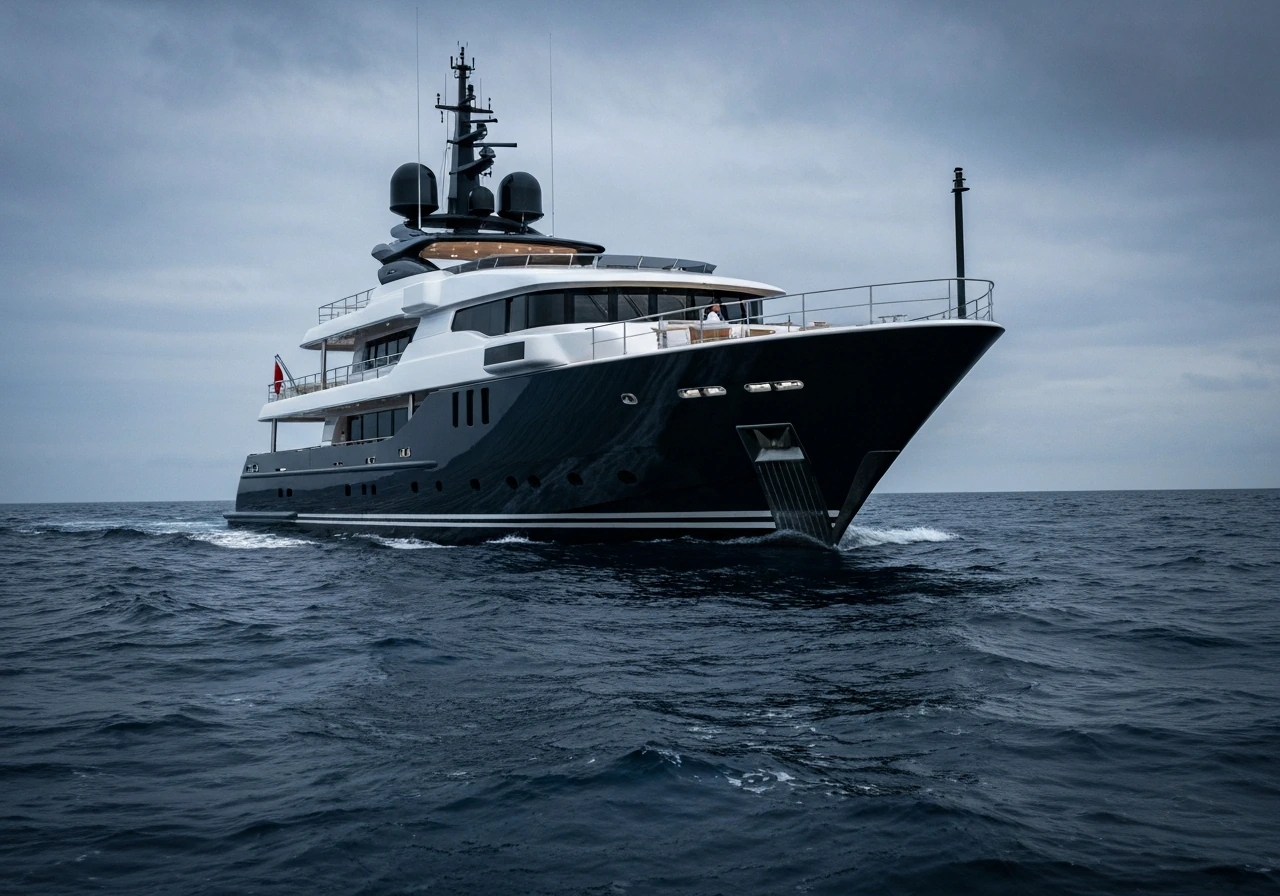
There is no single public figure consistently known as 'Queen D the yacht owner' with a documented net worth. What research actually turns up is that 'Queen D' is primarily the name of a 41. 1-meter superyacht built by Christensen Shipyards in 2000, not a celebrity nickname tied to one well-known woman.
Queen D Yacht Owner Net Worth: Estimate, Sources, Method

Jordan Hartwell
19 Jun 2026
The human owner of that vessel is not publicly disclosed on open web sources, and the major yacht databases that do have the name keep it behind a subscription paywall. If you searched 'Queen D yacht owner net worth' hoping to find a specific woman entrepreneur or entertainer, the honest answer is: the identity of the yacht's owner is unconfirmed in public records, and no credible net worth estimate can be built around an unidentified person.
The same uncertainty applies when people search for a specific "Madame Queen" net worth tied to this yacht.
Who (or what) is 'Queen D', and why this gets confusing fast
The confusion starts because 'Queen D' functions as both a vessel name and, in some corners of social media, a nickname applied to various women in entertainment and business. The vessel itself is well-documented: SuperYachtTimes, Boat International, and Superyachts.com all list 'Queen D' as a custom motor yacht, 41.15 meters, launched in 2000 by Christensen Shipyards (a well-regarded American builder), with a refit completed in 2012. VesselFinder tracks it under IMO number 9826196. That is a real, traceable boat. What is not traceable through open sources is who owns it today, because the registered owner field in public marine databases either requires a paid subscription or simply does not display the name on the public-facing page.
On the celebrity side, 'Queen D' gets applied loosely to several different women depending on the platform. In rap and hip-hop circles it shows up as a stage name for more than one artist. In reality TV and social media spaces it appears as a self-given title. None of those uses have produced a consistently prominent, nationally covered public figure whose finances are well-documented enough to build a reliable net worth profile around. If you encountered the phrase on TikTok or Instagram attached to someone showing off a yacht, that is almost certainly a charter or event appearance rather than ownership, and the 'Queen D' label may refer to the boat's name rather than the person's nickname.
What 'net worth' actually means in this context
Net worth is total assets minus total liabilities. For a private individual, especially one not required to file public financial disclosures, that number is always an estimate. The way this site builds those estimates is by layering publicly available financial signals: business ownership filings, brand partnerships and endorsement deals reported in the press, real estate records, documented revenue from music or media, and asset indicators like verified vehicle or vessel registrations.
A superyacht is one of the loudest asset signals possible. A Christensen 41-meter built in 2000, depending on its condition and current market, typically carries a resale value somewhere between $3 million and $8 million, and annual operating costs (crew, fuel, maintenance, insurance, berthing) commonly run 10 to 15 percent of the vessel's value per year. That means owning a yacht like Queen D implies both significant liquid wealth and ongoing high income to sustain the running costs.
What public sources actually tell us about the Queen D yacht's ownership

Here is what the open web actually surfaces. blank" rel="noopener noreferrer">SuperYachtTimes has an entry for Queen D with its build details but explicitly notes the owner is only visible inside their paid 'SYT iQ' platform. Boat International's superyacht directory and Superyachts.com both confirm the vessel's specs and history but do not name a current private owner. blank" rel="noopener noreferrer">VesselFinder lists IMO 9826196 as 'QUEEN D.' with a registered owner field, but the public preview of the page does not expose that name. In short, every credible maritime data source walls off the ownership detail.
That is actually normal for superyacht ownership. Many high-net-worth individuals register vessels through shell companies or trusts specifically to avoid their personal name appearing in public maritime databases. So the absence of a named owner is not unusual, but it does mean any claim you have seen online identifying a specific 'Queen D' as the owner of this yacht should be treated with real skepticism unless it comes with a citation to a credible primary source like a corporate registration, a verified press interview, or a regulated financial disclosure.
Owning vs. chartering: why the distinction matters enormously for net worth
This is the single biggest variable in any wealth estimate tied to a yacht claim. Actual ownership of a 41-meter superyacht strongly suggests a net worth in the tens of millions at minimum. Running a vessel of that size costs roughly $500,000 to $1 million per year in operational expenses alone, before depreciation or upgrades. Someone who genuinely owns Queen D outright is almost certainly worth $20 million or more, and possibly much more depending on how the vessel is financed.
Chartering, on the other hand, tells you almost nothing about net worth. A week on a 40-meter motor yacht in, say, the Mediterranean can be chartered for somewhere between $50,000 and $150,000 depending on season and destination. That is expensive by most standards, but it is accessible to someone with a net worth of $2 to $5 million who saves up for a luxury trip or receives it as a gift or promotional arrangement.
Leasing or appearing on a chartered vessel for a music video, event, or social media content is even less indicative of wealth. Many influencers and artists rent time on high-profile boats specifically to signal wealth they do not actually hold. The yacht name 'Queen D' appearing in a photo or video caption does not confirm ownership of anything.
| Scenario | What It Implies About Net Worth | Reliability as a Wealth Signal |
|---|---|---|
| Full ownership (vessel registered in her name or her company) | Likely $20M+ net worth | High, if verified through maritime or corporate records |
| Co-ownership or investment stake | Likely $5M–$20M+ | Medium, requires corporate filing or credible reporting |
| Long-term charter lease | Net worth could range $2M–$20M+ | Low, chartering alone tells you little |
| One-time charter or event appearance | No meaningful net worth signal | Very low, common social media strategy |
| Featured in content filmed on the yacht | No net worth signal | Not a wealth indicator at all |
Estimated net worth ranges and the assumptions behind them

Because the owner of the Queen D yacht is not publicly confirmed, any net worth figure tied specifically to 'the Queen D yacht owner' is speculative. That said, here is how to think about the range depending on what scenario turns out to be true.
If the owner is a private individual who holds the vessel outright, a reasonable working estimate for their personal net worth would be $20 million to $100 million or more, with the wide range reflecting that superyacht owners vary from the moderately wealthy to the ultra-rich. If the connection to Queen D is a charter or promotional arrangement rather than ownership, the net worth could be almost anything and the yacht provides no useful data point.
If 'Queen D' is a nickname for a specific woman in entertainment whose connection to this yacht has been loosely reported or inferred from social content, her net worth would need to be estimated entirely from her career earnings, business holdings, and other verified assets, with the yacht detail bracketed out as unconfirmed.
The one thing to avoid is building a number backward from the yacht. It is tempting to see a $5 million boat and assume a $50 million person, but that logic only works if ownership is confirmed. Without that confirmation, the yacht is noise, not signal. In other words, when people look up "queen holla net worth," they are usually trying to estimate the same kind of assets minus liabilities story that applies to any yacht-linked rumor.
How Queen D compares to similar women in entertainment and business
For context, women in entertainment and entrepreneurship who are genuinely in the superyacht ownership bracket tend to have diversified revenue streams well beyond performance or social media income. Think equity stakes in beverage or beauty companies, real estate portfolios, and backend ownership in touring or media production. The Queen D yacht, if owned by a woman entrepreneur, would place her in rarefied company. Most women artists and influencers who appear wealthy enough to own a vessel of this caliber have documented business ownership that shows up in press coverage, trademark filings, or investment announcements, none of which currently point to a specific 'Queen D' persona.
This site profiles a range of women whose financial stories illustrate what that wealth-building actually looks like in practice. Artists who build toward real asset ownership typically combine recording and touring income with brand deals, licensing, and equity plays. The gap between appearing wealthy on a yacht and actually owning one is often a decade of business decisions and reinvestment. That context is worth keeping in mind when evaluating any social-media-driven 'yacht owner' claim.
How to verify or update this estimate yourself

If you want to dig deeper and find a current, credible answer, here is the practical sequence to follow.
- Check maritime databases directly. VesselFinder (free tier) will confirm the vessel exists under IMO 9826196. For the registered owner, a paid subscription to SuperYachtTimes SYT iQ or Lloyd's List Intelligence will surface the ownership record if it is not hidden behind a holding company.
- Search corporate registrations. If the yacht is registered to a company rather than an individual, search that company name in the relevant national business registry (Delaware Secretary of State for US-flagged entities, Companies House for UK, or the Marshall Islands registry for many offshore registrations). Follow the chain to find the beneficial owner.
- Look for credible journalism. A profile in Forbes, Essence, Bloomberg, or a verified interview in a major publication where the subject explicitly claims ownership is a strong primary source. Social media posts, fan blogs, and gossip sites are not.
- Check trademark and business filings. If 'Queen D' is a professional brand name, USPTO trademark searches and state business filings may connect the name to a real person and reveal business activity that supports a net worth estimate.
- Cross-reference with entertainment industry reporting. For artists, music industry revenue data from Billboard, Luminate, or reported tour grosses from Pollstar can anchor earnings estimates. For entrepreneurs, press releases about funding rounds or acquisitions are the most reliable signals.
- Watch for red flags. Be cautious of any source that names a specific person as the Queen D yacht owner without linking to a maritime record, corporate filing, or verified interview. Also watch for confusion between the vessel named Queen D and a person who uses Queen D as a nickname, these are two different things that frequently get conflated online.
Red flags that should make you skeptical
- A social media post where someone stands on a yacht named Queen D: this most likely means they are on a charter, not that they own it.
- A net worth figure cited without any named source or methodology, especially if it is a round number like '$10 million' or '$50 million' with no explanation.
- Confusion between multiple 'Queen D' personas: at least a few different women use this name or nickname, and their financial situations vary enormously.
- Claims that treat the yacht as proof of wealth: the vessel is an asset signal only if ownership is confirmed, otherwise it is just a backdrop.
- Very recent or viral claims: net worth claims that spike in search interest are often driven by a single unverified post that gets reshared, not by new financial reporting.
The bottom line is that 'Queen D yacht owner net worth' does not yet have a clean, verifiable answer in public records. If you want the most accurate view, focus on verified ownership details first, then use those facts to support any net worth discussion Queen D yacht owner net worth. The yacht is real and documented. The owner's identity is not publicly confirmed through open sources.
Any specific net worth figure attached to this query right now should be treated as an estimate at best and speculation at worst until maritime or corporate records confirm who actually holds the vessel. If that information surfaces through a credible source, the methodology above will let you build a reasonable estimate quickly.
FAQ
How can I verify whether “Queen D” is actually someone’s private yacht, not a charter or event boat?
Look for evidence tied to vessel operation, not just photos. A credible check is whether the same IMO number (9826196) shows charter/management activity during recent dates, and whether there is any public vessel management company consistently listed. If the only “owner” evidence comes from social media captions, treat it as non-ownership.
What is the fastest reliable way to confirm the registered owner behind the “Queen D” yacht?
Use the IMO-identified record in paid maritime intelligence or subscription databases, because the public preview may omit the owner field. If you cannot access paid records, try to corroborate via corporate registries for a management or holding entity that appears in charter listings or event press releases, then trace that entity back to a real-world name.
If the owner uses a shell company, can I still estimate the owner’s net worth accurately?
You can estimate indirectly, but not cleanly. Shell or trust structures often hide personal names on maritime registries, so you would need to identify the holding entity and then find corroborating signals like beneficial ownership disclosures, major business filings, or regulated reports. Without entity-to-person linkage, any “net worth” number becomes a rough bracket, not a direct estimate.
Does the $3 million to $8 million resale value range for a 41-meter yacht mean the owner’s net worth is always “tens of millions”?
Not always. Resale value is only one asset indicator and assumes market pricing for that hull in its current condition. Financing structure matters, too (loans, partial ownership, or lease arrangements). Also, liabilities and other wealth sources can widen or shrink the gap, so treat the “tens of millions” idea as a working hypothesis only when ownership is confirmed.
What’s the most common mistake when people estimate “queen d yacht owner net worth” from the yacht’s price?
They reverse-engineer the person’s wealth from the yacht and assume ownership is confirmed. The article’s key decision point is whether the person is the owner, a charter guest, or a promotional appearance. If ownership is unconfirmed, the yacht is not a reliable wealth signal.
If someone claims “Queen D” owner net worth on TikTok or Instagram, what evidence would make it credible?
Credible claims usually include a verifiable chain: identifiable management or owning entity, a document-like reference (court filing, corporate registry record, or regulated disclosure), or a direct interview where the person ties themselves to that specific vessel by IMO number. Missing that chain, the claim is likely conflating the yacht’s name with a persona or stage name.
How much do operating costs actually matter for net worth estimates, and are the 10% to 15% yearly costs realistic?
They matter for cash-flow, but they do not directly define net worth. The 10% to 15% range is a practical planning window for crew, fuel, maintenance, insurance, and berthing, but actual costs swing with usage frequency, refit timing, crew model, and route. Even if costs are high, that impacts sustainability rather than total assets minus liabilities.
Can chartering explain “owning” vibes, and how can I tell the difference in practice?
Yes, chartering is common for influencers and entertainers. The tell is repeat branding: if the same person “owns” the yacht across many locations with no ownership trail, it is more consistent with renting time or promotional access. Look for documentation that the person is a beneficial owner, not just a recurring face in marketing content.
What if “Queen D” is also used as a stage name, how should I avoid mixing different people?
Treat “Queen D” as ambiguous until you can anchor it to a specific vessel (IMO 9826196) and to an identifiable owner or entity. If a claim does not explicitly connect to that IMO number or to an owner record, assume it may be a different person who shares the same nickname.
What should I do if new information suddenly identifies the owner publicly?
Re-run the estimate with a confirmation-first workflow: (1) confirm the owner identity via a primary record or verifiable registry link, (2) list assets with sourced indicators (business holdings, real estate, equity stakes), (3) estimate liabilities where available, and (4) bracket net worth rather than using a single guess. This prevents the “backward number” trap.
Next Article
Queen the Group Net Worth: Estimate, Sources, and Verification
Estimate Queen the Group net worth with sources, income breakdown, and tips to verify claims reliably online