
There is no widely documented modern influencer, social-media personality, or music act that goes specifically by the name 'Queen the Group' with a verifiable net worth on record as of June 2026. When you search that phrase today, almost every result points back to the legendary British rock band Queen, whose combined member wealth runs into the hundreds of millions of dollars. If you landed here looking for a specific collective or creator who uses that name, the honest answer is that no credible, sourced figure exists yet because the identity itself hasn't broken through to the level of financial documentation. What this article will do is walk you through exactly what the research shows, how net-worth estimates get built for acts like this, and what you can do to assess any number you find elsewhere.
Queen the Group Net Worth: Estimate, Sources, and Verification

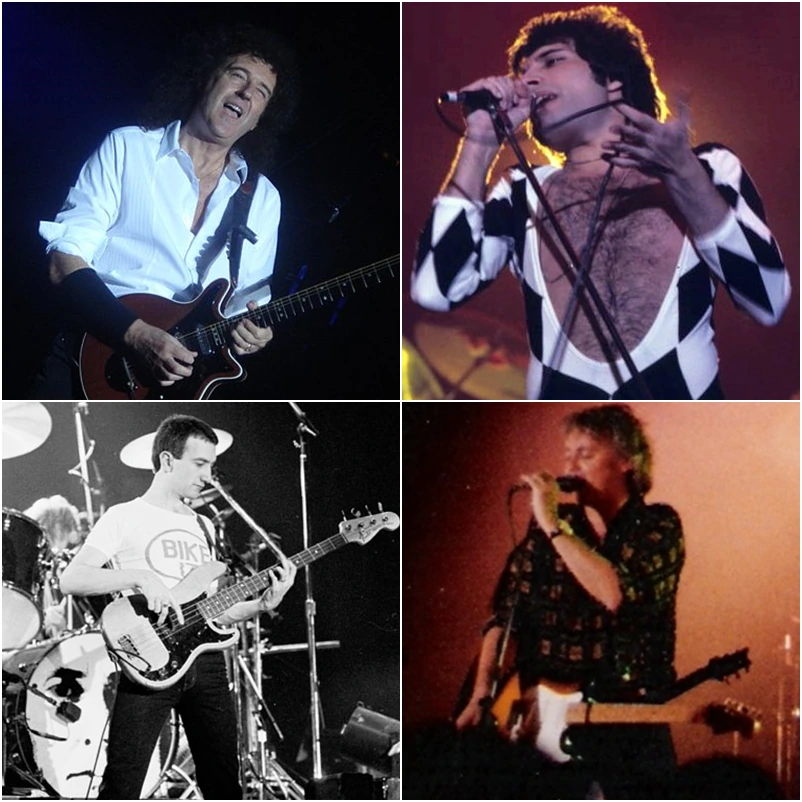
Who Queen the Group Actually Is (and Why the Name Is Confusing)
The phrase 'Queen the Group' sits in an awkward spot on the internet. The dominant result across every major search engine and aggregator is the British rock band Queen, formed around 1970 from the earlier lineup Smile, with Brian May and Roger Taylor carrying over before Freddie Mercury and John Deacon joined. That group is one of the best-selling music acts in history, with documented catalog income, ongoing licensing deals, and legacy marketing campaigns still running through Hollywood Records and other rights-holders. They are, in every practical sense, the most recognized 'Queen' group in existence.
Beyond that rock-band identity, there is no second, clearly established entity called 'Queen the Group' with its own Wikipedia page, official label affiliation, or documented business filing that surfaces consistently in public records as of mid-2026. It's possible the name refers to a regional music act, an emerging social-media collective, or a niche entertainment brand that simply hasn't reached the threshold of financial documentation yet. This is important to flag because net-worth sites sometimes publish figures for names before any real data exists, which is exactly what you need to watch for.
If you're researching this because you encountered the name in a specific context, such as a local music scene, a YouTube channel, or a short-form video platform, the group may be genuinely emerging but not yet financially documented. That's a different situation from, say, Queen (the rock band), whose members have decades of royalty streams and public business records behind them.
Why Net Worth Numbers Vary So Wildly Across Websites

This is worth understanding regardless of which 'Queen' you're researching. Most net-worth aggregator sites don't have access to tax returns, audited financials, or private equity disclosures. What they do is reverse-engineer a figure from publicly available signals: reported record sales, estimated streaming royalties, known brand-deal rates for comparable artists, real estate records where available, and court filings or business registrations. The result is always an estimate, and a wide one at that. Two reputable sites can show figures that differ by millions simply because they weighted different inputs.
For 'Queen the Group' specifically, at least one aggregator that tracks the name explicitly lists the net worth as 'Under Review,' meaning they haven't yet assigned even an estimated figure. That's actually a more honest position than publishing a number with no backing data. When you see a site post a specific dollar amount for an entity this ambiguous, the first question to ask is: what primary evidence supports it? If the answer is nothing traceable, treat the figure as speculative at best.
The Most Common Estimation Inputs (And Their Limits)
- Streaming and digital sales revenue: estimated from chart positions and platform payout rates, but actual payout splits between artists, labels, and distributors are rarely public
- Catalog licensing: used for legacy acts like the rock-band Queen, where sync placements in film, TV, and advertising generate ongoing income, but deal values are almost never disclosed
- Brand deal benchmarks: estimated by comparing follower counts or audience size to publicly known influencer rate cards, which vary enormously by niche and engagement rate
- Real estate records: publicly available in most U.S. counties, but only useful if the subject holds property under their own name rather than an LLC
- Business filings: state-level incorporation records can confirm a company exists, but they don't show revenue or profit
- Court documents: useful when relevant, such as divorce proceedings or IP disputes, but only applicable when litigation is on record
The Estimated Net Worth Range (And What Drives It)

For the rock band Queen as a collective, credible estimates place the combined wealth of the surviving members and the estate in the range of several hundred million dollars, with Brian May and Roger Taylor individually estimated in the $200 million-plus range by multiple outlets. Freddie Mercury's estate, managed after his death in 1991, has continued generating income through licensing, tribute projects, and the massive success of the 2018 biopic 'Bohemian Rhapsody,' which reignited catalog sales globally. Those figures, however, belong to individual members and rights-holding entities, not a single 'Queen the Group' net worth figure.
For an emerging or regional act using the 'Queen the Group' name with no documented financial history, any net worth estimate would essentially be zero or negligible from a documented-wealth perspective, until the act reaches a level of activity that generates traceable public revenue. That's not a criticism; it's just where the evidence sits today. If new information surfaces after mid-2026, whether through a label signing, a major brand deal, or a business registration that becomes public, those would be the data points that move any estimate upward.
The Income Streams That Would Build This Kind of Net Worth
Whether you're looking at the legendary rock group or a newer act carrying that name, the income architecture for a music-based group follows a fairly consistent structure. Here's how those streams typically layer together and what each one contributes to overall wealth.
Music and Entertainment Revenue

For Queen the band, this is the dominant driver. Catalog royalties from songs like 'Bohemian Rhapsody,' 'We Will Rock You,' and 'Don't Stop Me Now' generate continuous income through Spotify, Apple Music, YouTube, and physical sales. Sync licensing, where songs are placed in films, commercials, and TV shows, adds another layer that is often more lucrative per placement than streaming. The 'Bohemian Rhapsody' biopic alone pushed the catalog back into heavy rotation globally, which had a measurable impact on streaming numbers. For a newer group using a similar name, this stream would only exist once recordings are commercially distributed and generating royalties.
Brand Deals and Sponsorships
Established music acts command significant sponsorship fees for endorsements, tour partnerships, and product collaborations. For social-media-based groups, brand deals are often the primary income source before catalog revenue matures. Rates scale with platform following, engagement, and audience demographics. A group with a few hundred thousand engaged followers might command $5,000 to $20,000 per sponsored post, while acts with millions of followers and high engagement can command six-figure partnerships. Without documented following size or deal history for 'Queen the Group' as a distinct entity, this stream can't be estimated.
Merchandise and Creative Projects
Merch is a meaningful income stream for music acts at almost every level. For Queen the band, official merchandise through their touring and online store generates ongoing revenue. For newer acts, direct-to-consumer merch sold through platforms like Shopify or Printful can generate income with relatively low overhead, though margins depend heavily on volume and fulfillment costs. Creative projects like independent films, documentaries, or branded content also fall here.
Investments and Business Equity
At the level of Queen the rock band's individual members, personal investments in real estate, publishing rights, and business equity make up a substantial portion of long-term wealth. Brian May, for instance, has publicly documented interests well beyond music. For any collective without this level of documented business history, this stream is speculative without a paper trail to reference.
Assets and Spending Signals: Where the Wealth Shows Up
For the rock band Queen, wealth signals are visible in documented ways: properties in London and internationally linked to band members, the scale of live touring operations (Queen + Adam Lambert tours have sold out stadium-level venues), and catalog-rights structures that have been referenced in music industry reporting. These are the kinds of signals that net-worth estimators use as anchors when they don't have direct financial statements.
For a newer or less-documented 'Queen the Group' entity, public wealth signals simply don't exist in the record right now. No real estate filings under that name, no documented equity stakes, no tour revenue in trade publications. That absence of signal is itself useful information for any reader trying to evaluate the credibility of a net-worth claim they've seen elsewhere. Because that name has no documented financial paper trail, there is not a credible, verifiable queen dura net worth figure in public records yet.
What's Changed Recently and How It Affects the Estimate

As of June 2026, the most recent documented activity tied to the Queen legacy band involves ongoing catalog promotion through 'Queen The Greatest' video programming (a series of legacy episodes originally launched around 2021 that continues to surface on official channels), continued streaming catalog performance, and the active Queen + Adam Lambert touring configuration. The official BrianMay.com episode archive for “Queen The Greatest” documents the Live Aid-related episode programming timeline and its continued catalog promotion on official channels Queen The Greatest' video programming. These keep catalog visibility and licensing income elevated relative to where they'd be without active promotion. For the surviving members and the Mercury estate, this sustained visibility translates to royalty and licensing income that holds wealth estimates steady or growing.
If 'Queen the Group' refers to a different, newer entity, there is no documented event as of this writing, such as a label deal, a viral moment, or a confirmed business partnership, that would anchor a revised net-worth estimate in either direction. Any site showing a specific number without referencing a specific recent event or data source should be treated with skepticism. Financial estimates need anchor points to be credible, and right now those anchor points don't appear in publicly available records for this name as a distinct modern act.
How to Verify Any Net Worth Claim You Find
This is genuinely useful no matter what name you're researching. Here's a practical checklist for evaluating whether a net-worth figure is credible or inflated.
- Check whether the site explains how the estimate was derived. A credible page will reference specific income streams, known deals, or public records. A page that just states a number with a biography and no methodology is almost always unverified.
- Cross-reference identity first. Search the name alongside Wikipedia, official label pages, or verified social accounts to confirm you're reading about the right person or group. The 'Queen' name confusion is a perfect example of why this matters.
- Look for recent updates. Net worth figures that haven't been revised in years are likely stale. A credible site will note when the estimate was last reviewed.
- Search for primary signals independently. Run a quick county property search, look for business filings in the relevant state, or check ASCAP/BMI royalty registration to see if the act has documented publishing rights.
- Compare across at least three sources. If one site says $5 million and two others say 'Under Review' or don't mention the subject at all, the $5 million figure is an outlier that needs scrutiny.
- Treat 'Under Review' as honest. When an aggregator hasn't assigned a number, that's often more accurate than a site that fabricates a figure to fill the page. Absence of data is not the same as a net worth of zero, but it means no defensible estimate exists yet.
- Note the site's niche and editorial standards. Sites focused on verified wealth documentation with clear methodology notes are more reliable than traffic-driven aggregators that publish hundreds of net-worth pages without editorial review.
Putting It All Together
The bottom line right now is that 'Queen the Group' as a distinct modern identity does not have a documented, verifiable net worth in publicly available records as of June 2026. CelebrityNetWorth-style pages for a specific person or act typically present a single net-worth number based on collected reporting, which means they may not provide the detailed primary evidence you would need for a verifiable “Queen the Group” figure blank" rel="noopener noreferrer">distinct modern identity does not have a documented, verifiable net worth. If you still want the headline figure for madame queen net worth, use the verification checklist above to separate documented wealth from speculation. If you're trying to estimate the queen d yacht owner net worth, use the same method: confirm primary evidence and avoid numbers that have no traceable data ‘Queen the Group’ as a distinct modern identity. If you're researching the iconic rock band Queen, the member-level wealth is substantial and well-documented in broad strokes, with individual estimates in the hundreds of millions. If you're looking for a newer group or creator collective using that name, the financial paper trail simply hasn't materialized in public records yet, and any specific dollar figure you find elsewhere should be treated as unverified until it comes with a clear methodology and traceable sources. This site covers financial profiles of notable women in entertainment, business, and social media, and profiles in adjacent spaces, including figures like Queen Shiba Darling, Queen Holla, Queen V, and others, follow the same standard: the estimate only stands if there's documented evidence behind it. Queen Shiba Darling net worth is best evaluated by checking whether there is documented income and a traceable methodology behind any figure you see.
FAQ
Why do net-worth sites show a dollar amount for “Queen the Group” if there is no verified identity or paper trail?
Many aggregators treat a name match as sufficient, then generate a guess using generic music or influencer income models (followers, assumed sponsorship rates, assumed catalog earnings). If the figure is not tied to a specific registered entity, credited release, or trackable business activity, the number should be considered speculative rather than a sourced net worth.
If “Queen the Group” is an emerging collective, what evidence would realistically appear first that lets an estimate become credible?
Look for primary signals like a formal business registration in a specific jurisdiction, an officially announced label or distribution agreement, trackable releases with identifiable rights holders (publisher, label, PRO entries), and recurring revenue events such as paid sponsorship campaigns. Without those anchors, most “net worth” numbers will be guesswork.
How can I tell whether the website is mixing up “Queen the Group” with the band Queen?
Check whether the page references band-specific facts like member names, Queen catalog titles, tours with known lineups, or Mercury estate licensing. If the claim uses band-related details while still claiming to be about “Queen the Group,” it is likely an identity conflation rather than a distinct-entity estimate.
What’s the difference between net worth and annual income for a group, and why does it matter for accuracy?
Net worth is accumulated assets minus liabilities, while income is what comes in over a period. Net-worth aggregators often back-calculate net worth from assumed revenue, which can be very misleading if expenses, taxes, team splits, or debt are unknown. A high annual income does not automatically imply a high net worth.
If I find multiple “Queen the Group net worth” estimates that vary widely, how should I interpret the range?
A wide spread usually indicates the sites used different assumptions or different inputs (for example, one assumes significant brand deals, another assumes catalog royalties). Use the largest credibility test: look for the presence of traceable anchors like named releases, identifiable rights holders, or documented partnerships. The estimate with verifiable anchors should be treated as higher-quality even if the exact number still varies.
What should I look for to judge whether an estimate is based on legitimate data versus “reverse engineered” assumptions?
A credible estimate typically explains inputs in a way you can verify, such as citing specific releases, royalty pathways, property records under a matching entity name, or documented business filings. If the page relies on vague statements about fame or platform popularity without showing how dollars were derived, it is likely model-based speculation.
Can “Queen the Group” refer to something that is not music, and would that change how net worth should be evaluated?
Yes. If the entity is a studio brand, a community collective, a merch company, or a non-music media operation, the income architecture changes (for example, product sales margins, licensing of content, or ad revenue). A correct assessment would require mapping the revenue sources to the actual business model, not using a generic music-royalty template.
For the band Queen versus “Queen the Group,” why are member-level wealth figures not the same thing as a single group net worth?
Band members and estates may hold rights through different entities (individual holdings, estates, publishing structures, licensing vehicles). The group itself might not legally own everything that generates income. So an accurate approach treats income-generating rights separately from ownership and then combines it only when ownership is clearly attributable.
What is the safest way to use net-worth numbers I find online for “Queen the Group” without spreading misinformation?
Treat any figure as unverified unless it includes traceable methodology tied to a specific entity. You can phrase conclusions as “uncorroborated estimate” or “model-based guess” and avoid stating it as fact. Also, verify whether the estimate explicitly distinguishes “Queen the Group” from the band Queen.
If I want to estimate “Queen the Group” myself, what practical first-step checklist should I follow?
First, confirm the exact entity details (official name spelling, location, and whether it is a registered business). Next, list public revenue anchors you can verify (releases with identifiable credits, platform monetization presence, recurring sponsorship announcements). Finally, map those anchors to plausible revenue pathways and keep the result as a range, not a precise single number, until evidence becomes stronger.
Queen Holla Net Worth: Estimated Range and How It’s Calculated
Queen Holla net worth estimate with a credible range, income sources, and how to verify signals vs rumors