
Cleopatra's net worth, in honest terms, cannot be stated as a single number. There is no ancient equivalent of a Forbes profile, no tax return, no audited balance sheet. What historians and researchers can do, and what this article walks through, is build a defensible range using the evidence that does exist: state revenues, royal treasure inventories, land and trade control, and comparative economic data from the ancient world. The short answer for anyone searching today: credible estimates place Cleopatra's wealth in a range equivalent to hundreds of billions of modern dollars when you account for her effective control over Egypt's entire economy, though the assumptions behind that number matter enormously and anyone citing a precise figure is speculating.
Cleopatra Net Worth Today: Realistic Range From History


Is Cleopatra even possible to value like a modern celebrity?
The short answer is: not directly, but with work, you can get somewhere useful. Modern net worth calculations rely on disclosed assets, known income streams, and public market valuations. Cleopatra, who ruled Egypt as the last active pharaoh of the Ptolemaic dynasty from around 51 BCE until her death in 30 BCE, operated in a fundamentally different economic structure. She wasn't a celebrity who earned royalties or equity stakes.
She was a monarch whose personal wealth and state wealth were, for most practical purposes, the same thing. Egypt's land, its grain output, its papyrus trade, its ports, its gold mines, its tax revenues all flowed through the crown. Trying to separate 'Cleopatra's personal net worth' from 'the value of Egypt's economy' is a bit like asking what the net worth of a country's central bank is and then calling it one person's fortune.
It's not wrong to frame it that way, but you have to be upfront about what you're measuring.
This is actually a problem historians who study what's the queen's net worth run into even for modern monarchs: distinguishing personal assets from state-held wealth that a ruler controls but doesn't technically own outright. With Cleopatra, that line essentially didn't exist. So when researchers talk about her wealth, they're usually measuring her effective control over economic resources, which is the most honest and defensible framing.
What records and historical evidence exist for Cleopatra's wealth

The surviving evidence comes from a mix of ancient literary sources, papyri, numismatic records, and archaeological findings. None of it is a spreadsheet. But taken together, it paints a detailed enough picture to work with.
Ancient literary accounts
Plutarch's Life of Antony is one of the most quoted sources. He reports that as Roman forces closed in near the end of Cleopatra's reign, she had assembled the most valuable of the royal treasures into a chamber near the temple of Isis, including gold, silver, emeralds, pearls, ebony, ivory, and cinnamon. Plutarch also notes that Caesar was so anxious about this stockpile that he feared she might burn or destroy it if she felt cornered. That detail alone tells you something important: the treasure was large and concentrated enough that its destruction would have been a geopolitically significant loss. This wasn't a jewelry box. It was a national reserve.
Ptolemaic state revenue records
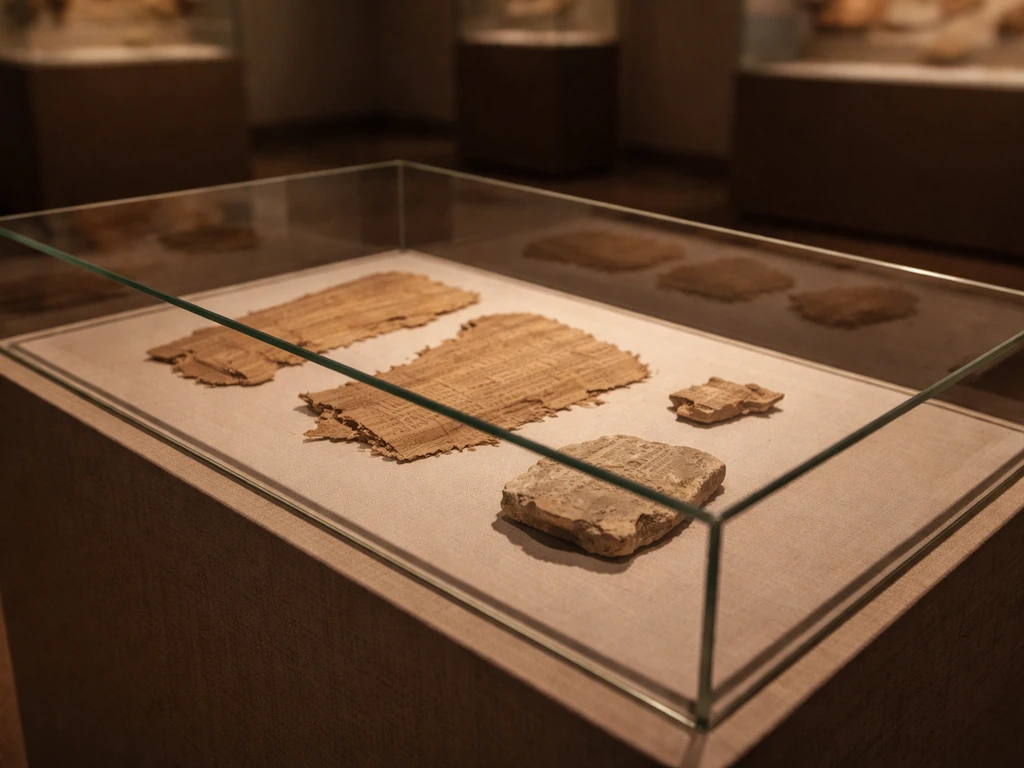
The Cambridge Ancient History chapters on Ptolemaic Egypt note that a few ancient sources provide figures for the money revenues of the Ptolemaic kingdom. One cited example involves Ptolemy II (Cleopatra's ancestor from roughly two centuries earlier), with blank" rel="noopener noreferrer">Jerome reporting an annual income figure of around 14,800 talents of silver, plus grain revenues. The Cambridge materials also confirm that the Ptolemaic state maintained stores of gold and silver in the king's reserves at Alexandria, and that the crown held a monopoly on buying and selling gold and silver for minting and metal management purposes. By Cleopatra's time, Ptolemaic revenues had declined somewhat from their peak, but Egypt was still one of the wealthiest territories in the Mediterranean world.
Papyri and administrative documents
Thousands of papyri survive from Ptolemaic and Roman Egypt. These include tax records, land registers, grain accounts, and trade documents. They don't give Cleopatra's personal balance sheet, but they allow economists and historians to reconstruct Egypt's fiscal system with reasonable confidence, including tax rates, commodity prices, and the scale of agricultural output. These are the building blocks for any serious wealth estimate.
Numismatic and archaeological evidence
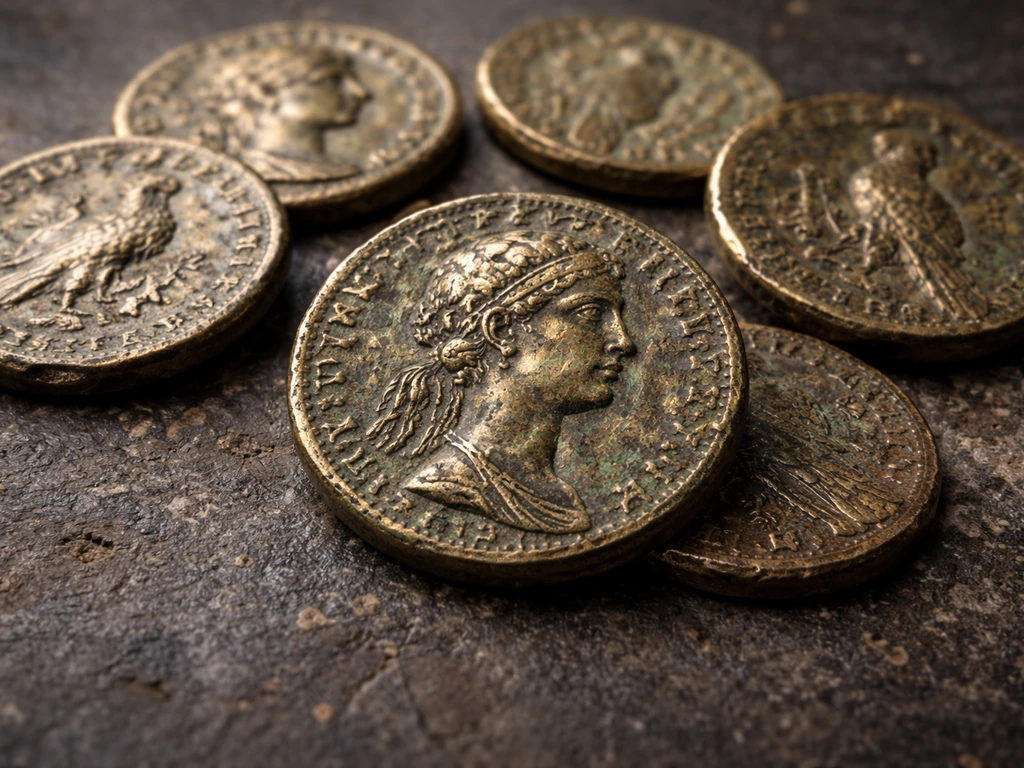
Cleopatra's coins survive and are well-catalogued. Coin series reveal something about monetary policy, debasement, and the scale of minting activity. Archaeological work at Alexandria and other Ptolemaic sites, though incomplete due to the city's submersion and later construction, has uncovered artifacts consistent with the literary accounts of royal luxury and large-scale resource management.
How researchers estimate net worth (assets, revenues, treasure, control)
Building a wealth estimate for a historical ruler follows a fairly consistent methodology, even if the inputs are uncertain. Researchers typically look at four categories:
- State revenues: Annual tax income, tribute from vassal territories, customs duties on trade, and agricultural levies. For Egypt under the Ptolemies, grain taxes alone were enormous given the Nile Delta's productivity.
- Physical asset control: Land ownership or control (most of Egypt's agricultural land was effectively crown property), mines (including gold and gemstone mines in the Eastern Desert), and royal estates.
- Liquid treasure: Gold, silver, gemstones, and luxury goods held in the royal treasury. Plutarch's account gives us a qualitative snapshot of this for Cleopatra specifically.
- Trade monopoly value: The Ptolemaic crown controlled or taxed key commodities including papyrus, grain, linen, oil, and luxury imports. This monopoly power is a form of economic control that translates to wealth even if it isn't held as physical bullion.
The researcher's job is to estimate each of these categories from the available evidence, express them in a consistent unit (usually talents of silver or gold for the ancient period), and then apply a conversion method to express that in modern terms. This is where things get complicated, and where different researchers reach very different numbers.
Converting ancient wealth to 'net worth today' (assumptions and methods)

There are three main approaches researchers use to translate ancient wealth into modern dollar figures, and each produces a different result. Understanding which method a source is using is essential for evaluating any claim.
| Method | What It Measures | Typical Result for Top Ptolemaic Rulers | Main Weakness |
|---|---|---|---|
| Commodity price conversion | The modern cost of the same amount of a benchmark commodity (e.g., wheat, silver, gold) | Hundreds of millions to low billions | Commodity prices fluctuate; doesn't capture purchasing power complexity |
| Wage-based purchasing power | How many days of labor the wealth could purchase, converted to modern wages | Tens to hundreds of billions | Ancient labor markets differ structurally from modern ones |
| GDP share method | Ancient wealth as a share of the known economy, applied to modern GDP | Hundreds of billions to low trillions (for full state control) | Requires accurate GDP estimates for ancient economies, which are speculative |
| Bullion face value | Simply valuing documented gold/silver at today's spot price | Tens of billions for documented treasure alone | Ignores non-bullion assets and income streams completely |
Most serious estimates for Cleopatra's effective wealth, using the GDP share or wage-purchasing-power methods, land in the range of $100 billion to over $1 trillion in today's terms depending on how broadly you define her economic control. The bullion-only approach produces a far lower number but is also the most defensible in a narrow sense because it sticks to documented evidence. The honest position is to report a range and be clear about which method you're using.
Range of credible estimates and why they differ
If you look across credible historical and economic sources, estimates for Cleopatra's personal or effective wealth in modern terms typically range from around $95 billion on the conservative end (focusing on documented treasure and known revenues) to $300 billion or more when full state economic control is factored in. Some popular lists have placed her even higher, occasionally exceeding $1 trillion, but those figures usually apply the GDP share method to Egypt's entire ancient economy without adjusting for the fact that Cleopatra's control was real but not absolute, especially in her later years as Rome's influence grew.
The reason estimates differ so widely comes down to four main variables. First, which Ptolemaic revenue figures you use as a baseline (the Ptolemy II figures are from the kingdom's peak; Cleopatra ruled during a period of relative decline). Second, how you treat the value of land and agricultural control versus liquid assets. Third, which conversion method you apply. Fourth, whether you count Roman-controlled territories that Cleopatra briefly held through her alliance with Antony, including Cyprus and parts of the Levant, as part of her wealth.
This kind of research challenge isn't unique to ancient figures. Even for relatively recent historical monarchs, wealth estimation is genuinely difficult. If you've ever looked into Britain queen net worth or wondered how analysts separate Crown Estate value from personal royal assets, you'll recognize the same structural problem: the line between institutional and personal wealth is blurry at the top of hereditary power structures.
Similarly, when researchers estimate the queen Beatrix net worth, they have to untangle Dutch royal family trusts, private portfolios, and state-held assets. With Cleopatra, there were no trusts or private portfolios in any modern sense, which paradoxically makes the estimate both simpler (it's all the same pool) and harder (there's no institutional boundary to use as a guide).
How to verify sources and spot unreliable Cleopatra 'net worth' claims

A lot of content online about Cleopatra's net worth is either recycled from a handful of speculative lists or invents a precise number without any methodology. Here's how to tell the difference between a credible estimate and a guess dressed up as a fact.
- Does the source cite a method? Any credible estimate will tell you whether it's using commodity conversion, purchasing power parity, or GDP share. If it just states a dollar figure with no explanation, treat it skeptically.
- Does it acknowledge uncertainty? Good historical scholarship always expresses wealth estimates as ranges with caveats, not single definitive numbers. A source that says 'Cleopatra was worth exactly $X billion' is a red flag.
- Does it distinguish between state wealth and personal wealth? A source that conflates Egypt's GDP with Cleopatra's net worth without acknowledging the problem is oversimplifying.
- Does it reference primary or secondary academic sources? Plutarch, the Cambridge Ancient History series, papyrological databases, and peer-reviewed economic history journals are the kinds of sources that underpin credible estimates. Celebrity net worth roundups are not.
- Is the figure being used to rank her against modern billionaires? These rankings can be legitimate if the methodology is sound, but they're often done for clicks rather than rigor. Check whether the list cites any ancient sources at all.
It's also worth knowing that this verification challenge isn't unique to ancient figures. Even for well-documented wealthy women like Slavica Ecclestone net worth research, wealth figures vary across sources because assets are held in complex structures, some offshore, some in trusts. The lesson is the same whether you're researching a first-century BCE queen or a modern billionaire: always look for the methodology, not just the headline number.
When evaluating royal wealth in particular, it's useful to compare how analysts approach net worth queen of England estimates, where the distinction between Crown assets, private estates, and personal investments requires careful sourcing. That same critical lens should be applied to any Cleopatra wealth claim you encounter.
Takeaways and next steps for doing your own estimate
If you want to build your own defensible Cleopatra wealth estimate, or just evaluate the ones you find online, here's a practical process to follow.
- Start with primary sources. Read the relevant sections of Plutarch's Life of Antony (freely available in translation online) and note the specific assets mentioned. These are your most direct documentary evidence for her treasure holdings.
- Find the Cambridge Ancient History chapters on Ptolemaic Egypt. The revenue figures cited there, including the Ptolemy II income data, give you a baseline for state revenues that you can adjust downward for Cleopatra's period of relative fiscal decline.
- Choose a conversion method deliberately. Decide whether you're measuring commodity equivalence, purchasing power, or economic share, and be consistent. Run the numbers using at least two methods to see how much your result varies.
- Express your result as a range, not a single figure. Given the uncertainty in the inputs, a range of something like $95 billion to $300 billion in today's dollars is more honest than picking one number.
- Cross-check against economic history literature. Search Google Scholar for 'Ptolemaic revenues' or 'ancient Egyptian GDP' to find peer-reviewed papers that estimate Egypt's economic output. These will help you calibrate your inputs.
- Flag your assumptions clearly. Note whether you're including non-Egypt territories Cleopatra controlled, whether you're using the kingdom's peak revenues or late-period figures, and which ancient sources you're relying on.
For broader context on how royal and aristocratic wealth is researched and reported, it's genuinely helpful to look at how modern analysts approach figures like queen of London net worth profiles, where inherited land, art, and institutional assets present similar methodological challenges. The frameworks overlap more than you'd expect.
The same applies to studying aristocratic wealth adjacent to royal families. Research into someone like lady Henrietta Spencer-Churchill net worth involves tracing inherited estates, art holdings, and private business interests, which is structurally similar to tracing Ptolemaic royal asset inventories even if the scale is very different.
The bottom line: Cleopatra was almost certainly one of the wealthiest individuals who ever lived, in terms of her effective control over an economy's resources. A range of $95 billion to $300 billion in today's terms is defensible if you're measuring documented revenues and assets conservatively. The higher estimates (into the trillions) are plausible only under the most expansive interpretation of economic control and the most generous conversion assumptions.
Any single precise number you see online should be treated as a starting point for a conversation, not a settled fact. Understanding how the number was built is what matters most.
A handbook chapter on Ptolemaic Egypt in Money and Prices in the Papyri explains that, under the Ptolemies, most taxes other than those on grain land/harvest and some oil-producing plants were collected as cash taxes, with tax administration and intermediaries playing key roles most taxes besides those on grain land/harvest (and some oil-producing plants) were cash taxes.
FAQ
Why do different sites give totally different Cleopatra net worth numbers even when they reference the same ancient history?
Use the range logic, but also identify the “basis” the estimate is using (documented bullion and treasury assets only, versus state-wide revenue or GDP share). If the source cannot explain which basis it uses, treat the headline number as unreliable.
If we know Cleopatra had huge treasure, can we just value the gold and silver and get the full net worth?
Coin collections and treasure descriptions can confirm that major reserves existed, but they do not tell you what portion was liquid, permanently held, mortgaged, or later moved. A conservative approach discounts anything that could have been temporary war stockpiles.
Does Cleopatra net worth mean her personal fortune, or the value of everything she controlled as queen?
Historically, Cleopatra’s wealth is usually discussed as “effective control,” not personal ownership. That means you should check whether the claim includes resources held by the state that were governed by her during her reign, or only assets the sources explicitly describe as royal treasury stock.
How much does the timing of her reign (peak Ptolemaic vs her later years) change Cleopatra net worth estimates?
Many estimates silently make a “reign period” choice. Cleopatra ruled during relative decline compared with earlier peak Ptolemaic years, and her later overlap with growing Roman influence can reduce effective control. If a source uses peak-era baselines without adjustment, it will likely overstate her wealth.
Should Cyprus and parts of the Levant be counted in Cleopatra net worth, and how do I tell if an estimate handles that correctly?
To sanity-check inclusion of Roman-controlled areas, look for whether the model counts only territories under Cleopatra’s administration during specific years, or whether it adds broad regions that Rome effectively controlled. Claims that “assume permanence” of her control tend to push numbers upward.
Which estimation method is the most conservative and easiest to defend, bullion-only or GDP-style approaches?
The bullion-only method is often the lowest figure because it sticks closer to documented metal and treasury inventories. If you want the most defensible lower bound, prioritize approaches that separate measurable treasury reserves from the broader economy.
What’s the biggest reason conversions to modern dollars can be misleading?
Ancient conversion depends heavily on what you treat as the “price level” equivalent (wages, consumption purchasing power, general GDP, or exchange rates). If a claim does not specify which conversion framework it uses, you cannot compare it fairly to other figures.
How can I tell if a Cleopatra net worth number is a defensible estimate or just a guess?
A practical quality check is whether the estimate provides intermediate steps, like reconstructed revenue totals in talents, assumptions about minting or land output, and the reasoning for applying a conversion. Numbers without those steps are usually just a methodless multiplier.
Is it possible for a single, exact Cleopatra net worth figure to be credible?
Because the evidence base is fragmentary, reputable approaches should produce ranges that reflect uncertainty in inputs. If a source gives a single precise figure with no discussion of uncertainty, treat it as impressionistic rather than research-grade.
When reading Cleopatra net worth claims, what should I look for to make sure the scope and units are consistent?
Search for a statement that clarifies the unit and scope, for example “talents of silver” internally converted using a stated framework, and whether the result is “personal,” “effective control,” or “state-linked wealth.” If the scope is unclear, you are likely mixing categories.
Net Worth Queen of England: Most Credible Estimate Today
Net worth queen of England estimate range, how it’s calculated, and how to verify public sources accurately.